
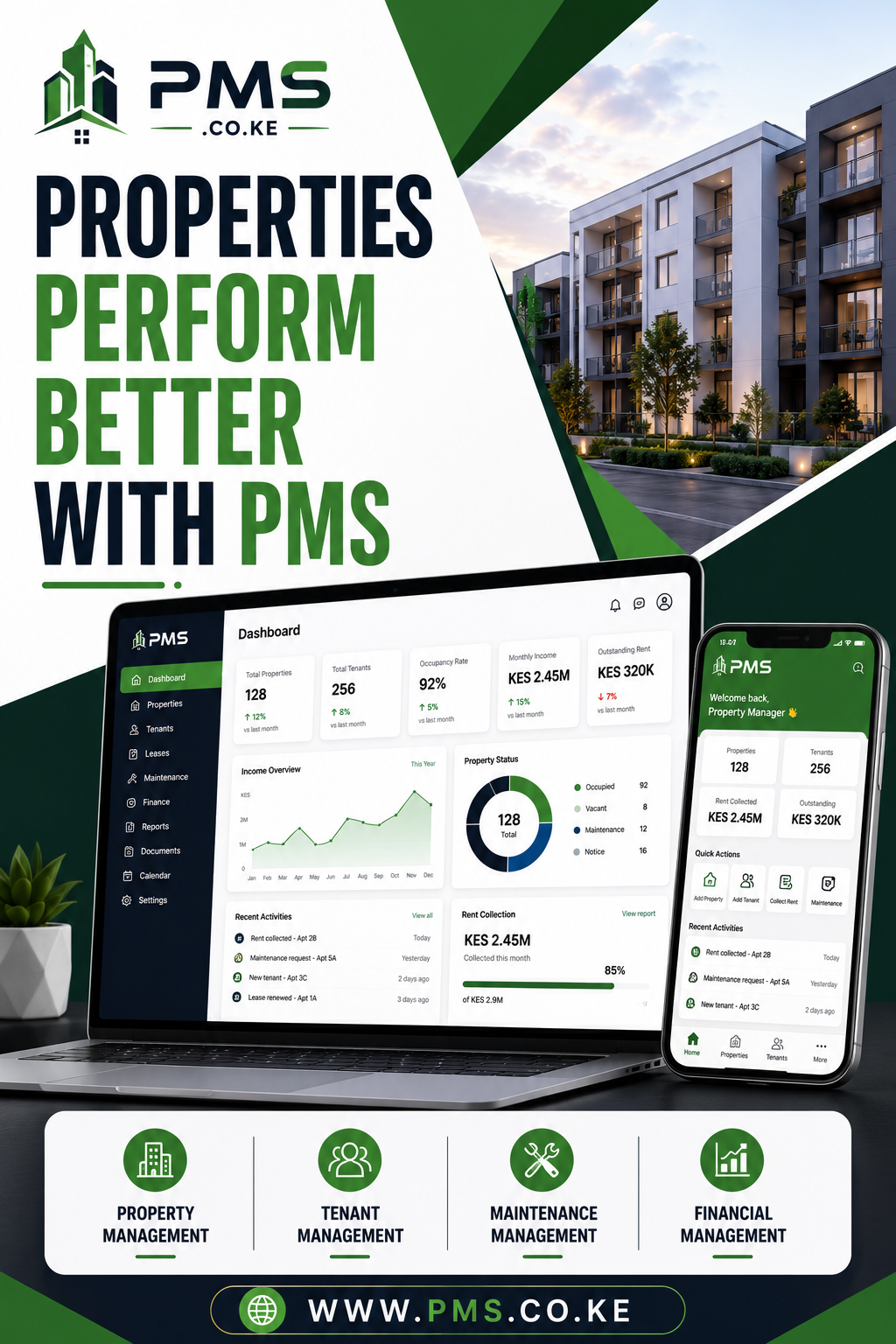
Rent collection system software helps landlords, property managers, real estate companies, and estate administrators manage rental payments more efficiently. Instead of relying entirely on manual records, spreadsheets, receipts, bank statements, or messaging applications, property managers can use a centralized platform to organize tenants, track rent payments, monitor outstanding balances, issue payment records, and maintain accurate rental income information.
For landlords managing a few rental units, keeping track of rent may initially seem straightforward. However, as the number of properties and tenants increases, rent collection can become time-consuming. Property managers may have to monitor different payment dates, follow up with tenants, reconcile payments, issue receipts, and determine which accounts are overdue.
A rent collection system provides a structured way to handle these activities from one platform. It can help property owners understand what has been billed, what has been collected, what remains outstanding, and which tenants require follow-up.
What Is a Rent Collection System?
A rent collection system is software designed to help landlords and property managers manage rental payments and related financial activities.
Depending on the platform, it can support:
- Tenant records
- Property records
- Rental units
- Rent schedules
- Payment tracking
- Outstanding balances
- Payment receipts
- Tenant statements
- Payment reminders
- Arrears management
- Income reports
- Expense records
- Financial reporting
The main objective is to make rent collection more organized and reduce the amount of manual work involved in managing rental income.
Why Use a Rent Collection System?
Manual rent collection can become difficult when a property portfolio grows.
A landlord managing several units may need to remember:
- Which tenants have paid
- Which tenants have not paid
- How much each tenant owes
- When rent was due
- Whether partial payments were made
- Whether previous arrears remain
- Which receipts have been issued
- How much income was collected during a particular month
A rent collection system brings these records together in one location.
Instead of searching through multiple spreadsheets, notebooks, receipts, bank messages, and conversations, property managers can use a centralized dashboard to review rental payment information.
How Does a Rent Collection System Work?
A typical system starts by creating property and tenant records.
The property manager can enter information such as:
- Property name
- Building
- Unit number
- Tenant name
- Contact details
- Monthly rent
- Deposit
- Lease information
- Payment due date
Once these records are configured, the system can track rental charges and payments.
When a tenant makes a payment, the transaction can be recorded against the appropriate tenant and rental unit. The system can then update the tenant’s account balance.
This creates a clear history of rental transactions.
Automated Rent Tracking
One of the biggest advantages of a rent collection system is automated rent tracking.
Instead of manually calculating what each tenant should pay, the system can use configured rental charges and payment records to determine account balances.
For example, if a tenant has a monthly rent charge and makes a payment, the system can record:
Rent Charged
Payment Received
Outstanding Balance
This makes it easier to identify accounts that require attention.
Tenant Payment Records
Keeping accurate payment records is essential for property management.
A rent collection platform can maintain transaction histories for each tenant.
A tenant record may show:
- Previous rent charges
- Payments received
- Partial payments
- Outstanding balances
- Arrears
- Payment dates
- Receipts
- Adjustments
This information can help property managers resolve payment disputes and answer tenant questions more efficiently.
Rent Payment Receipts
A rent collection system can make receipt management easier by recording payments and generating payment records.
A receipt can contain information such as:
- Tenant name
- Property
- Unit
- Payment amount
- Payment date
- Payment reference
- Description
- Outstanding balance
Digital records can make it easier to retrieve historical payment information when required.
Rent Collection and Tenant Statements
Tenant statements provide a summary of financial activity for a particular rental account.
A statement can show:
- Opening balance
- Rent charges
- Payments
- Adjustments
- Arrears
- Closing balance
This provides both landlords and tenants with a clearer view of the account.
A rent collection system can make generating these statements much easier than manually compiling transactions.
Rent Arrears Management
Rent arrears are one of the major challenges faced by landlords and property managers.
When tenants fail to pay rent on time, property managers need to know:
- Who is overdue
- How much is outstanding
- How long the balance has remained unpaid
- Whether previous arrears exist
- Whether partial payments have been made
A centralized system can make this information easier to identify.
Rent Payment Reminders
Payment reminders can help property managers communicate with tenants about upcoming or overdue payments.
Depending on the system, reminders may be sent through supported communication channels such as:
- SMS
- Mobile notifications
- Other integrated messaging services
Reminder schedules can be configured according to the property’s requirements.
For example, tenants may receive a notification before rent is due and another message if payment becomes overdue.
Automated Rent Collection
Automation can reduce repetitive administrative work.
A rent collection system may automate tasks such as:
- Creating recurring rent charges
- Updating balances
- Generating receipts
- Identifying overdue accounts
- Producing reports
- Sending reminders
- Recording recurring transactions
This allows property managers to spend less time on repetitive financial administration.
Rent Collection for Multiple Properties
Managing multiple properties can make rental accounting significantly more complicated.
A landlord may own:
- Apartments
- Residential houses
- Commercial buildings
- Shops
- Offices
- Mixed-use properties
Each property may contain multiple rental units with different tenants and rental rates.
A rent collection system can organize these properties under one platform.
Property managers can then review individual properties or obtain consolidated information across their entire portfolio.
Rent Collection for Apartments
Apartment buildings often have many tenants paying rent at different times.
A centralized system can help property managers track:
- Apartment numbers
- Tenant details
- Monthly rent
- Payments
- Arrears
- Deposits
- Outstanding balances
This reduces the need to manage tenant records separately.
Rent Collection for Commercial Properties
Commercial properties may include:
- Shops
- Offices
- Warehouses
- Retail spaces
- Business premises
Commercial tenants may have different lease terms and rental charges.
A rent collection system can help property managers maintain separate rental records for each commercial unit.
Rent Collection for Residential Properties
Residential property managers can use rental software to manage houses, apartments, flats, and other residential units.
The system can provide a central view of:
- Occupied units
- Vacant units
- Tenants
- Rent charges
- Payments
- Arrears
This can make day-to-day property administration easier.
Rent Collection for Property Managers
Property managers often handle rental payments on behalf of property owners.
They may need to manage hundreds or thousands of transactions.
A rent collection system can help property managers maintain records for different:
- Property owners
- Properties
- Buildings
- Units
- Tenants
- Payment accounts
This creates a more structured management environment.
Rent Collection for Landlords
Individual landlords can also benefit from rental management software.
A landlord may use the system to track:
- Tenant payments
- Rental income
- Arrears
- Property expenses
- Tenant statements
- Payment history
This can be useful even for landlords managing a relatively small property portfolio.
Rent Collection Dashboard
A dashboard can give property managers an overview of rental performance.
It may display information such as:
- Total rent billed
- Total rent collected
- Outstanding rent
- Number of overdue tenants
- Occupied units
- Vacant units
- Recent payments
A dashboard allows managers to identify important issues without reviewing every tenant account individually.
Rent Collection Reports
Reporting is another important feature of a rent collection system.
Property managers may need reports showing:
- Rent collected
- Rent outstanding
- Arrears
- Tenant balances
- Property income
- Monthly collections
- Payment histories
- Collection performance
Reports can help landlords understand the financial performance of their properties.
Monthly Rent Collection Reports
Monthly reports can provide a snapshot of rental activity.
A monthly report may show:
Total Rent Due
Total Rent Collected
Total Outstanding
Total Arrears
Number of Paid Tenants
Number of Overdue Tenants
This can help property owners quickly understand the month’s collection performance.
Property-Level Rent Reports
Property managers with several buildings may need to compare collection performance between properties.
A system can allow managers to review:
- Property A
- Property B
- Property C
- Property D
This can help identify properties with higher arrears or lower collection rates.
Tenant-Level Rent Reports
Managers may also need to investigate individual tenant accounts.
Tenant reports can provide detailed transaction histories that show exactly what has been charged and paid.
This can be particularly useful when resolving disputes.
Rent Collection and Property Accounting
Rental payments are only one part of property finances.
Property managers may also need to track:
- Maintenance expenses
- Utilities
- Service charges
- Management fees
- Repairs
- Contractor payments
- Property expenses
Integrating rent collection with broader property accounting can provide a more complete picture of property performance.
Rent Collection and Expense Management
A property can generate rental income while also producing ongoing expenses.
For example:
Rent Collected → Property Income
Maintenance → Property Expense
Utilities → Property Expense
Management Costs → Property Expense
Tracking both sides allows property managers to better understand the financial position of each property.
Rent Collection and Service Charges
Some properties have additional charges beyond basic rent.
These may include:
- Service charges
- Parking fees
- Water charges
- Garbage collection
- Security charges
- Shared utility costs
A rent collection system can help property managers organize these charges alongside rental payments where the platform supports them.
Rent Collection and Utility Billing
Some property managers collect utility payments from tenants.
The system may need to track:
- Water
- Electricity
- Garbage
- Internet
- Other recurring charges
Combining these records with rent information can reduce the need to maintain separate billing systems.
Rent Collection and Lease Management
Rental payments are closely connected to lease agreements.
A property management platform can store information such as:
- Lease start date
- Lease end date
- Rent amount
- Deposit
- Payment frequency
- Renewal information
This allows rental charges to be managed according to the tenant’s agreement.
Rent Increase Management
Rental rates may change when leases are renewed or according to agreed terms.
A rent collection system can help property managers maintain updated rental rates and prevent outdated charges from being used accidentally.
Proper records can also help managers identify when a rental agreement needs review.
Managing Partial Rent Payments
Tenants do not always pay the full rental amount at once.
A tenant may make:
- Full payment
- Partial payment
- Multiple payments
- Payment toward previous arrears
A good rent collection system should be able to maintain a clear transaction history so the remaining balance is easy to identify.
Managing Rental Arrears
Arrears management should provide clear information about overdue balances.
Property managers may want to identify:
- Current arrears
- Previous arrears
- Aging balances
- Payment history
- Repeated late payments
This can help managers prioritize follow-up activities.
Rent Collection and Tenant Communication
Communication is an important part of collecting rent.
Property managers may need to contact tenants regarding:
- Upcoming payments
- Overdue rent
- Payment confirmations
- Statements
- Account balances
- Lease changes
A centralized platform can help organize these activities.
Benefits of a Rent Collection System
Using a rent collection system can provide several benefits to property owners and managers.
Better Organization
Rental records can be stored centrally rather than across multiple documents.
Reduced Manual Work
Recurring charges, balances, receipts, and reports can be managed more efficiently.
Better Visibility
Managers can quickly identify collected and outstanding rent.
Improved Accuracy
Centralized transaction records can reduce calculation and recording errors.
Faster Reporting
Property owners can obtain rental reports without manually compiling data.
Better Tenant Service
Tenant statements and payment histories can be retrieved more easily.
Improved Arrears Follow-Up
Managers can identify overdue accounts faster.
Features to Look for in a Rent Collection System
Before choosing a platform, property managers should consider the features they require.
Important features may include:
- Tenant management
- Property management
- Unit management
- Rent billing
- Payment tracking
- Receipt generation
- Tenant statements
- Arrears management
- Payment reminders
- Expense tracking
- Financial reports
- User permissions
- Mobile access
- Data backups
The ideal system depends on the size and complexity of the property portfolio.
Rent Collection System for Small Landlords
Small landlords may not need a highly complex platform.
However, they can still benefit from:
- Tenant records
- Automated rent tracking
- Payment records
- Receipts
- Arrears tracking
- Monthly reports
A simple platform can help a landlord remain organized as the property portfolio grows.
Rent Collection System for Large Property Portfolios
Large property portfolios require stronger organization.
A property manager may need to track hundreds or thousands of tenants.
In this situation, the system should support:
- Multiple properties
- Multiple units
- Large tenant databases
- Automated billing
- Payment reconciliation
- Arrears management
- Detailed reports
- Multiple users
- Role-based permissions
Scalability should be considered when selecting the software.
Rent Collection System for Property Management Companies
Property management companies often manage properties belonging to different owners.
A suitable platform should allow managers to distinguish between:
- Property owners
- Properties
- Units
- Tenants
- Rental income
- Expenses
This can make it easier to prepare accurate owner reports and manage financial records.
Choosing the Right Rent Collection System
Before selecting software, property managers should assess their needs.
Consider:
- Number of properties
- Number of units
- Number of tenants
- Payment methods
- Billing requirements
- Reporting requirements
- Communication needs
- Accounting requirements
- User roles
- Future growth
The right system should make rent collection easier rather than introduce unnecessary complexity.
Conclusion
A rent collection system provides landlords and property managers with a structured way to manage rental billing, payments, receipts, tenant balances, arrears, statements, and rental income reports. By bringing these activities together, the software can reduce manual administration and improve visibility into the financial performance of rental properties.
Whether you manage a few residential units or a large portfolio of apartments, commercial properties, offices, shops, or estates, centralized rent management can make it easier to monitor payments and identify outstanding balances.
For property managers looking to improve efficiency, reduce paperwork, strengthen financial recordkeeping, and gain better control over rental income, implementing a reliable rent collection system can be an important step toward more organized and efficient property management.
rent collection system software gives landlords, property managers, estate administrators, and real estate companies a centralized way to manage rental billing and tenant payments. Instead of relying on notebooks, spreadsheets, paper receipts, mobile messages, or separate payment records, property managers can use software to organize rent charges, record payments, monitor arrears, generate receipts, and produce financial reports.
Rent collection becomes increasingly difficult as a property portfolio grows. A landlord managing one or two units may be able to remember payment dates and balances manually, but managing dozens or hundreds of tenants creates a much larger administrative workload. Every tenant may have a different lease, rental amount, payment history, balance, and payment status.
A reliable rent collection system helps bring these details into one organized platform, making it easier to understand the financial position of each tenant, unit, and property.
How a Rent Collection System Simplifies Property Management
Property management involves much more than receiving rent.
Managers may need to:
- Create tenant accounts
- Assign tenants to units
- Set rental rates
- Generate recurring rent charges
- Record payments
- Issue receipts
- Track arrears
- Send reminders
- Prepare statements
- Monitor rental income
- Record property expenses
- Generate reports
When these activities are performed manually, mistakes and delays can become common.
A rent collection system can centralize these processes and make them easier to manage.
Centralized Tenant and Rental Records
One of the most important advantages of rental management software is centralized information.
Instead of keeping tenant information in different files, a property manager can maintain records containing:
- Tenant name
- Phone number
- Email address
- Property
- Unit
- Monthly rent
- Deposit
- Lease information
- Payment history
- Current balance
This makes it easier to retrieve information whenever it is needed.
Automated Recurring Rent Billing
Monthly rent billing can be repetitive when handled manually.
A rent collection system can automate recurring rental charges according to the configured rental terms.
For example, if a tenant pays rent monthly, the system can automatically generate the appropriate charge for each billing period.
This reduces the need for property managers to manually create the same rental charge every month.
Tracking Rent Due Dates
Different tenants may have different payment schedules.
A system can help managers keep track of:
- Upcoming rent
- Rent due today
- Overdue rent
- Previous balances
- Partial payments
- Outstanding amounts
This makes it easier to prioritize collection activities.
Automated Rent Payment Tracking
When a payment is recorded, the tenant’s account can be updated.
For example:
Monthly Rent: $500
Payment Received: $500
Balance: $0
If the tenant makes a partial payment:
Monthly Rent: $500
Payment Received: $300
Balance: $200
This provides a straightforward way of understanding the tenant’s financial position.
Rent Arrears Dashboard
Arrears can become difficult to monitor when a property manager has many tenants.
A rent collection system can provide an arrears dashboard showing accounts that require attention.
Managers can identify:
- Tenants with overdue rent
- Amount outstanding
- Number of overdue days
- Previous arrears
- Partial payments
- Total property arrears
This can make follow-up more systematic.
Rent Arrears Aging
Not every outstanding balance is equally urgent.
An arrears report can categorize balances according to how long they have remained unpaid.
For example:
- Current
- 1–30 days
- 31–60 days
- 61–90 days
- Over 90 days
This can help property managers prioritize accounts that require immediate attention.
Tenant Payment History
A complete payment history can provide a chronological record of a tenant’s account.
It may show:
- Date charged
- Amount charged
- Date paid
- Amount paid
- Payment reference
- Balance
- Adjustments
This can be useful when tenants ask questions about their accounts.
It can also help resolve disputes because both the landlord and tenant can refer to the transaction history.
Digital Rent Receipts
Paper receipts can be difficult to organize and retrieve.
A rent collection system can maintain digital records of payments and, depending on the platform, generate receipts for tenants.
A digital receipt can contain:
- Tenant name
- Property
- Unit
- Amount paid
- Payment date
- Payment reference
- Description
- Balance
Digital receipts can improve recordkeeping and reduce paperwork.
Tenant Statements
Tenant statements provide a detailed overview of an account.
A statement may include:
- Previous balance
- Rent charges
- Other charges
- Payments
- Adjustments
- Arrears
- Current balance
This can provide tenants with a clearer understanding of their accounts.
Rent Collection Notifications
Communication can play an important role in successful rent collection.
Depending on the software, notifications can be used for:
- Upcoming rent
- Overdue payments
- Payment confirmation
- Account statements
- Balance notifications
Automated notifications can reduce the amount of time property managers spend sending repetitive messages.
Rent Collection and Mobile Payments
Modern tenants increasingly expect convenient payment options.
A rental platform can be integrated with supported payment channels depending on the country and system architecture.
In Kenya, for example, property managers may want their software to work with mobile money, bank transfers, or other payment methods used by their tenants.
The key advantage is not simply accepting payments but ensuring that payments can be accurately associated with the correct tenant and rental account.
Rent Payment Reconciliation
Payment reconciliation is the process of matching received money with the appropriate tenant account.
This can become difficult when a property manager receives many payments.
A rent collection system can help organize payment records and make it easier to determine:
- Who paid
- How much was paid
- When payment was made
- Which unit the payment belongs to
- Which invoice or rent charge was settled
- What balance remains
Accurate reconciliation is essential for reliable property accounting.
Managing Multiple Payment Methods
Tenants may use different payment channels.
A property manager may receive payments through:
- Mobile money
- Bank transfers
- Cash
- Cheques
- Online payment platforms
A centralized system can help record these different payment methods within tenant accounts.
Rent Collection for Apartment Buildings
Apartment buildings often have many tenants living in separate units.
A rent collection system can organize the property hierarchy:
Property → Building → Floor → Unit → Tenant
This structure makes it easier to determine which tenants occupy which units and how much rent is expected from each one.
Rent Collection for Commercial Buildings
Commercial buildings may contain shops, offices, warehouses, and other business premises.
Tenants may have different:
- Rental rates
- Lease periods
- Payment schedules
- Deposits
- Additional charges
Rental software can help manage these differences within one system.
Rent Collection for Shopping Centers
Shopping centers can contain many businesses with different rental agreements.
A property manager may need to track:
- Shop number
- Tenant
- Monthly rent
- Service charges
- Utility charges
- Payment history
- Arrears
A centralized platform can provide better visibility across the entire shopping center.
Rent Collection for Residential Estates
Residential estates may contain many houses or apartment units.
The property manager can use software to organize:
- Houses
- Units
- Tenants
- Rental charges
- Payments
- Arrears
- Service charges
This can reduce the administrative burden associated with managing large residential communities.
Rent Collection for Property Management Companies
Property management companies often manage properties on behalf of different owners.
This creates a need to separate financial information by property owner.
A rent collection system can help distinguish:
Property Owner A → Properties → Units → Tenants
Property Owner B → Properties → Units → Tenants
This makes owner reporting easier.
Property Owner Statements
Property owners need to know how their properties are performing financially.
An owner statement may show:
- Total rent billed
- Total rent collected
- Outstanding rent
- Property expenses
- Management fees
- Net income
This provides a clearer picture of property performance.
Rent Collection and Property Expenses
Rental income does not represent the entire financial picture.
Property managers may also need to record:
- Repairs
- Maintenance
- Security
- Cleaning
- Utilities
- Staff costs
- Management expenses
- Contractor payments
Combining rental income and expenses can provide a more complete financial overview.
Rental Income Reports
A rent collection system can generate reports showing rental income over different periods.
Managers may want to see:
- Daily collections
- Weekly collections
- Monthly collections
- Quarterly collections
- Annual collections
Reports can be filtered by property, unit, tenant, or payment method where supported.
Comparing Rental Collection Performance
Property owners managing multiple buildings may want to compare performance.
For example:
Property A — 95% collected
Property B — 88% collected
Property C — 97% collected
This can help identify properties where arrears or collection problems require attention.
Occupancy and Rent Collection
Rent collection is closely connected to occupancy.
A property with vacant units may have lower rental income even if every occupied tenant pays on time.
A property management platform can therefore help managers monitor:
- Occupied units
- Vacant units
- Expected rent
- Actual collections
- Outstanding rent
This gives managers a more complete view of rental performance.
Rent Collection and Lease Expiration
Lease management can also affect rent collection.
Managers need to know when leases:
- Begin
- Expire
- Renew
- Change rental rates
- Require new agreements
Keeping these dates organized can reduce the risk of outdated rental charges.
Rent Increase Management
Rental rates may change when a lease is renewed or according to agreed terms.
A rent collection system can help property managers update rental rates and ensure future charges reflect the current agreement.
This can prevent the continued use of outdated rental amounts.
Security Deposit Management
Security deposits are separate from ordinary rent payments.
A property manager may need to record:
- Deposit amount
- Date received
- Tenant
- Property
- Unit
- Deposit adjustments
- Refunds
Keeping these records within the tenant account can make deposit management easier.
Managing Additional Tenant Charges
Tenants may owe more than basic rent.
Additional charges can include:
- Parking
- Water
- Electricity
- Service charges
- Garbage collection
- Security
- Internet
- Shared utilities
A rent collection system can help organize these charges where supported by the platform.
Rent Collection and Utility Billing
Some properties include utility billing as part of their rental management operations.
Managers may need to track:
Water → Usage → Charge → Payment
Electricity → Usage → Charge → Payment
Combining these records with rental information can provide tenants with a more complete account statement.
Rent Collection for Managed Properties
Property management companies may handle rent collection for properties owned by other individuals or organizations.
The software can help maintain separation between:
- Property owners
- Management company
- Tenants
- Rental income
- Expenses
This makes it easier to maintain transparent records.
Role-Based Access to Rental Data
Property management companies may have several employees using the same system.
Different users may require different levels of access.
For example:
Administrator → Full access
Property Manager → Property and tenant management
Accountant → Financial records
Maintenance Staff → Maintenance information
This can help protect sensitive financial and tenant information.
Rental Financial Data Security
Property management software contains important information.
This can include:
- Tenant names
- Phone numbers
- Rental agreements
- Payment records
- Financial transactions
- Property information
Businesses should therefore consider security features when selecting a rent collection system.
Important considerations include:
- User authentication
- Role-based permissions
- Data backups
- Secure connections
- Access controls
- Audit records
Rent Collection Audit Trails
An audit trail can show what actions users have taken within the system.
This may include:
- Payment creation
- Payment editing
- Receipt generation
- Tenant updates
- Rental charge adjustments
- User activity
Audit records can improve accountability, especially when several employees manage the same properties.
Cloud-Based Rent Collection
Cloud-based rental software allows authorized users to access property information through supported devices and internet connections.
This can be useful for managers who need to work:
- From the office
- From home
- At properties
- While traveling
- Across different branches
Cloud access can make property management more flexible.
Rent Collection on Mobile Devices
Mobile access can be valuable for landlords and property managers who are frequently away from their desks.
A mobile-friendly system can allow users to:
- Review tenant accounts
- Check payments
- View arrears
- Record transactions
- Access reports
- Check property information
This makes rental administration more convenient.
Rent Collection System for Small Landlords
A small landlord may manage only a handful of properties but still benefit from organized financial records.
The system can help track:
- Tenants
- Rent
- Payments
- Arrears
- Receipts
- Expenses
As the landlord acquires more properties, the system can provide a structured foundation for growth.
Rent Collection System for Large Landlords
Large landlords may manage hundreds or thousands of units.
At this scale, manual rent tracking becomes increasingly inefficient.
A large property portfolio may require:
- Multiple properties
- Multiple buildings
- Large tenant databases
- Automated billing
- Payment reconciliation
- Arrears tracking
- Reporting
- User permissions
- Accounting integration
Scalability should therefore be considered before selecting software.
Rent Collection System for Real Estate Companies
Real estate companies may manage rental properties alongside property sales and other activities.
A rental platform can provide dedicated tools for managing:
- Rental properties
- Tenants
- Payments
- Leases
- Income
- Expenses
This allows rental operations to remain organized as the company grows.
Rent Collection System for Estate Managers
Estate managers often deal with multiple responsibilities every day.
They may need to manage:
- Tenant communication
- Rent collection
- Maintenance
- Service charges
- Utility billing
- Property records
- Financial reports
A centralized system can reduce the need to switch between multiple tools.
Automating Rent Collection Workflows
Automation can help property managers reduce repetitive administrative tasks.
A typical workflow can be:
Tenant Account → Rent Charge → Payment → Receipt → Balance Update → Statement
The more of this process that can be managed within one platform, the less manual administration may be required.
Reducing Rent Collection Errors
Manual data entry can result in:
- Incorrect balances
- Duplicate transactions
- Missing payments
- Wrong tenant assignments
- Incorrect rental charges
- Lost receipts
A structured software system can reduce these risks by centralizing records and standardizing processes.
Improving Tenant Transparency
Tenants want to know how much they owe and what they have paid.
A rent collection system can provide clear records of:
- Rent charges
- Payments
- Outstanding balances
- Previous transactions
- Additional charges
This transparency can improve communication between tenants and property managers.
Improving Property Manager Productivity
Property managers spend significant amounts of time handling repetitive administrative tasks.
Software can reduce the workload associated with:
- Payment entry
- Receipt generation
- Balance calculations
- Arrears identification
- Report preparation
This allows managers to spend more time on other property management activities.
Rent Collection and Property Performance
Rental income is an important indicator of property performance.
Property managers can use collection data to understand:
- Expected rental income
- Actual collections
- Arrears
- Vacancy impact
- Property expenses
- Net property income
These insights can support better property management decisions.
Choosing the Best Rent Collection System
There is no single rental platform that is perfect for every landlord.
Before choosing one, evaluate:
- Number of properties
- Number of units
- Number of tenants
- Payment methods
- Automated billing
- Arrears management
- Reporting
- Accounting requirements
- Mobile access
- User roles
- Security
- Integrations
- Scalability
- Technical support
The best platform should fit the way the property business operates.
Rent Collection System Features Checklist
A property manager can use this checklist when comparing solutions:
- Property management
- Tenant management
- Unit management
- Automated rent billing
- Payment tracking
- Payment reconciliation
- Digital receipts
- Tenant statements
- Arrears management
- Payment reminders
- Expense management
- Utility billing
- Service charge management
- Owner statements
- Financial reports
- User permissions
- Mobile access
- Data backups
- Audit trails
Not every business will require every feature, so priorities should be based on actual operational needs.
Common Rent Collection Problems
Property managers commonly face challenges such as:
Late Payments
Tenants may fail to pay by the agreed date.
Incomplete Records
Manual records may not accurately reflect all transactions.
Difficult Reconciliation
Payments can be difficult to match to tenants when many transactions are received.
Poor Arrears Visibility
Managers may not immediately know which accounts are overdue.
Manual Reporting
Preparing monthly reports manually can consume significant time.
Tenant Disputes
Missing or unclear transaction records can make disputes difficult to resolve.
A centralized rent collection system can help address many of these administrative challenges.
How a Rent Collection System Improves Efficiency
A well-designed system can turn a fragmented rental operation into a more structured workflow.
Instead of:
Notebook → Spreadsheet → Bank Statement → Messages → Manual Calculation
The process can become:
Tenant → Billing → Payment → Reconciliation → Receipt → Reporting
This can provide better visibility and reduce unnecessary administrative work.
Rent Collection System for Modern Property Management
Property management is becoming increasingly digital.
Landlords and property managers now need tools that can help them manage:
- Tenants
- Properties
- Payments
- Maintenance
- Accounting
- Communication
- Reports
Rent collection is one of the most important components because rental income directly affects property cash flow.
Why Automated Rent Collection Matters
Automated rent collection can help property managers maintain consistent billing and payment records.
Instead of manually checking every tenant every month, managers can use the system to identify:
- Who has paid
- Who has not paid
- How much remains outstanding
- Which accounts are overdue
- Which properties have collection problems
This creates a more proactive approach to rent management.
Future of Rent Collection Software
The future of property management will continue moving toward automation and integrated digital platforms.
Modern rental software can increasingly connect:
Property Management → Rent Collection → Accounting → Communication → Maintenance → Reporting
This integrated approach can provide landlords with a complete view of property operations.
Conclusion
A rent collection system can transform how landlords, estate managers, and property management companies handle rental payments. By centralizing tenant records, rental charges, payments, receipts, statements, arrears, expenses, and reports, the software can reduce manual work while providing greater visibility into property finances.
For landlords managing a few units, the system can simplify everyday rent tracking. For large property managers, it can provide the scalability needed to handle hundreds or thousands of tenants and multiple properties.
The most important factor when selecting rental software is choosing a solution that matches the organization’s operational requirements. Features such as automated billing, payment tracking, arrears management, tenant statements, reporting, mobile access, user permissions, and accounting capabilities can make a significant difference.
Ultimately, a reliable rent collection system is not simply a tool for recording payments. It can become an important part of a modern property management operation, helping landlords and property managers improve accuracy, reduce administrative work, monitor rental income, manage arrears, and maintain better financial control across their properties.
