
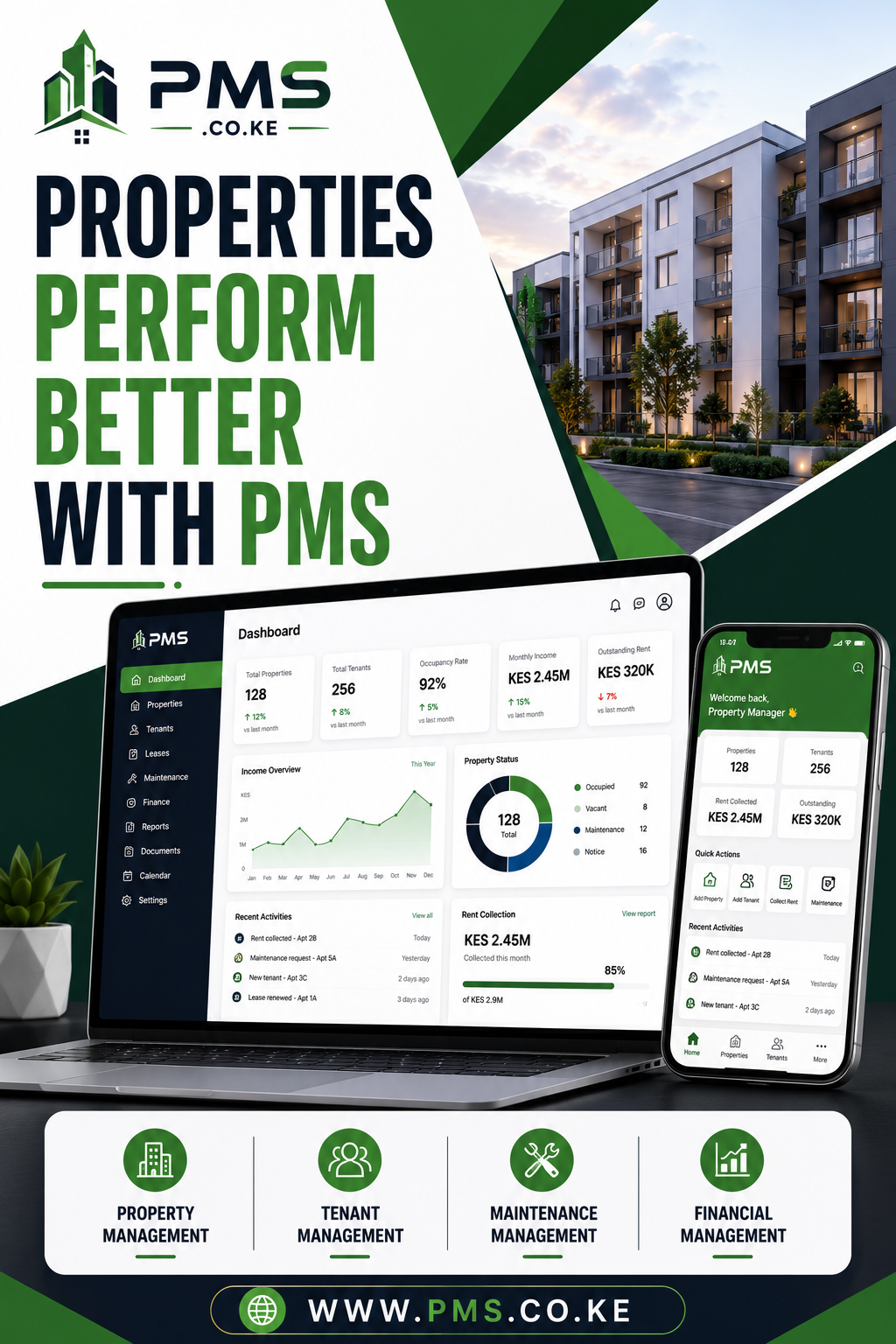
automated rent collection system software helps landlords, property managers, estate administrators, and real estate companies simplify the process of billing tenants, receiving and recording payments, tracking outstanding rent, generating receipts, and monitoring rental income. Instead of depending on spreadsheets, notebooks, manual calculations, and repeated follow-ups, property managers can use a centralized platform to automate important parts of the rental collection process.
Rent collection is one of the most important responsibilities in property management because rental income directly affects the cash flow and financial performance of a property. However, collecting rent from many tenants can become difficult when every payment has to be monitored manually.
A modern automated rent collection system can reduce repetitive administrative work by bringing rental billing, payment tracking, tenant accounts, receipts, arrears, and reporting together in one platform. This allows property managers to spend less time checking individual records and more time managing properties and serving tenants.
Table of Contents
ToggleWhat Is an Automated Rent Collection System?
An automated rent collection system is property management software designed to automate and organize the processes involved in collecting rental payments from tenants.
Instead of manually calculating rent every month, property managers can configure recurring rental charges within the system. Once the rental information is established, the software can help track what each tenant owes, what has been paid, and what remains outstanding.
Depending on the software, an automated system can provide:
- Automated rent billing
- Tenant account management
- Payment tracking
- Payment reconciliation
- Digital receipts
- Tenant statements
- Arrears monitoring
- Payment reminders
- Property income reports
- Expense tracking
- Service charge management
- Utility billing
- Owner statements
- Financial dashboards
The exact capabilities depend on the platform and integrations available.
Why Automate Rent Collection?
Traditional rent collection can require significant manual work.
A property manager may need to:
- Check tenant records.
- Calculate rental charges.
- Contact tenants.
- Confirm payments.
- Update spreadsheets.
- Prepare receipts.
- Calculate outstanding balances.
- Follow up on arrears.
- Prepare monthly reports.
When a property contains many units, this process can consume considerable time.
An automated rent collection system helps streamline these activities by keeping tenant and payment information in one centralized database.
How Automated Rent Collection Works
The process generally starts by creating properties, units, and tenant accounts.
For each tenant, the property manager can configure information such as:
- Tenant name
- Contact information
- Property
- Unit
- Monthly rent
- Deposit
- Payment frequency
- Due date
- Lease information
- Additional charges
The system can then generate recurring rental charges according to the configured schedule.
When a payment is received and recorded or integrated into the platform, the tenant’s account can be updated accordingly.
This provides a clear financial trail from billing to payment.
Automated Monthly Rent Billing
Monthly billing is one of the areas where automation can save property managers significant time.
Instead of manually creating a rent charge for every tenant at the beginning of every month, an automated rent collection system can generate recurring charges based on each tenant’s rental agreement.
For example, a property manager can configure:
Tenant A → Monthly Rent → Due on the 1st
Tenant B → Monthly Rent → Due on the 5th
Tenant C → Monthly Rent → Due on the 10th
The system can then maintain these recurring charges according to the configured billing rules.
Automated Rent Payment Tracking
Tracking payments manually can become complicated when a property manager manages many tenants.
An automated system can maintain transaction histories showing:
- Amount charged
- Amount paid
- Payment date
- Payment method
- Payment reference
- Outstanding amount
- Previous balance
This makes it easier to determine the current financial position of each tenant.
Automated Rent Receipts
Issuing receipts manually can create additional administrative work.
An automated rent collection system can generate digital receipts after payments are recorded.
A receipt can include:
- Tenant name
- Property
- Unit number
- Payment amount
- Payment date
- Payment reference
- Description
- Remaining balance
Digital receipts can also make historical records easier to retrieve.
Automated Tenant Statements
Tenant statements provide a detailed overview of account activity.
A statement can show:
- Opening balance
- Rent charges
- Additional charges
- Payments
- Adjustments
- Arrears
- Closing balance
A property manager can use statements to answer tenant questions and provide transparent financial records.
Automated Rent Reminders
Late payments are a common challenge for property managers.
An automated rent collection system can support scheduled reminders for tenants.
Depending on the platform, reminders can be sent through supported channels such as:
- SMS
- Mobile notifications
- Integrated messaging platforms
A reminder can be scheduled before rent becomes due and additional notifications can be sent when an account becomes overdue.
Automated Arrears Tracking
Rental arrears require close monitoring.
When a property manager has many tenants, it can be difficult to identify every overdue account manually.
An automated platform can provide an arrears dashboard showing:
- Tenant
- Unit
- Amount outstanding
- Due date
- Number of overdue days
- Previous arrears
- Payment history
This allows property managers to identify accounts requiring attention more quickly.
Rent Arrears Aging
Not all overdue balances have been outstanding for the same amount of time.
An automated rent management platform can organize arrears according to age.
For example:
- Current
- 1–30 days
- 31–60 days
- 61–90 days
- More than 90 days
This helps property managers prioritize collection activities.
Automated Payment Reconciliation
Payment reconciliation involves matching money received with the correct tenant account.
This can become difficult when a property manager receives many payments every day.
An automated rent collection system can help organize payment information and associate transactions with the appropriate tenant accounts, depending on the payment integration.
This can reduce the administrative work involved in determining:
- Who paid
- How much they paid
- When they paid
- Which property they occupy
- Which rental charge was settled
- What balance remains
Automated Rent Collection and Mobile Payments
Mobile payment platforms have become important for modern property management, particularly in markets where tenants commonly use mobile money.
An automated rental platform can be connected to supported payment services where appropriate.
The objective is not simply to accept a payment but to ensure that the payment is correctly reflected in the tenant’s account.
A well-integrated workflow can look like:
Tenant Payment → Payment Confirmation → Tenant Account Update → Receipt → Updated Balance
This can significantly reduce manual payment entry.
Automated Rent Collection for Apartments
Apartment buildings can have dozens or hundreds of tenants.
Managing rent manually across all units can become increasingly difficult.
An automated system can organize:
- Apartment buildings
- Floors
- Units
- Tenants
- Rental rates
- Payments
- Arrears
- Receipts
Property managers can then review individual tenant accounts or obtain an overall view of the building’s rental performance.
Automated Rent Collection for Residential Estates
Residential estates can contain many houses or apartment units.
An automated rent collection system can help estate managers manage:
- Tenant registration
- Unit allocation
- Monthly rent
- Payment records
- Arrears
- Service charges
- Utility charges
- Tenant statements
This can provide estate administrators with a centralized view of rental operations.
Automated Rent Collection for Commercial Properties
Commercial properties may contain offices, shops, warehouses, and other business premises.
Commercial tenants can have different rental amounts and payment schedules.
Automated rental software can help managers maintain separate billing rules for each tenant.
This is particularly useful when a property contains many tenants with different lease terms.
Automated Rent Collection for Shopping Centers
Shopping centers can contain numerous businesses paying rent and other property-related charges.
The system can help property managers monitor:
- Shop numbers
- Tenant information
- Monthly rent
- Service charges
- Utility charges
- Payments
- Arrears
This provides a structured way to manage the financial side of a shopping center.
Automated Rent Collection for Multiple Properties
Landlords with multiple properties need to monitor rental income across different locations.
A centralized automated rent collection system can organize:
Property A → Units → Tenants → Payments
Property B → Units → Tenants → Payments
Property C → Units → Tenants → Payments
Instead of maintaining separate spreadsheets for every property, managers can work from a centralized platform.
Automated Rent Collection for Property Management Companies
Property management companies often manage properties belonging to multiple owners.
This makes organization particularly important.
A property management company may need to separate:
- Property owners
- Properties
- Buildings
- Units
- Tenants
- Rental income
- Expenses
- Management fees
An automated platform can help maintain these relationships and generate reports for individual owners.
Automated Rent Collection and Property Accounting
Rental income is only one side of property finances.
Property managers may also need to track:
- Repairs
- Maintenance
- Security
- Cleaning
- Utilities
- Contractor payments
- Management expenses
- Service charges
Integrating rent collection with property accounting can provide a clearer picture of the financial performance of each property.
Automated Rental Income Reports
An automated rent collection system can help generate financial reports without requiring managers to manually compile information.
Reports can include:
- Total rent billed
- Total rent collected
- Outstanding rent
- Total arrears
- Property income
- Tenant balances
- Payment history
- Collection performance
Reports can be generated for different periods and properties depending on the system’s capabilities.
Monthly Rent Collection Reports
Monthly reporting allows landlords to compare expected and actual rental income.
A monthly report might show:
Total Rent Due
Total Rent Collected
Total Outstanding
Total Arrears
Collection Rate
Number of Paid Accounts
Number of Overdue Accounts
This information can help property owners understand how well their rental portfolio is performing.
Automated Owner Statements
Property owners often want to know how much income their properties generated.
A property management platform can prepare owner statements showing:
- Rent billed
- Rent collected
- Outstanding rent
- Property expenses
- Management fees
- Net income
This can make communication between property managers and owners more transparent.
Automated Service Charge Collection
Some properties charge tenants additional fees beyond basic rent.
These can include:
- Service charges
- Security fees
- Garbage collection
- Parking
- Water
- Common-area maintenance
An automated platform can help include these charges in tenant accounts where supported.
Automated Utility Billing
Property managers may also collect utility payments from tenants.
These can include:
- Water
- Electricity
- Internet
- Garbage
- Other shared services
A platform that combines rent and utility billing can reduce the need to maintain separate records.
Automated Rent Collection and Lease Management
Rental payments are closely connected to lease agreements.
A property manager may need to maintain:
- Lease start dates
- Lease expiry dates
- Rental amounts
- Deposit information
- Payment frequency
- Renewal dates
Connecting lease information to billing can help ensure that tenant accounts use the correct rental terms.
Automated Rent Increase Management
Rental rates may change when leases are renewed or according to agreed terms.
A property management system can help property managers update rental charges when the agreed rate changes.
This reduces the risk of continuing to bill tenants using outdated rental information.
Managing Partial Rent Payments Automatically
Not every tenant will always pay the full amount at once.
A tenant may make:
- Full payment
- Partial payment
- Multiple payments
- Payment toward previous arrears
An automated platform can maintain the payment history and calculate the remaining balance based on recorded transactions.
Automated Tenant Account Balances
A tenant account should provide a clear view of the current financial position.
For example:
Rent Charge: $500
Payment: $400
Outstanding: $100
If another $100 is paid, the account can be updated to show a zero balance.
This makes it easier for property managers and tenants to understand account status.
Automated Tenant Communication
Communication is a key part of successful rent collection.
An automated platform can help property managers communicate information regarding:
- Rent due dates
- Payment confirmations
- Outstanding balances
- Payment reminders
- Statements
- Other rental charges
This can reduce repetitive manual communication.
Benefits of an Automated Rent Collection System
Using an automated rent collection system can provide several benefits.
Saves Time
Recurring billing, reminders, receipts, and reports can reduce repetitive administrative work.
Improves Accuracy
Centralized records can reduce manual calculations and data entry errors.
Improves Payment Visibility
Managers can quickly determine what has been paid and what remains outstanding.
Simplifies Arrears Management
Overdue accounts can be identified more easily.
Reduces Paperwork
Digital receipts and statements reduce reliance on physical documents.
Improves Tenant Communication
Automated reminders and statements can provide tenants with timely information.
Supports Better Reporting
Managers can generate rental income and arrears reports more efficiently.
Features to Look for in Automated Rent Collection Software
Before choosing a platform, landlords and property managers should consider the features they actually need.
Important features can include:
- Property management
- Tenant management
- Unit management
- Automated rent billing
- Payment tracking
- Payment reconciliation
- Digital receipts
- Tenant statements
- Automated reminders
- Arrears management
- Utility billing
- Service charge management
- Expense tracking
- Owner statements
- Financial reporting
- User permissions
- Mobile access
- Data backups
The best system depends on the size and complexity of the rental portfolio.
Automated Rent Collection for Small Landlords
Small landlords can benefit from automation even when they manage only a few units.
A system can help them track:
- Monthly rent
- Tenant payments
- Outstanding balances
- Receipts
- Arrears
- Expenses
As the portfolio grows, having organized records from the beginning can make expansion easier.
Automated Rent Collection for Large Property Portfolios
Large portfolios may contain hundreds or thousands of rental units.
At this scale, manual rent management can become extremely difficult.
A suitable platform should support:
- Multiple properties
- Multiple buildings
- Large tenant databases
- Automated billing
- Payment tracking
- Arrears management
- Financial reporting
- Multiple users
- Role-based access
Scalability should therefore be considered when selecting software.
Automated Rent Collection in Kenya
Property managers in Kenya may manage residential apartments, commercial properties, shopping centers, office buildings, and estates.
A suitable automated rent collection system can help organize tenant information, recurring rental charges, payment records, arrears, receipts, and financial reporting.
Where supported, integration with commonly used payment channels can further reduce manual payment reconciliation.
How to Choose an Automated Rent Collection System
Before selecting rental software, consider:
- Number of properties
- Number of units
- Number of tenants
- Payment methods
- Billing requirements
- Arrears management
- Reporting requirements
- Accounting needs
- Tenant communication
- User roles
- Mobile accessibility
- Data security
- Scalability
- Technical support
The system should match the way the property business operates.
Common Problems Solved by Automated Rent Collection
Property managers often experience challenges such as:
Manual Rent Calculations
Calculating rent for every tenant can consume time and lead to errors.
Missing Payment Records
Payments can be difficult to track when records are stored in multiple locations.
Delayed Receipts
Manual receipt preparation can delay confirmation to tenants.
Poor Arrears Visibility
Managers may not immediately know which tenants have outstanding balances.
Difficult Reporting
Monthly financial reports can take significant time to prepare manually.
Repeated Tenant Follow-Up
Managers may spend hours reminding tenants about payments.
Automation can address many of these issues by centralizing rental operations.
How Automated Rent Collection Improves Property Management
A modern rental operation can follow a structured process:
Tenant Setup → Automated Billing → Payment → Reconciliation → Receipt → Balance Update → Reporting
This is more organized than relying on multiple disconnected tools.
With accurate information available from one platform, property managers can make faster decisions and maintain better financial records.
Automated Rent Collection and Business Growth
As a property management company grows, its administrative requirements also increase.
A company may move from managing:
10 units → 50 units → 200 units → 500+ units
Without suitable software, increasing tenant numbers can create significant administrative pressure.
An automated rent collection system provides a foundation for handling more tenants without requiring every process to be performed manually.
Conclusion
An automated rent collection system can significantly improve the way landlords, estate managers, property management companies, and real estate businesses manage rental payments. By automating recurring billing, payment tracking, receipts, reminders, tenant statements, arrears monitoring, and financial reporting, the software can reduce administrative work and improve visibility across a rental portfolio.
Whether you manage a small residential property or hundreds of commercial and residential units, automation can make rent collection more structured and easier to monitor. Instead of spending hours checking spreadsheets and manually following up with tenants, property managers can use centralized software to understand rental income, outstanding balances, and payment performance.
The right solution should provide more than basic payment recording. Features such as tenant management, automated billing, payment reconciliation, digital receipts, arrears management, reporting, property accounting, and payment integrations can turn rent collection into a more efficient part of the overall property management process.
For landlords and property managers looking to reduce manual work, improve financial accuracy, and gain better control over rental income, implementing an automated rent collection system can be an important step toward modern and efficient property management.
automated rent collection system software can transform the way landlords and property managers handle recurring rental payments. As property portfolios grow, collecting rent manually becomes increasingly difficult because managers must monitor numerous tenants, rental units, payment dates, balances, receipts, and arrears. Automation provides a centralized approach that can reduce repetitive work while improving the accuracy and visibility of rental financial information.
A modern automated rent collection system can connect tenant management, recurring billing, payment recording, receipts, reminders, arrears tracking, statements, and reporting into a single property management workflow. This allows managers to move away from scattered spreadsheets and manual records and toward a more organized rental operation.
Automating the Complete Rent Collection Process
Traditional rent collection can involve several separate activities. A property manager may first calculate rent, contact tenants, wait for payments, check payment records, issue receipts, update balances, and prepare reports.
Automation can connect these activities into one workflow:
Tenant Account → Rent Charge → Payment → Reconciliation → Receipt → Balance Update → Report
This approach makes it easier to follow the financial activity associated with each rental unit.
Automated Tenant Billing
Recurring tenant billing is one of the most useful functions of an automated rent collection system.
Property managers can configure the rental amount and billing schedule for each tenant. The system can then create recurring charges according to the configured rules.
This is particularly useful for properties with many tenants because managers do not have to manually create identical charges every month.
Managing Different Rental Rates
Not every tenant pays the same amount.
For example, a building may contain:
- Studio apartments
- One-bedroom apartments
- Two-bedroom apartments
- Three-bedroom apartments
- Commercial units
Each unit can have a different rental rate.
Automated billing allows managers to maintain the appropriate charge for each tenant instead of applying one generic rental amount to every unit.
Managing Different Payment Dates
Tenants may have different payment due dates depending on their lease agreements.
An automated rent collection system can help property managers maintain these schedules and identify upcoming or overdue payments.
This is particularly valuable when managing large numbers of tenants with different billing cycles.
Automated Payment Confirmation
When a payment is received through a supported integration, the system can record the transaction against the appropriate tenant account.
This can reduce the need for staff to manually enter every transaction.
A successful workflow can provide:
Payment Received → Tenant Identified → Account Updated → Receipt Generated
The exact level of automation depends on the payment integration being used.
Automated Payment Matching
One of the biggest challenges in rental management is determining which tenant made a particular payment.
Payment matching can help associate transactions with:
- Tenant
- Property
- Unit
- Rental charge
- Payment reference
This is especially useful for property managers handling a large number of transactions.
Automated Rent Receipts
Receipts provide proof that a payment has been recorded.
An automated rent collection system can generate receipts after successful payment recording.
The receipt can include:
- Tenant name
- Property
- Unit
- Amount
- Date
- Payment reference
- Transaction description
- Remaining balance
Digital receipt generation reduces paperwork and makes payment records easier to retrieve.
Automated Tenant Statements
Tenant statements can provide a complete financial history.
A statement may show:
Opening Balance
- Rent Charges
- Other Charges
− Payments
= Closing Balance
This makes it easier for both property managers and tenants to understand how the current balance was calculated.
Automated Rent Reminders
Rent reminders can help reduce late payments.
A property manager can configure reminders around important dates, depending on the capabilities of the software.
For example:
- Reminder before rent is due
- Reminder on the due date
- Overdue notification
- Arrears follow-up
Automated communication reduces the need for staff to contact every tenant individually.
Automated Arrears Management
Arrears can have a major effect on property cash flow.
An automated rent collection system can identify tenants whose accounts have outstanding balances and organize them according to the severity or age of the arrears.
Managers can then focus their attention on accounts that require follow-up.
Arrears Aging Reports
Arrears aging allows property managers to understand how long unpaid balances have remained outstanding.
A report can group accounts into categories such as:
- Current
- 1–30 days
- 31–60 days
- 61–90 days
- 90+ days
This can help managers distinguish recent late payments from long-standing arrears.
Automated Follow-Up Workflows
Property managers can establish standardized processes for overdue accounts.
For example:
Rent Due → Payment Not Received → Reminder → Overdue Notification → Follow-Up → Escalation
The specific process should follow the landlord’s policies and applicable legal requirements.
The advantage of automation is that important follow-up stages can be tracked systematically rather than relying on memory.
Managing Partial Payments
Tenants may sometimes pay only part of their rental balance.
For example:
Rent Due: $800
Payment Received: $500
Outstanding: $300
The system should maintain the remaining balance rather than treating the account as completely settled.
If another payment is received later, the transaction can be added to the account and the balance updated.
Managing Multiple Payments
A tenant may make several payments toward the same rental charge.
For example:
Payment 1: $300
Payment 2: $200
Payment 3: $300
Total Paid: $800
The system can maintain the individual transactions while also showing the total amount paid and remaining balance.
Automated Service Charge Billing
Rental properties may generate additional charges beyond rent.
These can include:
- Service charges
- Security fees
- Parking charges
- Garbage collection
- Common-area maintenance
- Other approved property charges
An automated rent collection system can help property managers include recurring additional charges in tenant accounts.
Automated Utility Billing
Some landlords also bill tenants for utilities.
Depending on the property, these can include:
- Water
- Electricity
- Internet
- Garbage
- Other shared services
Combining utility billing with rental management can make tenant accounts easier to understand.
Automated Lease-Based Billing
A tenant’s lease agreement can determine important billing information.
This may include:
- Monthly rent
- Payment frequency
- Due date
- Deposit
- Lease period
- Additional charges
Connecting billing information to lease records can help ensure that tenant accounts remain aligned with their agreements.
Managing Lease Renewals
Lease renewals can result in changes to rental amounts or other charges.
A property management platform can help managers monitor:
- Lease expiry dates
- Renewal dates
- Updated rental rates
- New payment terms
This helps prevent outdated rental information from remaining active indefinitely.
Automated Rent Increase Management
When an agreed rental increase takes effect, the new amount should be reflected in future billing.
A suitable platform can help property managers update the rental charge and maintain a record of the change.
This can be particularly valuable when managing large numbers of leases.
Automated Deposit Records
Security deposits should be kept separate from ordinary rental payments.
A system can maintain records for:
- Deposit received
- Deposit amount
- Tenant
- Unit
- Date received
- Adjustments
- Refunds
This creates a clearer financial record for each tenancy.
Automated Property-Level Reporting
Property owners often want to know how individual properties are performing.
An automated rent collection system can provide reports showing:
- Rent billed
- Rent collected
- Outstanding rent
- Arrears
- Number of occupied units
- Rental income
This helps managers compare financial performance between properties.
Automated Unit-Level Reporting
Managers can also examine individual rental units.
A unit report can show:
- Current tenant
- Rental rate
- Payment history
- Outstanding balance
- Lease information
- Previous transactions
This makes it easier to investigate individual accounts.
Automated Tenant-Level Reporting
Tenant reports can provide detailed financial histories.
A manager can review:
- Charges
- Payments
- Receipts
- Adjustments
- Arrears
- Current balance
This information can help resolve disputes and answer tenant questions.
Automated Monthly Collection Reports
Monthly collection reports can show how much rent was expected and how much was actually received.
For example:
Total Rent Billed
Total Rent Collected
Outstanding Rent
Total Arrears
Collection Performance
These reports can help property managers monitor the health of their rental operations.
Automated Cash Flow Monitoring
Rental income is important to property cash flow.
An automated rent collection system can help managers monitor expected and actual income.
When combined with expense information, managers can gain a better understanding of:
- Rental income
- Property expenses
- Outstanding rent
- Net property performance
This can support more informed property management decisions.
Automated Owner Reporting
Property managers who work on behalf of property owners need to provide accurate financial information.
Owner reports can show:
- Gross rent
- Collected rent
- Outstanding rent
- Expenses
- Management charges
- Net income
Automated reporting can reduce the amount of time spent manually compiling owner statements.
Automated Multi-Property Management
A landlord may own several properties in different locations.
Instead of managing each property separately, a centralized platform can organize them under one account.
For example:
Portfolio
→ Property A
→ Property B
→ Property C
→ Property D
Each property can contain its own buildings, units, tenants, rental rates, and transactions.
Automated Management of Multiple Buildings
Large estates can contain multiple buildings.
A property management structure can organize:
Property → Building → Floor → Unit → Tenant
This makes it easier to locate tenant records and review rental performance.
Automated Rental Collection for Commercial Tenants
Commercial tenants often have different rental terms from residential tenants.
A commercial property may contain:
- Retail shops
- Offices
- Warehouses
- Restaurants
- Service businesses
Each tenant may have a different rent, lease period, and payment schedule.
Automated rental management can help keep these accounts separate and organized.
Automated Rent Collection for Residential Apartments
Residential apartments can contain large numbers of tenants.
Software can help managers track:
- Apartment numbers
- Tenant names
- Rental rates
- Payment dates
- Payment history
- Arrears
- Occupancy
This is more scalable than maintaining separate manual records for every tenant.
Automated Rent Collection for Estates
Estate management often involves more than rent.
Managers may also handle:
- Service charges
- Water
- Security
- Garbage collection
- Maintenance
- Tenant communication
A centralized platform can bring these activities together.
Automated Rent Collection and Maintenance
Although rent collection and maintenance are different functions, they can be connected within a property management platform.
For example:
Tenant → Rental Account
Tenant → Maintenance Request
Property Manager → Financial Record
This allows managers to have a more complete view of the tenant and property.
Automated Rent Collection and Expense Tracking
Property income should be considered alongside property expenses.
Managers may record:
- Repairs
- Maintenance
- Cleaning
- Security
- Utilities
- Contractor costs
- Management costs
Combining income and expense data can help property owners understand actual property performance.
Automated User Management
Large property management companies may have several employees using the same platform.
The software can provide different permissions for:
- Administrators
- Property managers
- Accountants
- Reception staff
- Supervisors
This can limit access to sensitive financial information while allowing employees to perform their assigned responsibilities.
Automated Audit Trails
Audit trails can help property managers determine who made changes to financial records.
For example, the system may record:
- User
- Date
- Action
- Previous value
- New value
This can improve accountability and make financial records easier to investigate.
Automated Data Backup
Rental records are valuable business information.
A property manager may have years of:
- Tenant records
- Payment histories
- Receipts
- Statements
- Rental charges
- Financial reports
Regular backups can help protect this information against accidental loss or system failure.
Automated Rent Collection and Data Security
Property management platforms handle sensitive information, so security should be an important consideration.
Businesses should consider features such as:
- Strong authentication
- Role-based access
- Secure connections
- Backups
- Audit trails
- Controlled administrative access
A secure platform can help reduce unnecessary exposure of tenant and financial information.
Mobile Access to Rent Collection
Property managers are not always sitting in an office.
Mobile-friendly rental software can allow managers to access information while:
- Visiting properties
- Meeting tenants
- Traveling
- Inspecting units
- Managing multiple locations
Mobile access can make rental operations more flexible.
Automated Rent Collection for Remote Property Managers
Landlords managing properties from different cities or countries may need remote access to rental information.
Cloud-based software can allow authorized users to review:
- Payments
- Arrears
- Tenant accounts
- Property information
- Reports
This can make remote property management easier.
Integrating Automated Rent Collection With Accounting
Accounting integration can reduce duplicate data entry.
A rental transaction can potentially flow from:
Tenant Payment → Rental Account → Financial Record → Accounting Report
This can provide a more connected financial management process.
Integrating Rent Collection With Payment Platforms
Payment integrations can make the collection process more efficient.
Depending on the available technology, a platform may connect to:
- Mobile money
- Bank payment systems
- Online payment gateways
- Other supported payment providers
The integration should be configured carefully so transactions are matched to the correct tenant accounts.
Automated Rent Collection and Tenant Portals
Some rental platforms provide tenant portals where tenants can access their own information.
A portal may allow tenants to:
- View rent balances
- Review statements
- Access receipts
- View payment information
- Submit requests
This can reduce the number of routine questions directed to property management staff.
Automated Rent Collection and Tenant Self-Service
Tenant self-service can reduce administrative workloads.
Instead of asking staff for a copy of a receipt or account statement, tenants can retrieve supported documents themselves.
This creates a more convenient rental management experience.
Benefits for Property Managers
An automated rent collection system can provide property managers with:
- Less manual data entry
- Faster payment tracking
- Better arrears visibility
- Easier reporting
- Better tenant communication
- More organized financial records
- Improved operational efficiency
The time saved can be redirected toward maintenance, tenant service, inspections, and property improvement.
Benefits for Landlords
Landlords can gain greater visibility into rental performance.
They can see:
- How much rent is expected
- How much has been collected
- Which tenants are overdue
- Which properties generate the most income
- What expenses have been recorded
This can make property ownership easier to manage.
Benefits for Tenants
Tenants can benefit from:
- Clear account balances
- Digital receipts
- Payment records
- Statements
- Payment reminders
- Convenient payment channels where supported
Transparency can help reduce confusion around rental accounts.
How Automation Reduces Administrative Costs
Manual processes require employee time.
For example, if a manager must manually update hundreds of tenant accounts every month, the workload can become substantial.
Automation can reduce repetitive activities such as:
- Creating recurring charges
- Updating balances
- Generating receipts
- Identifying overdue accounts
- Preparing reports
This can improve operational efficiency.
What to Look for in an Automated Rent Collection System
When comparing rental software, consider whether it supports:
- Automated recurring billing
- Tenant management
- Property management
- Payment integration
- Payment reconciliation
- Digital receipts
- Automated reminders
- Arrears tracking
- Tenant statements
- Service charges
- Utility billing
- Expense management
- Financial reporting
- Owner statements
- User permissions
- Audit trails
- Data backups
- Mobile access
The most important features should be prioritized according to the organization’s actual needs.
Questions to Ask Before Choosing Rental Software
Before implementing a system, ask:
Can it manage multiple properties?
Can it handle many tenants?
Can it automate recurring rental charges?
Can it track partial payments?
Can it manage arrears?
Can it generate digital receipts?
Can tenants access statements?
Can it integrate with payment platforms?
Can it generate owner reports?
Can it track property expenses?
Can multiple staff members use it securely?
Can it scale as the portfolio grows?
These questions can help landlords select a platform that supports their operational requirements.
Common Mistakes When Automating Rent Collection
Automation works best when the underlying property information is accurate.
Common mistakes include:
Incorrect Tenant Information
Wrong tenant details can cause communication and payment problems.
Incorrect Rental Rates
Outdated rental amounts can result in inaccurate billing.
Poor Payment Identification
Payment references should be structured so transactions can be matched correctly.
Lack of Backup Procedures
Important financial records should be protected against data loss.
Insufficient User Permissions
Every employee should have only the access required for their responsibilities.
Ignoring Arrears
Automation should support active arrears management rather than simply recording unpaid balances.
Preparing a Property Portfolio for Automation
Before implementing an automated rent collection system, property managers should organize their existing records.
This may involve:
- Listing all properties.
- Listing all rental units.
- Creating tenant records.
- Confirming rental amounts.
- Confirming payment schedules.
- Recording existing balances.
- Recording existing arrears.
- Reviewing lease information.
- Configuring payment methods.
- Setting user permissions.
Clean initial data can make the transition to a new system much easier.
Training Property Management Staff
Employees should understand how to use the system correctly.
Training can cover:
- Tenant creation
- Unit management
- Rent billing
- Payment recording
- Receipt generation
- Arrears management
- Reports
- User permissions
Good training helps ensure that automation produces reliable results.
Measuring Rent Collection Performance
Once an automated platform is implemented, managers can monitor key indicators.
These can include:
- Collection rate
- Total arrears
- Number of overdue tenants
- Average payment delay
- Monthly rental income
- Outstanding balances
- Property-level collection performance
These indicators can help managers understand whether their collection processes are improving.
The Future of Automated Rent Collection
Property management is increasingly moving toward integrated digital platforms.
Future rental operations are likely to connect:
Tenant Management
↓
Lease Management
↓
Automated Billing
↓
Digital Payments
↓
Receipt Generation
↓
Arrears Management
↓
Accounting
↓
Reporting
This integrated approach can help property managers operate more efficiently as portfolios grow.
Conclusion
An automated rent collection system can change rent management from a highly manual process into a structured digital workflow. Automated billing, payment tracking, reconciliation, receipts, reminders, arrears monitoring, tenant statements, and reporting can help property managers maintain more accurate records while reducing repetitive administrative work.
For small landlords, automation can provide a simple way to keep rental records organized. For large property management companies, it can provide the scalability required to manage numerous properties, buildings, units, and tenants.
The strongest solution is one that goes beyond simply recording payments. It should connect tenant management, rental billing, payment processing, arrears management, financial reporting, and property operations in a way that matches the organization’s workflow.
For landlords and property managers seeking better control over rental income, fewer manual processes, improved tenant communication, and more accurate financial records, an automated rent collection system can provide a practical foundation for modern property management.
