
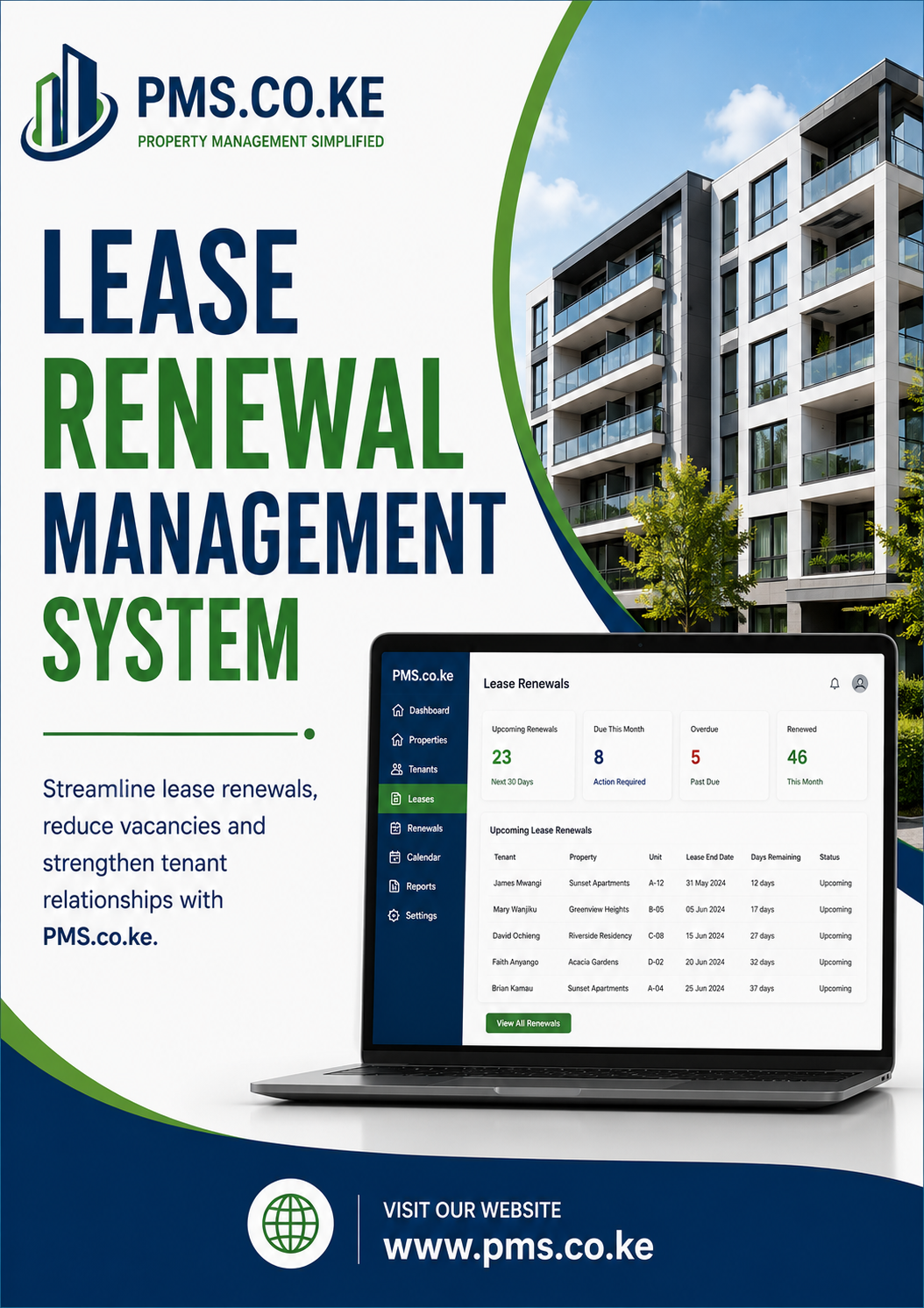
Lease Renewal Management System is an essential solution for modern property managers seeking to improve tenant retention, reduce vacancy rates, and streamline lease administration processes. In Kenya’s growing real estate sector, managing lease renewals efficiently has become increasingly important as property owners compete to maintain stable occupancy and maximize rental income.
Lease renewals are a critical stage in the tenant lifecycle. A poorly managed renewal process can result in unnecessary vacancies, revenue loss, increased turnover costs, and administrative inefficiencies. A Lease Renewal Management System helps property managers automate renewal workflows, monitor lease expiration dates, communicate with tenants proactively, and maintain accurate lease records.
As rental portfolios expand, manual renewal tracking becomes increasingly difficult. Property managers require technology that centralizes lease information, provides timely notifications, and ensures renewal opportunities are not missed. A Lease Renewal Management System delivers these capabilities while improving operational efficiency and tenant satisfaction.
Table of Contents
- Understanding Lease Renewal Management
- Importance of Effective Renewals
- Core Features of Modern Solutions
- Renewal Workflow Automation
- Tenant Communication and Retention
- Lease Data Management
- Challenges of Manual Renewal Tracking
Understanding Lease Renewal Management
Lease renewal management involves overseeing the process of extending existing lease agreements between property owners and tenants. This process includes monitoring lease expiration dates, initiating renewal discussions, updating lease terms, obtaining approvals, and maintaining accurate records.
A Lease Renewal Management System centralizes these activities and provides a structured approach to renewal administration. Instead of relying on spreadsheets, manual reminders, or paper records, property managers can automate much of the renewal process.
Effective renewal management helps organizations maintain occupancy stability while reducing the operational burden associated with lease administration. The system ensures that renewal opportunities are identified early and managed consistently across all properties.
Lease Renewal Management System solutions are particularly valuable for organizations managing multiple properties where hundreds of lease agreements may expire at different times throughout the year.
By providing visibility into upcoming renewals, managers can take proactive action that supports tenant retention and revenue stability.
Importance of Effective Renewals
Lease renewals directly influence occupancy rates, tenant retention, and rental income. A successful renewal strategy helps maintain stable occupancy while reducing the costs associated with tenant turnover.
A Lease Renewal Management System enables managers to engage tenants before lease expiration dates and begin renewal discussions early. This proactive approach minimizes uncertainty and improves the likelihood of successful renewals.
Benefits of effective renewal management include:
- Reduced vacancy rates
- Higher tenant retention
- Lower turnover costs
- Improved rental income stability
- Better forecasting accuracy
- Stronger tenant relationships
- Increased operational efficiency
Property managers who actively manage renewals are often able to maintain stronger occupancy performance than those relying on reactive processes.
Lease Renewal Management System technology supports these efforts by providing timely alerts and automated workflows that reduce the risk of missed renewal opportunities.
In competitive rental markets, retaining quality tenants can significantly improve overall property performance and long-term profitability.
Core Features of Modern Solutions
Modern Lease Renewal Management System platforms offer a range of features designed to simplify lease administration and improve renewal outcomes.
Renewal Tracking
The system monitors lease expiration dates and provides visibility into upcoming renewal opportunities.
Automated Notifications
Property managers receive alerts regarding leases approaching expiration, helping ensure timely action.
Renewal Workflows
A Lease Renewal Management System automates the steps required to complete renewal processes efficiently.
Tenant Communication Tools
Integrated communication capabilities support renewal discussions and tenant engagement.
Lease Document Management
The platform stores lease agreements and renewal documentation in a centralized location.
Reporting and Analytics
Managers can evaluate renewal performance and identify trends that impact tenant retention.
Multi-Property Support
Organizations managing multiple locations can oversee all renewal activities from a single system.
These capabilities help streamline operations while improving consistency and accuracy across renewal processes.
Renewal Workflow Automation
Automation is one of the most valuable aspects of a Lease Renewal Management System. Automated workflows reduce manual effort while ensuring renewal tasks are completed on time.
The renewal process often involves several steps:
- Identifying expiring leases
- Reviewing tenant history
- Preparing renewal offers
- Communicating with tenants
- Updating lease documents
- Obtaining approvals
- Recording renewal outcomes
Without automation, these activities can become time-consuming and prone to errors.
A Lease Renewal Management System automatically triggers reminders and workflow actions based on lease expiration schedules. Managers can monitor progress and ensure each renewal follows established procedures.
Workflow automation also improves consistency. Every lease renewal is handled according to the same standards, reducing the likelihood of missed deadlines or incomplete documentation.
As portfolios grow, automation becomes increasingly important for maintaining operational efficiency and service quality.
Tenant Communication and Retention
Successful lease renewals depend heavily on effective communication. Tenants who receive timely and professional communication are often more likely to renew their leases.
A Lease Renewal Management System supports tenant engagement by providing tools for scheduling renewal discussions, sending notifications, and maintaining communication records.
Proactive communication helps managers:
- Address tenant concerns
- Discuss renewal options
- Explain lease updates
- Encourage renewals
- Improve tenant satisfaction
Strong communication also contributes to better tenant relationships. When tenants feel valued and informed, they are more likely to remain with the property.
Lease Renewal Management System platforms help ensure communication occurs consistently and at the appropriate time during the renewal cycle.
Improved tenant retention reduces turnover costs and supports long-term occupancy stability.
Lease Data Management
Accurate lease information is essential for effective renewal management. A Lease Renewal Management System centralizes lease records and ensures data remains accessible and up to date.
Managers can store and manage:
- Lease agreements
- Renewal terms
- Expiration dates
- Tenant information
- Rent adjustments
- Communication history
- Approval records
Centralized data management reduces duplication and improves record accuracy. Property managers can quickly access information required for renewal discussions and decision-making.
A Lease Renewal Management System also supports compliance by maintaining complete documentation and audit trails.
For organizations managing large portfolios, centralized lease data improves visibility and operational control while reducing administrative workload.
Reliable information is the foundation of effective lease administration and successful renewals.
Challenges of Manual Renewal Tracking
Many organizations still rely on spreadsheets, calendars, and manual reminders to manage lease renewals. While these methods may work for small portfolios, they become increasingly difficult as operations expand.
Common challenges include:
Missed Renewal Opportunities
Manual processes increase the risk of overlooking lease expiration dates.
Administrative Burden
Tracking renewals manually requires significant time and effort.
Inconsistent Processes
Different team members may handle renewals using different procedures.
Limited Visibility
Managers may struggle to obtain a complete view of renewal activity across multiple properties.
Data Inaccuracies
Manual data entry increases the likelihood of errors.
Poor Tenant Experience
Delayed communication can negatively impact tenant satisfaction and retention.
A Lease Renewal Management System addresses these challenges by automating workflows, centralizing information, and providing real-time visibility into renewal activities.
Organizations that adopt modern renewal management solutions often experience higher renewal rates, improved efficiency, and stronger portfolio performance.
Benefits of Lease Renewal Management System for Property Managers
Property managers are responsible for maintaining occupancy levels, reducing vacancies, and ensuring lease administration processes run smoothly. A Lease Renewal Management System provides the tools necessary to manage renewals efficiently while improving operational performance.
One of the most significant benefits is proactive renewal management. Instead of waiting until leases are about to expire, property managers can identify upcoming renewals well in advance and begin tenant engagement activities early.
A Lease Renewal Management System also reduces administrative workload through automation. Renewal reminders, task assignments, document tracking, and approval workflows can be managed automatically, allowing property teams to focus on strategic activities.
Another advantage is improved visibility. Managers can monitor renewal status across multiple properties from a centralized platform, ensuring no renewal opportunities are overlooked.
The reporting capabilities provided by a Lease Renewal Management System help managers evaluate renewal performance, identify trends, and improve tenant retention strategies.
As property portfolios expand, standardized renewal processes become increasingly important. The system ensures consistency while reducing errors and improving efficiency across the organization.
Benefits of Lease Renewal Management System for Property Owners
Property owners depend on stable occupancy and predictable rental income to achieve financial goals. A Lease Renewal Management System helps support these objectives by improving tenant retention and reducing vacancy-related losses.
One major benefit is increased occupancy stability. By encouraging lease renewals before expiration dates, property owners can reduce turnover and maintain consistent cash flow.
A Lease Renewal Management System also provides greater visibility into lease activity. Owners can monitor renewal rates, occupancy trends, and tenant retention performance through comprehensive reporting tools.
Improved forecasting is another important advantage. Knowing which leases are likely to renew allows owners to estimate future rental income more accurately and plan investments with confidence.
The system also contributes to stronger asset performance by reducing the costs associated with tenant turnover, marketing vacant units, and onboarding new tenants.
For owners managing multiple properties, a Lease Renewal Management System offers centralized oversight that simplifies portfolio management and improves operational transparency.
Increasing Tenant Retention Through Structured Renewal Processes
Tenant retention is one of the most effective ways to improve property performance. Retaining existing tenants often costs significantly less than acquiring new ones.
A Lease Renewal Management System helps organizations create structured renewal processes that encourage tenants to remain in their properties.
Managers can use the system to:
- Initiate renewal discussions early
- Track tenant responses
- Provide renewal options
- Monitor retention performance
- Maintain communication records
- Manage lease updates efficiently
Early engagement helps property managers address tenant concerns before they become reasons for moving out. This proactive approach often leads to higher renewal rates and improved tenant satisfaction.
A Lease Renewal Management System ensures every tenant receives consistent attention throughout the renewal cycle, reducing the likelihood of missed opportunities.
Higher retention rates contribute to stronger occupancy performance, reduced turnover costs, and improved long-term profitability.
Improving Operational Efficiency with Automation
Automation is transforming property management operations, and lease administration is no exception. A Lease Renewal Management System automates repetitive tasks that would otherwise require significant manual effort.
Automated workflows can manage:
- Renewal reminders
- Expiration notifications
- Task assignments
- Approval processes
- Document updates
- Status tracking
- Reporting generation
These capabilities reduce administrative burdens while improving process consistency.
A Lease Renewal Management System also minimizes the risk of human error. Automated alerts ensure managers receive timely notifications regarding upcoming lease expirations and renewal deadlines.
For organizations managing hundreds or thousands of leases, automation provides substantial efficiency gains while supporting scalable growth.
Operational improvements achieved through automation often translate into better tenant experiences and stronger overall property performance.
Why RentalDesk Is the Ideal Solution
RentalDesk provides a powerful Lease Renewal Management System designed to help property managers streamline renewals, improve tenant retention, and maximize occupancy levels.
The platform centralizes lease information, renewal schedules, tenant records, and communication history within a single system. Property managers gain complete visibility into upcoming renewals and can manage the entire renewal process efficiently.
RentalDesk helps organizations:
- Track lease expiration dates
- Automate renewal reminders
- Manage tenant communications
- Store lease documentation
- Monitor renewal performance
- Improve occupancy stability
- Reduce vacancy risks
- Support multi-property operations
By integrating lease renewal workflows with tenant management, occupancy tracking, and financial administration, RentalDesk creates a unified property management environment.
Whether managing residential apartments, commercial offices, mixed-use developments, or large rental portfolios, RentalDesk provides the tools necessary to improve renewal outcomes and support long-term growth.
Future Trends in Lease Renewal Management System Technology
The future of Lease Renewal Management System technology will be driven by automation, artificial intelligence, predictive analytics, and cloud-based property management platforms.
Artificial intelligence will help property managers identify tenants most likely to renew and recommend strategies that improve retention rates. Predictive analytics will provide deeper insights into renewal behavior and occupancy trends.
Cloud-based Lease Renewal Management System platforms will continue to gain adoption because they offer real-time accessibility, improved collaboration, and scalable infrastructure.
Automation capabilities will become increasingly sophisticated, allowing renewal workflows to be completed with minimal manual intervention.
Future systems may also integrate with tenant experience platforms, enabling property managers to use satisfaction data when developing renewal strategies.
As competition within the rental sector increases, organizations that adopt advanced Lease Renewal Management System solutions will be better positioned to maintain occupancy, improve tenant retention, and maximize portfolio performance.
Getting Started with Lease Renewal Management System
Implementing a Lease Renewal Management System begins with evaluating existing renewal processes and identifying areas where automation can improve efficiency.
Organizations should prioritize solutions that offer:
- Automated renewal tracking
- Centralized lease management
- Tenant communication tools
- Reporting and analytics
- Multi-property support
- Scalable infrastructure
- Workflow automation
- Occupancy visibility
Successful implementation involves accurate lease data migration, staff training, and the establishment of standardized renewal procedures.
As property portfolios grow, a Lease Renewal Management System becomes increasingly valuable for maintaining operational control and ensuring renewal opportunities are managed effectively.
Organizations that invest in modern renewal management solutions can improve retention rates, reduce vacancies, increase efficiency, and strengthen long-term financial performance.
