
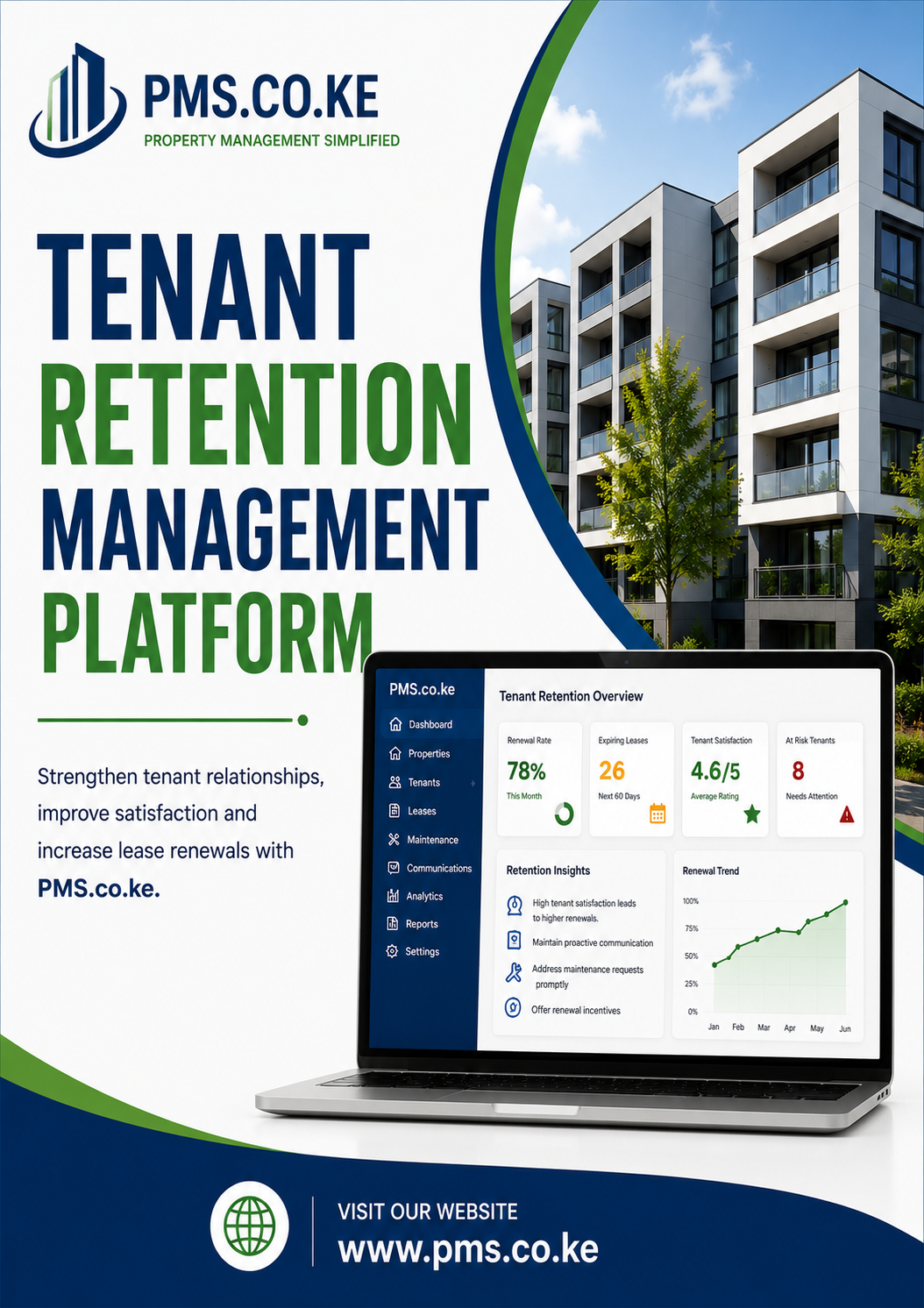
Tenant Retention Management Platform is becoming an essential solution for property managers, landlords, and real estate investors seeking to maintain high occupancy rates and build long-term tenant relationships. In Kenya’s increasingly competitive rental market, retaining quality tenants is often more cost-effective than continuously acquiring new ones.
Tenant turnover can create significant challenges, including vacancy losses, marketing expenses, maintenance costs, administrative workload, and reduced profitability. A Tenant Retention Management Platform helps organizations address these challenges by providing tools that improve tenant engagement, streamline communication, monitor satisfaction levels, and support proactive retention strategies.
As rental portfolios continue to expand, manual tenant retention efforts become difficult to manage effectively. Property managers require technology that centralizes tenant information, tracks tenant interactions, identifies retention risks, and helps maintain positive tenant experiences. A Tenant Retention Management Platform provides these capabilities while supporting operational efficiency and portfolio growth.
Table of Contents
- Understanding Tenant Retention
- Why Tenant Retention Matters
- Core Features of Modern Platforms
- Tenant Communication Strategies
- Measuring Tenant Satisfaction
- Retention Analytics and Reporting
- Challenges of Traditional Retention Methods
Understanding Tenant Retention
Tenant retention refers to the ability of property managers and landlords to keep tenants for longer periods by providing positive rental experiences and addressing tenant needs effectively.
A Tenant Retention Management Platform helps organizations manage retention activities through a structured and data-driven approach. Rather than relying on occasional communication or reactive problem-solving, property managers can develop consistent strategies that strengthen tenant relationships.
Retention management involves several important activities, including tenant communication, issue resolution, lease renewal planning, service quality monitoring, and satisfaction measurement. A Tenant Retention Management Platform brings these functions together within a centralized system.
For organizations managing multiple properties, maintaining consistent retention practices can be challenging. The platform provides standardized processes that help ensure every tenant receives the same level of service and attention.
Effective tenant retention contributes to stable occupancy rates, predictable revenue streams, and stronger portfolio performance over time.
Why Tenant Retention Matters
Tenant retention has a direct impact on property profitability. Every tenant who renews a lease helps reduce turnover costs and vacancy-related revenue losses.
A Tenant Retention Management Platform enables property managers to focus on long-term tenant relationships instead of constantly replacing departing tenants. This proactive approach often leads to improved occupancy stability and stronger financial performance.
Benefits of strong tenant retention include:
- Reduced vacancy periods
- Lower tenant acquisition costs
- Improved rental income stability
- Higher occupancy rates
- Better tenant relationships
- Reduced administrative workload
- Increased property value
Retaining existing tenants is often significantly less expensive than marketing, screening, and onboarding new occupants. For this reason, tenant retention has become a major performance indicator within modern property management.
A Tenant Retention Management Platform helps managers identify opportunities to improve tenant experiences and encourage lease renewals before turnover occurs.
As competition within the rental market grows, tenant retention strategies become increasingly important for long-term success.
Core Features of Modern Platforms
Modern Tenant Retention Management Platform solutions provide a range of tools designed to improve tenant engagement and retention outcomes.
Tenant Communication Management
The platform centralizes tenant communications and helps property managers maintain consistent engagement.
Satisfaction Monitoring
Managers can track tenant feedback and identify areas where service improvements may be needed.
Lease Renewal Tracking
A Tenant Retention Management Platform helps monitor upcoming lease expirations and renewal opportunities.
Issue Resolution Tracking
Maintenance requests and tenant concerns can be monitored to ensure timely responses.
Tenant Activity Records
The system maintains detailed records of tenant interactions and service history.
Automated Notifications
Property managers can schedule reminders and communication campaigns that support retention efforts.
Reporting and Analytics
Comprehensive reports provide insights into retention performance and tenant behavior trends.
These features allow organizations to manage tenant relationships proactively while improving operational efficiency.
Tenant Communication Strategies
Communication is one of the most important factors influencing tenant retention. Tenants who feel informed, valued, and supported are often more likely to remain with a property.
A Tenant Retention Management Platform provides tools that help property managers communicate effectively throughout the tenant lifecycle.
Communication activities may include:
- Welcome messages
- Service updates
- Maintenance notifications
- Lease renewal discussions
- Satisfaction surveys
- Community announcements
- Follow-up communications
Consistent communication helps build trust and strengthen tenant relationships. Property managers can address concerns quickly and demonstrate commitment to tenant satisfaction.
A Tenant Retention Management Platform also ensures communication records are maintained for future reference, supporting accountability and service quality.
Organizations that prioritize communication often achieve stronger retention rates and improved tenant experiences.
Measuring Tenant Satisfaction
Tenant satisfaction is a key indicator of retention potential. Satisfied tenants are generally more likely to renew leases and recommend properties to others.
A Tenant Retention Management Platform helps organizations measure satisfaction through surveys, feedback collection, service tracking, and performance monitoring.
Managers can evaluate factors such as:
- Maintenance response times
- Communication quality
- Property condition
- Community experience
- Service consistency
- Overall satisfaction levels
These insights help identify opportunities for improvement before dissatisfaction leads to tenant turnover.
A Tenant Retention Management Platform supports continuous monitoring of tenant experiences and enables property managers to address issues proactively.
Organizations that regularly measure tenant satisfaction can develop more effective retention strategies and strengthen long-term occupancy performance.
Retention Analytics and Reporting
Data-driven decision-making is becoming increasingly important in property management. A Tenant Retention Management Platform provides reporting and analytics tools that help organizations understand retention performance.
Common reports include:
- Retention rate reports
- Lease renewal reports
- Tenant turnover analysis
- Satisfaction trend reports
- Communication effectiveness reports
- Occupancy stability reports
- Service performance metrics
These reports provide valuable insights into the factors influencing tenant behavior and retention outcomes.
A Tenant Retention Management Platform allows managers to compare performance across properties, identify trends, and evaluate the effectiveness of retention initiatives.
Historical data also supports forecasting and strategic planning by helping organizations anticipate future retention challenges and opportunities.
Analytics-driven retention management helps improve decision-making while supporting stronger portfolio performance.
Challenges of Traditional Retention Methods
Many property managers rely on informal retention efforts that lack structure, consistency, and measurable outcomes.
Common challenges include:
Limited Visibility
Managers may struggle to identify tenants at risk of leaving.
Inconsistent Communication
Without centralized systems, communication quality may vary significantly.
Delayed Responses
Tenant concerns may not be addressed quickly enough to maintain satisfaction.
Poor Data Management
Retention-related information may be scattered across multiple systems.
Limited Reporting
Organizations may lack the insights needed to evaluate retention performance.
Scalability Issues
Manual retention efforts become difficult to maintain as portfolios expand.
A Tenant Retention Management Platform addresses these challenges by centralizing information, automating workflows, and providing actionable insights into tenant relationships.
Organizations that adopt modern retention solutions often experience higher lease renewal rates, improved tenant satisfaction, reduced vacancies, and stronger long-term financial performance.
Benefits of Tenant Retention Management Platform for Property Managers
Property managers are constantly working to maintain occupancy levels, improve tenant satisfaction, and maximize rental income. A Tenant Retention Management Platform provides the tools needed to achieve these objectives through structured tenant engagement and proactive retention strategies.
One of the most significant benefits is improved visibility into tenant relationships. Property managers can monitor tenant interactions, track satisfaction levels, and identify potential retention risks before they result in vacancies.
A Tenant Retention Management Platform also helps streamline communication. Centralized communication records ensure that tenant concerns, service requests, and follow-up actions are managed consistently across all properties.
Another major advantage is increased lease renewal rates. By proactively engaging tenants and addressing issues early, managers can create positive rental experiences that encourage long-term occupancy.
The platform also reduces administrative workload through automation. Notifications, surveys, renewal reminders, and tenant engagement campaigns can be scheduled and managed automatically.
As rental portfolios grow, a Tenant Retention Management Platform helps maintain service quality while supporting scalable property management operations.
Benefits of Tenant Retention Management Platform for Property Owners
Property owners benefit significantly when tenants remain in their properties for extended periods. A Tenant Retention Management Platform helps support stable occupancy, predictable income, and stronger portfolio performance.
One of the primary benefits is reduced turnover costs. When tenants renew leases, property owners avoid expenses associated with marketing, tenant screening, property preparation, and onboarding new occupants.
A Tenant Retention Management Platform also improves revenue stability. Consistent occupancy helps maintain reliable cash flow and reduces the financial impact of vacancies.
Owners gain access to detailed retention analytics that provide insights into tenant behavior, renewal trends, and occupancy performance. These reports support informed investment and operational decisions.
The platform further contributes to stronger asset performance by helping property managers create positive tenant experiences that encourage long-term tenancy.
For owners managing multiple properties, centralized retention management improves visibility and simplifies portfolio oversight.
Building Long-Term Tenant Relationships
Successful tenant retention depends on strong relationships between property managers and tenants. A Tenant Retention Management Platform helps organizations establish consistent engagement practices that strengthen trust and satisfaction.
Long-term tenant relationships are built through:
- Timely communication
- Responsive service
- Transparent policies
- Effective issue resolution
- Personalized tenant engagement
- Consistent property management practices
A Tenant Retention Management Platform enables managers to maintain detailed records of tenant interactions, making it easier to provide personalized service.
When tenants feel valued and supported, they are more likely to remain in the property and renew their leases. This contributes to improved occupancy rates and stronger financial performance.
The platform also helps ensure every tenant receives a consistent experience regardless of property size or management structure.
Strong tenant relationships remain one of the most effective strategies for reducing turnover and improving retention outcomes.
Reducing Vacancy Rates Through Proactive Retention
Vacancies can significantly impact rental income and portfolio performance. A Tenant Retention Management Platform helps reduce vacancy rates by identifying retention opportunities before tenants decide to move out.
Managers can monitor satisfaction indicators, lease expiration schedules, and service history to determine which tenants may require additional engagement.
A Tenant Retention Management Platform supports proactive actions such as:
- Early lease renewal discussions
- Tenant satisfaction surveys
- Service improvement initiatives
- Retention-focused communication campaigns
- Personalized renewal offers
- Tenant appreciation programs
By addressing concerns before they become major issues, property managers can improve tenant satisfaction and increase renewal rates.
Reduced vacancy periods lead to more stable revenue streams and improved operational efficiency across the portfolio.
Organizations that prioritize proactive retention strategies often experience stronger occupancy performance and lower turnover costs.
Why RentalDesk Is the Ideal Solution
RentalDesk provides a comprehensive Tenant Retention Management Platform designed to help property managers improve tenant satisfaction, increase lease renewals, and strengthen occupancy performance.
The platform centralizes tenant information, communication history, lease records, and satisfaction data within a single system. This allows property managers to manage tenant relationships more effectively and respond quickly to emerging issues.
RentalDesk helps organizations:
- Monitor tenant satisfaction
- Track lease renewals
- Manage tenant communications
- Improve retention performance
- Reduce vacancies
- Enhance occupancy stability
- Generate retention reports
- Support multi-property management
By integrating tenant retention with lease administration, occupancy tracking, maintenance management, and financial reporting, RentalDesk provides a unified property management experience.
Whether managing residential apartments, commercial properties, student housing, or mixed-use developments, RentalDesk delivers the tools needed to build stronger tenant relationships and improve portfolio performance.
Future Trends in Tenant Retention Management Platform Technology
The future of Tenant Retention Management Platform technology will be shaped by artificial intelligence, predictive analytics, automation, and enhanced tenant experience solutions.
Artificial intelligence will help property managers identify tenants at risk of leaving and recommend personalized retention strategies. Predictive analytics will provide deeper insights into tenant behavior and renewal likelihood.
Cloud-based Tenant Retention Management Platform solutions will continue to grow in popularity because they offer real-time accessibility, scalability, and improved collaboration across property management teams.
Automation will further streamline tenant engagement by handling surveys, communication campaigns, renewal reminders, and satisfaction monitoring with minimal manual intervention.
Future platforms may also integrate with smart building technologies and tenant experience applications, creating more connected and responsive rental environments.
Organizations that adopt advanced Tenant Retention Management Platform solutions will be better positioned to improve retention rates, reduce vacancies, and maintain a competitive advantage in the rental market.
Getting Started with Tenant Retention Management Platform
Implementing a Tenant Retention Management Platform begins with evaluating current retention practices and identifying opportunities for improvement.
Property managers should prioritize solutions that provide:
- Tenant satisfaction monitoring
- Lease renewal tracking
- Automated communication tools
- Retention analytics
- Occupancy reporting
- Multi-property support
- Workflow automation
- Centralized tenant records
Successful implementation requires accurate tenant data, clearly defined retention objectives, and ongoing performance evaluation.
As rental portfolios grow, a Tenant Retention Management Platform becomes increasingly important for maintaining tenant satisfaction and operational efficiency.
Organizations that invest in modern retention technology can improve occupancy rates, strengthen tenant relationships, reduce turnover costs, and support long-term portfolio growth.
