
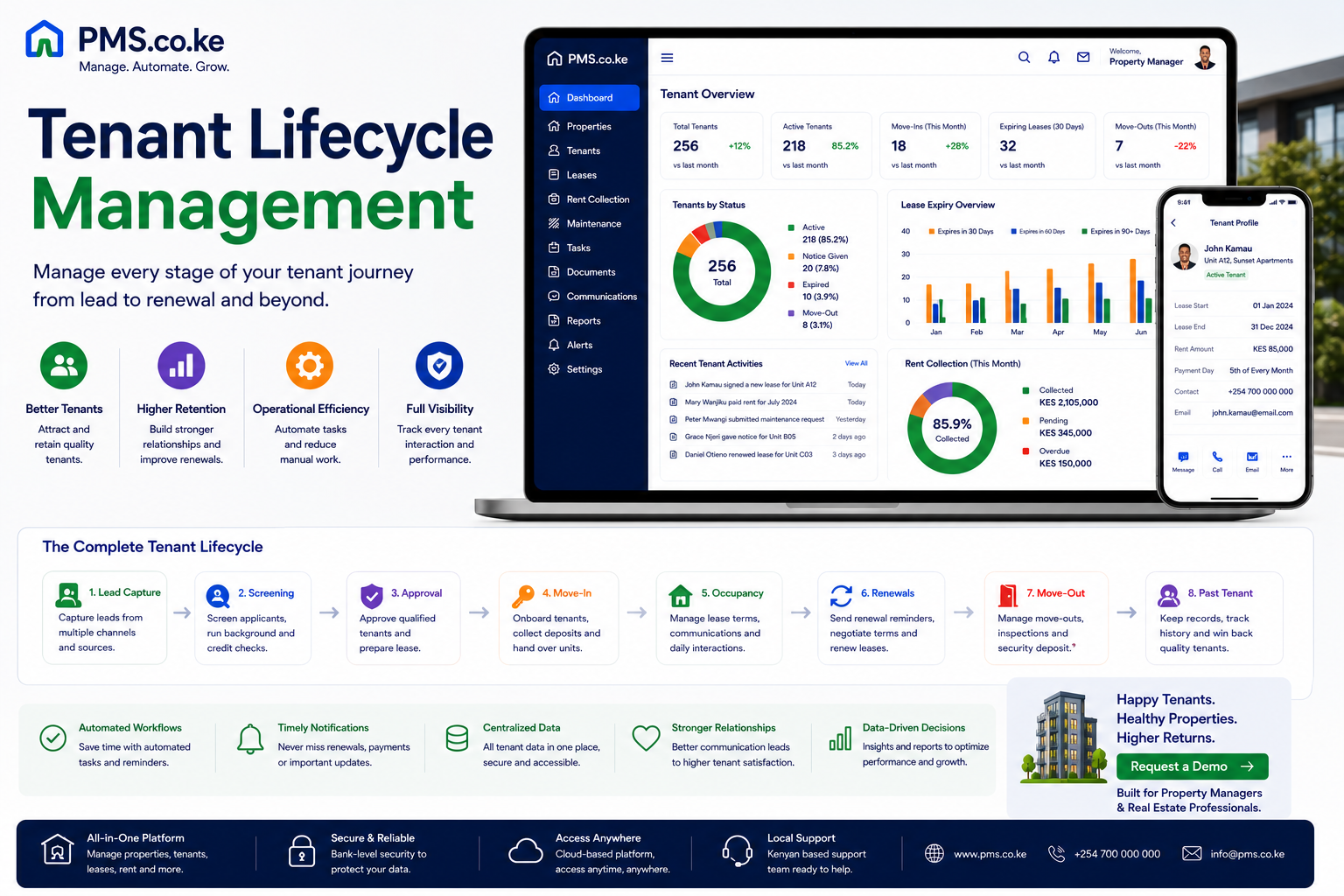
Tenant Lifecycle Management is a critical component of modern property management that focuses on managing every stage of the tenant journey, from initial inquiry and onboarding to lease renewal and move-out. Property managers and landlords who effectively implement Tenant Lifecycle Management can improve tenant satisfaction, increase retention rates, reduce vacancies, and strengthen long-term portfolio performance.
In today’s competitive rental market, tenant expectations continue to evolve. Residents expect professional communication, efficient service delivery, transparent processes, and responsive support throughout their tenancy. Tenant Lifecycle Management helps property organizations meet these expectations through structured processes and centralized management systems.
Managing tenants effectively involves far more than collecting rent. Property managers must coordinate onboarding, maintain accurate records, manage communication, address maintenance requests, monitor lease agreements, support renewals, and handle move-outs efficiently. Tenant Lifecycle Management provides the framework needed to oversee these activities consistently while enhancing both operational efficiency and tenant experience.
For property owners and managers in Kenya, investing in Tenant Lifecycle Management can lead to stronger occupancy rates, improved revenue stability, and more sustainable business growth.
Table of Contents
- Understanding the Tenant Journey
- Why Tenant Experience Matters
- Core Components of Effective Tenant Management
- Tenant Onboarding and Move-In Processes
- Communication and Engagement Strategies
- Lease Administration and Occupancy Monitoring
- Maintenance and Service Management
Understanding the Tenant Journey
Every tenant interaction contributes to the overall rental experience. From the moment a prospective tenant expresses interest in a property until they eventually move out, multiple touchpoints influence satisfaction and retention. Tenant Lifecycle Management ensures these touchpoints are managed consistently and professionally.
The tenant journey typically includes inquiry, application, screening, onboarding, occupancy, lease management, renewal discussions, and move-out activities. Each stage presents opportunities to strengthen relationships and improve operational outcomes.
Without structured processes, tenant interactions can become inconsistent and difficult to manage. Important communications may be missed, maintenance requests delayed, and lease opportunities overlooked. Tenant Lifecycle Management provides a systematic approach that improves organization and accountability throughout the tenant lifecycle.
Property managers who understand the tenant journey can identify areas for improvement and implement strategies that enhance satisfaction. Better experiences often result in higher retention rates, lower turnover costs, and stronger community engagement.
As residential and commercial rental markets become increasingly competitive, organizations that prioritize Tenant Lifecycle Management gain meaningful advantages in tenant retention and operational performance.
Why Tenant Experience Matters
Tenant experience has become one of the most important drivers of property performance. Satisfied tenants are more likely to renew leases, recommend properties to others, and maintain positive relationships with management teams.
Tenant Lifecycle Management focuses on delivering consistent experiences throughout the entire tenancy period. This includes prompt communication, efficient service delivery, transparent policies, and proactive support.
Poor tenant experiences often lead to higher turnover rates, increased vacancies, and additional leasing costs. Every tenant departure creates operational disruptions and revenue risks. Effective Tenant Lifecycle Management helps reduce these challenges by strengthening tenant engagement and satisfaction.
Positive experiences also contribute to stronger property reputations. In today’s digital environment, tenant feedback and online reviews can significantly influence leasing performance. Organizations that prioritize tenant satisfaction often achieve better occupancy outcomes and improved market positioning.
Property managers who invest in tenant-focused processes create environments where residents feel valued and supported. This approach benefits both tenants and property owners through improved retention and operational stability.
Core Components of Effective Tenant Management
Successful Tenant Lifecycle Management involves multiple interconnected processes that support tenants throughout their rental journey.
Tenant onboarding establishes the foundation for a positive relationship. Clear communication, efficient documentation, and structured move-in procedures help create positive first impressions.
Communication management ensures tenants receive important updates, reminders, announcements, and responses to inquiries in a timely manner. Consistent communication contributes to transparency and trust.
Lease administration supports compliance, occupancy stability, and efficient renewal management. Monitoring lease timelines helps property managers engage tenants proactively before contracts expire.
Maintenance coordination is another essential component. Timely responses to maintenance requests improve satisfaction while protecting property assets.
Tenant retention initiatives focus on identifying opportunities to strengthen relationships and encourage lease renewals. These efforts reduce turnover and improve long-term occupancy performance.
Tenant Lifecycle Management integrates all these components into a cohesive operational framework that supports both tenant satisfaction and business objectives.
Tenant Onboarding and Move-In Processes
First impressions play a crucial role in shaping tenant perceptions. A well-organized onboarding process establishes trust and creates a positive foundation for the entire tenancy.
Tenant Lifecycle Management begins with efficient application processing, tenant screening, lease preparation, and move-in coordination. Structured onboarding procedures help ensure that tenants understand expectations, policies, and available services.
Accurate documentation is particularly important during onboarding. Property managers must maintain records related to lease agreements, identification documents, payment information, and inspection reports. Centralized systems help organize this information efficiently.
Move-in experiences influence long-term satisfaction. Clear communication regarding property access, maintenance procedures, community guidelines, and contact information helps tenants settle in quickly.
Tenant Lifecycle Management supports consistency across onboarding activities, ensuring that every new resident receives the same high-quality experience regardless of property size or portfolio complexity.
Strong onboarding processes contribute directly to tenant confidence, satisfaction, and retention.
Communication and Engagement Strategies
Communication is one of the most important elements of successful tenant relationships. Tenants expect timely responses, clear information, and consistent engagement throughout their occupancy period.
Tenant Lifecycle Management helps property managers establish structured communication practices that improve responsiveness and transparency. Communication channels may include email notifications, SMS alerts, tenant portals, and service updates.
Regular communication reduces misunderstandings and strengthens trust between tenants and management teams. It also ensures that residents remain informed about maintenance activities, policy updates, community announcements, and lease-related matters.
Engagement initiatives further enhance tenant experiences by creating opportunities for feedback and interaction. Understanding tenant concerns helps property managers identify areas for improvement and strengthen resident relationships.
Proactive communication becomes especially important during significant lifecycle events such as renewals, maintenance projects, and move-out planning. Effective Tenant Lifecycle Management ensures these interactions are handled professionally and consistently.
Organizations that prioritize communication often experience higher satisfaction levels and stronger tenant retention outcomes.
Lease Administration and Occupancy Monitoring
Lease management is a central component of Tenant Lifecycle Management. Accurate lease tracking supports occupancy stability, compliance, and financial performance.
Property managers must monitor lease start dates, expiration schedules, renewal opportunities, and contractual obligations carefully. Missing important lease events can result in unnecessary vacancies and operational challenges.
Tenant Lifecycle Management provides structured processes for lease administration and occupancy monitoring. Automated reminders help ensure renewal discussions begin early, increasing the likelihood of tenant retention.
Occupancy visibility enables property managers to identify trends, forecast vacancies, and coordinate leasing activities more effectively. Accurate occupancy information supports better planning and resource allocation.
By combining lease administration with occupancy monitoring, organizations can improve retention rates while maintaining stable revenue streams.
Maintenance and Service Management
Maintenance experiences significantly influence tenant satisfaction. Residents expect issues to be addressed promptly and professionally throughout their tenancy.
Tenant Lifecycle Management incorporates maintenance coordination as a key operational function. Service requests must be logged, assigned, tracked, and resolved efficiently to maintain high service standards.
Effective maintenance management improves tenant confidence while protecting property assets. When maintenance issues are resolved quickly, tenants are more likely to remain satisfied and renew leases.
Tracking maintenance histories also provides valuable operational insights. Property managers can identify recurring issues, evaluate service performance, and allocate resources more effectively.
Consistent maintenance delivery contributes directly to stronger tenant relationships and improved retention outcomes. As a result, maintenance management remains an essential component of comprehensive Tenant Lifecycle Management.
Benefits for Property Managers
Property managers are responsible for maintaining positive tenant relationships while ensuring operational efficiency and portfolio performance. Tenant Lifecycle Management provides the structure needed to manage these responsibilities effectively.
One of the primary benefits is improved organization. Property managers can monitor tenant activities, lease milestones, communication records, maintenance histories, and renewal opportunities from a centralized system. This visibility reduces administrative complexity and improves consistency.
Tenant Lifecycle Management also supports proactive management practices. Instead of reacting to issues after they arise, property managers can anticipate tenant needs, prepare for lease events, and address concerns before they escalate.
Communication becomes more efficient when interactions are documented and managed systematically. Property managers can respond faster, maintain accurate records, and improve service delivery across multiple properties.
Another major advantage is reduced tenant turnover. By improving onboarding, communication, maintenance coordination, and renewal management, property managers can strengthen tenant satisfaction and encourage longer tenancy periods.
As portfolios grow, Tenant Lifecycle Management helps maintain operational quality while supporting scalability and efficiency.
Benefits for Property Owners
Property owners benefit significantly from strong tenant relationships and stable occupancy levels. Tenant Lifecycle Management helps create the conditions necessary to achieve both objectives.
One key benefit is improved tenant retention. Retaining existing tenants is often more cost-effective than acquiring new ones. Reduced turnover lowers vacancy costs, leasing expenses, and operational disruptions.
Tenant Lifecycle Management also contributes to more predictable revenue generation. Longer tenancy periods support consistent occupancy levels and stronger cash flow stability.
Property owners gain greater transparency into tenant interactions, service performance, and occupancy trends. This visibility supports informed decision-making and improved portfolio oversight.
Satisfied tenants are more likely to care for rental units responsibly and maintain positive relationships with management teams. These outcomes contribute to better property conditions and lower operational costs.
By supporting stronger tenant engagement and retention, Tenant Lifecycle Management helps property owners maximize long-term investment performance.
Tenant Retention Strategies
Tenant retention is one of the most valuable outcomes of effective Tenant Lifecycle Management. Maintaining long-term tenant relationships reduces turnover costs while improving portfolio stability.
Successful retention strategies begin with understanding tenant expectations. Residents value responsive communication, efficient maintenance services, transparent policies, and professional management practices.
Regular engagement helps property managers identify concerns before they become reasons for relocation. Tenant feedback programs provide opportunities to improve service quality and strengthen relationships.
Lease renewal planning is another critical component. Tenant Lifecycle Management enables managers to initiate renewal discussions early, providing sufficient time to address concerns and negotiate agreements.
Maintenance responsiveness also influences retention significantly. Tenants are more likely to remain in properties where maintenance requests are handled efficiently and professionally.
By focusing on the complete tenant experience, organizations can improve retention rates and reduce vacancy-related costs.
Managing Tenant Transitions Effectively
Tenant move-outs and transitions require careful planning to minimize disruptions and maintain occupancy performance. Tenant Lifecycle Management ensures these processes are handled consistently and efficiently.
Move-out procedures involve inspections, documentation, communication, and coordination with maintenance teams. Structured processes help ensure that units are prepared quickly for new occupants.
Exit feedback can provide valuable insights into tenant experiences and identify opportunities for operational improvement. Understanding why tenants leave helps property managers refine retention strategies and enhance service quality.
Tenant Lifecycle Management also supports smooth transitions between occupants by coordinating move-out schedules, property preparation activities, and onboarding processes for incoming residents.
Efficient transition management reduces vacancy periods, improves operational consistency, and contributes to stronger portfolio performance.
Why RentalDesk Is the Ideal Solution
RentalDesk provides a comprehensive platform designed to support every stage of the tenant journey. From onboarding and occupancy management to lease renewals and move-outs, the system helps property managers deliver consistent, high-quality tenant experiences.
The platform combines tenant management, maintenance coordination, communication tools, lease administration, occupancy tracking, and financial reporting within a single integrated environment. This centralized approach simplifies operations while improving visibility across the tenant lifecycle.
RentalDesk enables property managers to monitor tenant interactions, automate reminders, manage service requests, and maintain accurate records throughout tenancy periods. These capabilities improve efficiency while strengthening tenant relationships.
As a powerful Tenant Lifecycle Management solution, RentalDesk helps organizations increase tenant satisfaction, improve retention rates, reduce vacancies, and support sustainable portfolio growth.
Whether managing apartments, residential communities, commercial properties, or mixed-use developments, RentalDesk provides the tools needed to optimize tenant experiences and operational performance.
Future of Tenant Lifecycle Management
Technology is rapidly transforming how property managers interact with tenants and manage rental operations. Future Tenant Lifecycle Management solutions will place even greater emphasis on automation, personalization, and data-driven decision-making.
Artificial intelligence and predictive analytics may help identify tenants at risk of non-renewal, allowing managers to implement targeted retention strategies proactively.
Automated communication workflows will continue improving responsiveness while reducing administrative workload. Tenants will increasingly expect seamless digital experiences throughout their tenancy.
Advanced reporting capabilities will provide deeper insights into tenant behavior, satisfaction levels, and retention trends. These insights will support more effective management strategies and stronger operational outcomes.
Mobile accessibility will also continue expanding, enabling tenants and property managers to interact more efficiently through digital platforms.
As tenant expectations evolve, Tenant Lifecycle Management will remain a critical strategy for organizations seeking long-term success in competitive rental markets.
Getting Started Today
Managing tenant relationships effectively requires more than basic recordkeeping and manual processes. Modern property management demands structured systems capable of supporting every stage of the tenant journey.
Implementing Tenant Lifecycle Management enables organizations to improve communication, strengthen retention, streamline operations, and enhance overall tenant satisfaction. The result is stronger occupancy performance, reduced turnover, and improved financial outcomes.
Property owners and managers who prioritize tenant experiences position themselves for sustainable growth and long-term success. By investing in the right processes and technology, they can build stronger communities while maximizing portfolio value.
Whether managing a small rental portfolio or a large property operation, Tenant Lifecycle Management provides the framework needed to create exceptional tenant experiences and achieve superior business results.
