
Property Occupancy Monitoring Software
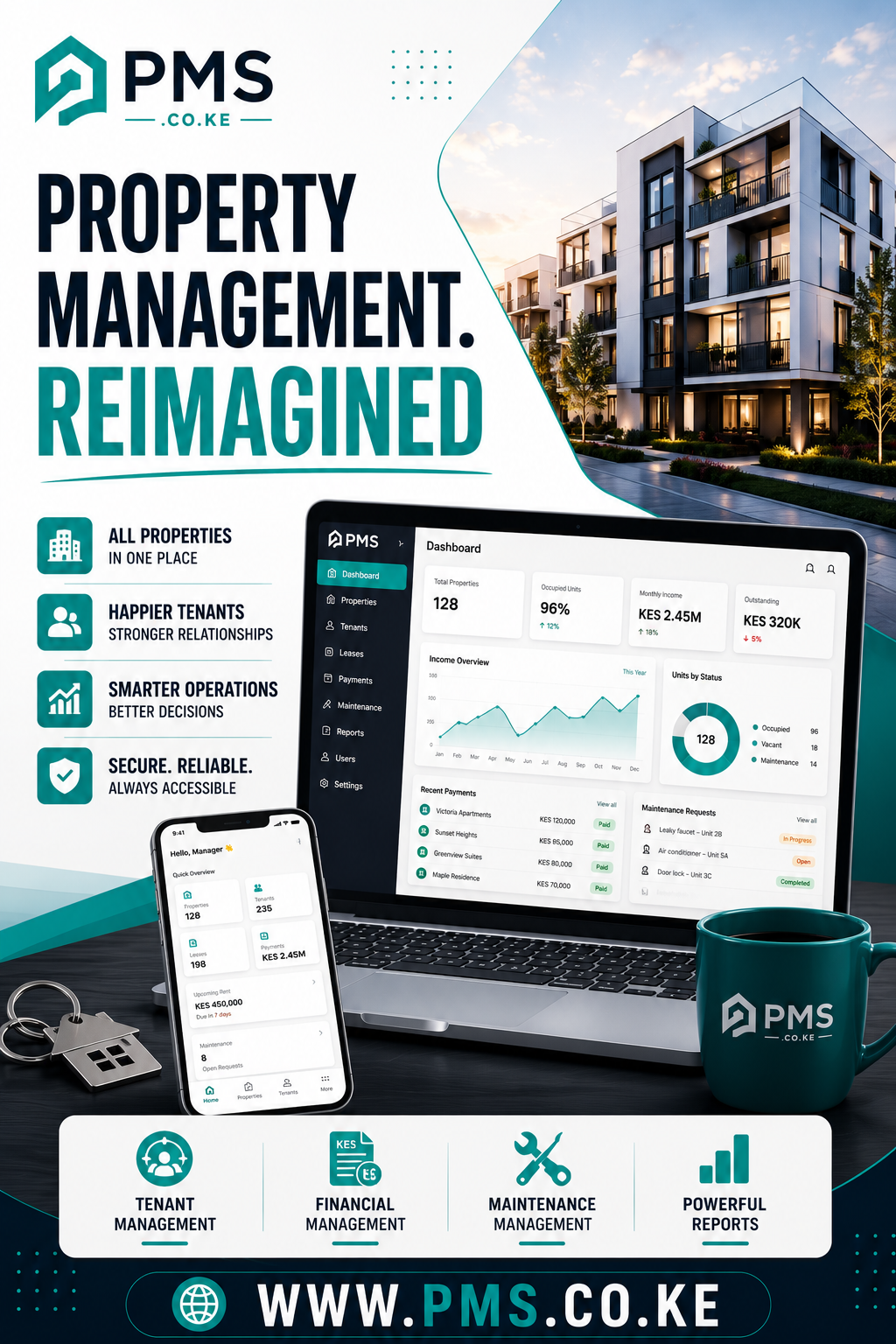
Managing property occupancy efficiently is one of the most important responsibilities for landlords, property managers, real estate companies, housing associations, and commercial property owners. As property portfolios continue to grow, manually tracking occupied and vacant units becomes increasingly difficult. Property Occupancy Monitoring Software provides a centralized digital solution that enables property managers to monitor occupancy levels in real time, improve leasing decisions, reduce vacancy periods, and maximize rental income.
Across Kenya, the real estate sector continues to expand with new residential apartments, gated communities, office buildings, mixed-use developments, student accommodation, and commercial properties. As competition increases, property owners need accurate occupancy information to maintain high occupancy rates while delivering better services to tenants. Relying on spreadsheets, paper records, or disconnected systems often leads to inaccurate reports, delayed decision-making, and missed leasing opportunities.
A modern Property Occupancy Monitoring Software platform gives property managers complete visibility into every unit within their portfolio. Managers can instantly determine which units are occupied, vacant, reserved, under maintenance, or approaching lease expiry. This real-time information supports faster decision-making, better resource allocation, and more effective property management.
Beyond occupancy tracking, the software integrates with tenant records, lease agreements, maintenance requests, financial reporting, inspections, and communication tools to create a complete property management ecosystem. Instead of switching between multiple systems, property managers can oversee all occupancy-related activities from one centralized dashboard.
Whether managing a single apartment building in Nairobi, multiple residential estates in Kiambu, commercial offices in Mombasa, or mixed-use developments across Kenya, Property Occupancy Monitoring Software helps organizations improve operational efficiency, increase occupancy rates, and provide better experiences for both tenants and property owners.
Table of Contents
Understanding Property Occupancy Management
Why Occupancy Monitoring Matters
Key Features of Occupancy Management Platforms
Real-Time Occupancy Tracking
Lease Monitoring and Vacancy Planning
Maintenance and Unit Availability
Occupancy Reporting and Analytics
Improving Tenant Satisfaction
Applications Across Different Property Types
Understanding Property Occupancy Management
Effective occupancy management involves much more than simply knowing whether a property is occupied or vacant. Property managers must track tenant information, lease agreements, move-in and move-out dates, maintenance activities, inspections, rent collection, and unit availability. Property Occupancy Monitoring Software brings all of these activities together into one centralized platform, making it easier to manage properties of any size.
With accurate occupancy data available in real time, managers can quickly identify vacant units, monitor upcoming lease expirations, coordinate maintenance work, and prepare units for new tenants. Instead of relying on manual records that may quickly become outdated, the software provides a live overview of the entire property portfolio.
This centralized approach improves operational efficiency while reducing errors that commonly occur when occupancy information is managed manually.
Why Occupancy Monitoring Matters
Vacant units directly affect rental income, making occupancy one of the most important performance indicators in property management. Without accurate monitoring, property managers may overlook available units, delay marketing efforts, or fail to renew leases on time. Property Occupancy Monitoring Software helps eliminate these risks by providing complete visibility into occupancy trends and unit availability.
Effective occupancy monitoring enables property managers to:
Reduce vacancy periods
Improve leasing decisions
Maximize rental income
Monitor lease expirations
Plan maintenance efficiently
Improve tenant retention
Support financial forecasting
Enhance portfolio performance
For property owners across Kenya, maintaining high occupancy rates contributes directly to long-term profitability and investment success.
Key Features of Occupancy Management Platforms
A modern Property Occupancy Monitoring Software solution includes a wide range of tools designed to simplify occupancy management while improving operational efficiency.
Typical features include:
Real-time occupancy tracking
Unit availability management
Tenant records
Lease management
Vacancy monitoring
Move-in and move-out tracking
Inspection scheduling
Maintenance coordination
Occupancy dashboards
Financial reporting
Property analytics
Automated notifications
Document management
Role-based user access
Mobile accessibility
These integrated capabilities provide property managers with a complete overview of occupancy across their entire portfolio.
Real-Time Occupancy Tracking
One of the biggest advantages of Property Occupancy Monitoring Software is the ability to monitor occupancy status instantly. Managers no longer need to search through spreadsheets or physical files to determine whether a unit is occupied.
The system can display units as:
Occupied
Vacant
Reserved
Under Maintenance
Pending Move-In
Pending Move-Out
Under Inspection
Temporarily Unavailable
Real-time visibility helps leasing teams respond quickly to enquiries while ensuring available units are marketed without unnecessary delays.
For large residential estates and commercial developments, centralized occupancy tracking significantly improves operational efficiency.
Lease Monitoring and Vacancy Planning
Lease management plays an important role in maintaining healthy occupancy rates. Property Occupancy Monitoring Software automatically tracks lease durations and alerts managers before agreements expire.
This allows property managers to:
Begin renewal discussions early
Prepare vacant units
Schedule inspections
Coordinate maintenance
Market available units
Minimize vacancy periods
Proactive lease monitoring helps maintain consistent occupancy while reducing lost rental income.
Maintenance and Unit Availability
Maintenance activities directly influence occupancy. A vacant unit undergoing repairs cannot generate rental income until work is completed. Property Occupancy Monitoring Software improves coordination between maintenance teams and property managers, ensuring units become available as quickly as possible.
Managers can monitor:
Maintenance requests
Inspection results
Repair progress
Contractor assignments
Unit readiness
Expected completion dates
Better coordination shortens turnaround times and allows vacant units to return to the rental market faster.
Occupancy Reporting and Analytics
Accurate reporting helps property owners understand portfolio performance and make informed business decisions. Property Occupancy Monitoring Software generates detailed reports that highlight occupancy trends, vacancy rates, leasing performance, and property utilization.
Common reports include:
Occupancy rates
Vacancy reports
Lease expiry schedules
Tenant turnover
Unit utilization
Portfolio performance
Maintenance turnaround
Rental income analysis
Occupancy trends
Property performance comparisons
These insights help organizations identify opportunities to improve occupancy while supporting long-term investment planning.
Improving Tenant Satisfaction
High occupancy rates are closely linked to tenant satisfaction. Happy tenants are more likely to renew leases, reducing turnover and vacancy costs. Property Occupancy Monitoring Software supports better tenant experiences by improving communication, reducing maintenance delays, and ensuring smoother move-in and move-out processes.
Benefits for tenants include:
Faster maintenance responses
Better communication
Streamlined leasing
Efficient inspections
Improved service delivery
Transparent occupancy processes
Satisfied tenants contribute to stronger occupancy rates and long-term property success.
Applications Across Different Property Types
Property Occupancy Monitoring Software supports a wide variety of property portfolios throughout Kenya.
Residential apartment owners use occupancy monitoring to track tenant occupancy, lease renewals, and vacant units.
Commercial property managers oversee office occupancy, retail space utilization, and tenant lease management.
Student accommodation providers monitor room availability, academic leasing cycles, and occupancy rates throughout the year.
Mixed-use developments manage residential, retail, and office occupancy from one centralized platform.
Hospitality organizations overseeing serviced apartments and long-term accommodation can also benefit from accurate occupancy monitoring and reporting.
Real estate investment companies use occupancy analytics to evaluate portfolio performance, improve leasing strategies, and maximize investment returns.
For organizations seeking a comprehensive property management solution, PMS naturally combines occupancy monitoring, tenant management, lease administration, maintenance management, financial reporting, inspections, communication tools, and portfolio analytics into one integrated platform. This enables property owners and managers to streamline daily operations while maintaining high occupancy levels and delivering exceptional tenant experiences.
Benefits of Property Occupancy Monitoring Software for Different Stakeholders
A modern Property Occupancy Monitoring Software platform delivers measurable value to everyone involved in property management. From landlords and property owners to tenants, maintenance teams, and financial managers, accurate occupancy information improves decision-making and simplifies day-to-day operations.
Instead of relying on manual records that can quickly become outdated, stakeholders gain access to real-time information that supports efficient property management and better tenant experiences.
Property Owners
Property owners need clear visibility into how their investments are performing. Property Occupancy Monitoring Software provides comprehensive dashboards that display occupancy rates, vacant units, lease expirations, rental performance, and overall portfolio health.
Key benefits include:
- Improved occupancy rates
- Higher rental income
- Reduced vacancy periods
- Better investment planning
- Increased portfolio visibility
- Faster leasing decisions
- Better financial forecasting
- Stronger return on investment
Having accurate occupancy data allows owners to make informed strategic decisions while maximizing the value of their property portfolio.
Property Managers
Managing multiple properties manually can become overwhelming as portfolios grow. Property Occupancy Monitoring Software enables managers to oversee occupancy across all properties from a centralized dashboard.
Managers can:
- Monitor occupied and vacant units
- Track lease expirations
- Coordinate tenant move-ins and move-outs
- Schedule inspections
- Monitor maintenance progress
- Generate occupancy reports
- Improve communication
- Reduce administrative workload
This centralized approach allows property managers to focus on delivering excellent service rather than spending time updating spreadsheets.
Leasing Teams
Leasing teams play a critical role in maintaining high occupancy rates. Property Occupancy Monitoring Software gives them immediate access to current unit availability and upcoming vacancies.
Leasing teams can:
- Identify available units quickly
- Monitor upcoming lease expirations
- Schedule property viewings
- Track tenant applications
- Prepare lease agreements
- Reduce vacancy periods
- Improve leasing efficiency
- Increase occupancy levels
Accurate occupancy information helps leasing teams respond to prospective tenants faster and close agreements more efficiently.
Maintenance Teams
Maintenance teams rely on timely information to prepare units for new occupants. Property Occupancy Monitoring Software improves coordination between maintenance and property management by ensuring work is scheduled immediately after tenants move out.
Benefits include:
- Faster repair scheduling
- Improved work prioritization
- Better contractor coordination
- Reduced turnaround times
- Improved communication
- Faster unit readiness
Well-coordinated maintenance ensures properties return to the rental market as quickly as possible.
Tenants
Although tenants may never interact directly with the software, they benefit from improved operational efficiency.
Advantages include:
- Faster move-in processes
- Better communication
- Quicker maintenance responses
- Accurate lease information
- Improved service delivery
- Better overall rental experience
Satisfied tenants are more likely to renew leases, helping property owners maintain consistently high occupancy rates.
Improving Efficiency Through Automation
Automation is transforming modern property management. Property Occupancy Monitoring Software automates repetitive administrative tasks that traditionally consume valuable staff time.
Instead of relying on manual processes, property managers can streamline occupancy management while reducing human error.
Automated Occupancy Updates
Whenever a tenant moves in or out, the software automatically updates occupancy status throughout the system.
Statuses may include:
- Occupied
- Vacant
- Reserved
- Under Maintenance
- Pending Inspection
- Ready for Leasing
This ensures occupancy information always remains current.
Automated Lease Monitoring
Lease tracking becomes significantly easier with Property Occupancy Monitoring Software.
The platform automatically monitors:
- Lease start dates
- Lease expiry dates
- Renewal deadlines
- Notice periods
- Vacating schedules
Automated reminders help property managers begin renewal discussions early, reducing unnecessary vacancies.
Automated Notifications
The software can automatically notify staff about important occupancy events.
Examples include:
- Upcoming lease expirations
- Scheduled inspections
- Move-in dates
- Move-out dates
- Maintenance completion
- Unit availability
- Renewal reminders
Automation improves communication while reducing administrative effort.
Automated Reporting
Preparing occupancy reports manually can take hours.
A modern Property Occupancy Monitoring Software platform generates reports automatically, including:
- Occupancy rates
- Vacancy trends
- Tenant turnover
- Lease expirations
- Property performance
- Rental income summaries
- Maintenance turnaround
- Portfolio utilization
These reports help management make informed operational and investment decisions.
Compliance, Security and Risk Management
Managing tenant and property information requires strong security measures. Property Occupancy Monitoring Software helps organizations protect sensitive information while maintaining accountability and compliance.
Role-Based User Permissions
Different employees require different levels of system access.
Typical user roles include:
- Property Owners
- Property Managers
- Leasing Officers
- Finance Teams
- Maintenance Teams
- Administrators
Each role receives access only to the information necessary for their responsibilities.
Secure Tenant Information
The platform securely stores important information including:
- Tenant profiles
- Lease agreements
- Occupancy records
- Property documents
- Inspection reports
- Financial information
- Communication history
Protecting this information helps maintain tenant trust while reducing operational risks.
Audit Trails
Every important system activity can be recorded automatically.
Audit logs may include:
- User logins
- Lease updates
- Occupancy changes
- Inspection records
- Maintenance updates
- Administrative actions
These records improve accountability and simplify future investigations.
Backup and Disaster Recovery
Reliable property management depends on continuous access to occupancy data.
Modern systems provide:
- Automated backups
- Data recovery
- Historical record retention
- Secure cloud storage
- Disaster recovery planning
These capabilities protect valuable operational information from unexpected loss.
Reducing Operational Risks
Accurate occupancy monitoring helps reduce risks associated with:
- Double bookings
- Missed lease renewals
- Unrecorded vacancies
- Incomplete tenant records
- Delayed maintenance
- Financial reporting errors
Digital workflows improve consistency while reducing manual mistakes.
Why PMS is the Ideal Property Occupancy Monitoring Software
Managing occupancy successfully requires more than simply tracking vacant units. Property managers need a comprehensive platform that connects occupancy, leasing, maintenance, financial management, inspections, and tenant communication into one integrated system.
PMS has been developed specifically to simplify property management while supporting organizations of every size, from individual landlords to large real estate companies managing thousands of units across Kenya.
Key capabilities include:
- Real-time occupancy monitoring
- Tenant management
- Lease administration
- Property inspection management
- Maintenance tracking
- Financial reporting
- Automated notifications
- Portfolio dashboards
- Role-based permissions
- Owner reporting
- Tenant communication
- Multi-property management
Because PMS is highly scalable, businesses can manage residential apartments, commercial buildings, mixed-use developments, student accommodation, and large property portfolios from one centralized platform.
Instead of using multiple disconnected systems, property managers gain complete visibility into occupancy and property performance through a single solution.
Future Trends in Property Occupancy Monitoring Software
Technology continues transforming the property management industry, and Property Occupancy Monitoring Software will continue evolving to deliver even greater value.
Artificial Intelligence
AI will increasingly help property managers:
- Predict vacancy trends
- Recommend rental pricing
- Forecast lease renewals
- Identify occupancy risks
- Improve investment planning
Predictive Analytics
Historical occupancy data will support:
- Vacancy forecasting
- Rental demand analysis
- Seasonal occupancy planning
- Property performance benchmarking
- Investment decision-making
These insights will help organizations maximize occupancy and profitability.
Smart Building Integration
Modern buildings increasingly incorporate connected technologies.
Future Property Occupancy Monitoring Software platforms will integrate with:
- Smart access control
- Digital locks
- Energy management systems
- IoT sensors
- Smart security systems
These integrations will provide even greater operational visibility.
Mobile Property Management
Mobile applications will continue enabling property managers to:
- Monitor occupancy remotely
- Approve leases
- Schedule inspections
- Track maintenance
- Communicate with tenants
Mobile-first capabilities will improve responsiveness and operational flexibility.
Greater Automation
Future platforms will automate:
- Lease renewals
- Inspection scheduling
- Vacancy marketing
- Maintenance coordination
- Occupancy reporting
Automation will continue reducing administrative work while improving efficiency.
Getting Started with Property Occupancy Monitoring Software
Successfully implementing Property Occupancy Monitoring Software begins by reviewing your current property management processes and identifying areas where manual occupancy tracking causes delays or inaccuracies. Organizations should document existing units, tenant records, lease agreements, and occupancy statuses before migrating information into the new platform.
The next step involves configuring user roles, organizing properties, importing lease information, and establishing automated notifications for lease expirations, inspections, and maintenance activities. Property managers should also train staff to use dashboards, reporting tools, and occupancy management features to ensure smooth adoption.
Once the system is operational, organizations should regularly review occupancy reports, vacancy trends, lease renewal rates, and maintenance turnaround times. Continuous monitoring enables property managers to make informed decisions that improve occupancy, increase rental income, and enhance tenant satisfaction.
For property owners and managers across Kenya, implementing a modern occupancy monitoring platform provides greater visibility, stronger operational control, and a scalable foundation for long-term portfolio growth.
Conclusion
Maintaining high occupancy rates is one of the most important factors in successful property management. As property portfolios grow, relying on manual records becomes increasingly inefficient and can result in lost rental income, delayed leasing, and poor decision-making. Property Occupancy Monitoring Software provides the real-time visibility, automation, and reporting capabilities needed to manage occupancy efficiently while improving operational performance.
From monitoring vacant units and lease expirations to coordinating maintenance and generating occupancy reports, a comprehensive occupancy management platform helps property managers work more efficiently while delivering better experiences for tenants and property owners alike.
Whether managing residential apartments, commercial buildings, mixed-use developments, student accommodation, or large investment portfolios, organizations that invest in Property Occupancy Monitoring Software are better equipped to maximize occupancy, improve financial performance, and support sustainable growth. With a comprehensive solution like PMS, Kenyan property managers can confidently streamline occupancy management while preparing their businesses for the future of digital property administration.
Benefits of Property Occupancy Monitoring Software for Different Stakeholders
A modern Property Occupancy Monitoring Software platform delivers measurable value to everyone involved in property management. From landlords and property owners to tenants, maintenance teams, and financial managers, accurate occupancy information improves decision-making and simplifies day-to-day operations.
Instead of relying on manual records that can quickly become outdated, stakeholders gain access to real-time information that supports efficient property management and better tenant experiences.
Property Owners
Property owners need clear visibility into how their investments are performing. Property Occupancy Monitoring Software provides comprehensive dashboards that display occupancy rates, vacant units, lease expirations, rental performance, and overall portfolio health.
Key benefits include:
- Improved occupancy rates
- Higher rental income
- Reduced vacancy periods
- Better investment planning
- Increased portfolio visibility
- Faster leasing decisions
- Better financial forecasting
- Stronger return on investment
Having accurate occupancy data allows owners to make informed strategic decisions while maximizing the value of their property portfolio.
Property Managers
Managing multiple properties manually can become overwhelming as portfolios grow. Property Occupancy Monitoring Software enables managers to oversee occupancy across all properties from a centralized dashboard.
Managers can:
- Monitor occupied and vacant units
- Track lease expirations
- Coordinate tenant move-ins and move-outs
- Schedule inspections
- Monitor maintenance progress
- Generate occupancy reports
- Improve communication
- Reduce administrative workload
This centralized approach allows property managers to focus on delivering excellent service rather than spending time updating spreadsheets.
Leasing Teams
Leasing teams play a critical role in maintaining high occupancy rates. Property Occupancy Monitoring Software gives them immediate access to current unit availability and upcoming vacancies.
Leasing teams can:
- Identify available units quickly
- Monitor upcoming lease expirations
- Schedule property viewings
- Track tenant applications
- Prepare lease agreements
- Reduce vacancy periods
- Improve leasing efficiency
- Increase occupancy levels
Accurate occupancy information helps leasing teams respond to prospective tenants faster and close agreements more efficiently.
Maintenance Teams
Maintenance teams rely on timely information to prepare units for new occupants. Property Occupancy Monitoring Software improves coordination between maintenance and property management by ensuring work is scheduled immediately after tenants move out.
Benefits include:
- Faster repair scheduling
- Improved work prioritization
- Better contractor coordination
- Reduced turnaround times
- Improved communication
- Faster unit readiness
Well-coordinated maintenance ensures properties return to the rental market as quickly as possible.
Tenants
Although tenants may never interact directly with the software, they benefit from improved operational efficiency.
Advantages include:
- Faster move-in processes
- Better communication
- Quicker maintenance responses
- Accurate lease information
- Improved service delivery
- Better overall rental experience
Satisfied tenants are more likely to renew leases, helping property owners maintain consistently high occupancy rates.
Improving Efficiency Through Automation
Automation is transforming modern property management. Property Occupancy Monitoring Software automates repetitive administrative tasks that traditionally consume valuable staff time.
Instead of relying on manual processes, property managers can streamline occupancy management while reducing human error.
Automated Occupancy Updates
Whenever a tenant moves in or out, the software automatically updates occupancy status throughout the system.
Statuses may include:
- Occupied
- Vacant
- Reserved
- Under Maintenance
- Pending Inspection
- Ready for Leasing
This ensures occupancy information always remains current.
Automated Lease Monitoring
Lease tracking becomes significantly easier with Property Occupancy Monitoring Software.
The platform automatically monitors:
- Lease start dates
- Lease expiry dates
- Renewal deadlines
- Notice periods
- Vacating schedules
Automated reminders help property managers begin renewal discussions early, reducing unnecessary vacancies.
Automated Notifications
The software can automatically notify staff about important occupancy events.
Examples include:
- Upcoming lease expirations
- Scheduled inspections
- Move-in dates
- Move-out dates
- Maintenance completion
- Unit availability
- Renewal reminders
Automation improves communication while reducing administrative effort.
Automated Reporting
Preparing occupancy reports manually can take hours.
A modern Property Occupancy Monitoring Software platform generates reports automatically, including:
- Occupancy rates
- Vacancy trends
- Tenant turnover
- Lease expirations
- Property performance
- Rental income summaries
- Maintenance turnaround
- Portfolio utilization
These reports help management make informed operational and investment decisions.
Compliance, Security and Risk Management
Managing tenant and property information requires strong security measures. Property Occupancy Monitoring Software helps organizations protect sensitive information while maintaining accountability and compliance.
Role-Based User Permissions
Different employees require different levels of system access.
Typical user roles include:
- Property Owners
- Property Managers
- Leasing Officers
- Finance Teams
- Maintenance Teams
- Administrators
Each role receives access only to the information necessary for their responsibilities.
Secure Tenant Information
The platform securely stores important information including:
- Tenant profiles
- Lease agreements
- Occupancy records
- Property documents
- Inspection reports
- Financial information
- Communication history
Protecting this information helps maintain tenant trust while reducing operational risks.
Audit Trails
Every important system activity can be recorded automatically.
Audit logs may include:
- User logins
- Lease updates
- Occupancy changes
- Inspection records
- Maintenance updates
- Administrative actions
These records improve accountability and simplify future investigations.
Backup and Disaster Recovery
Reliable property management depends on continuous access to occupancy data.
Modern systems provide:
- Automated backups
- Data recovery
- Historical record retention
- Secure cloud storage
- Disaster recovery planning
These capabilities protect valuable operational information from unexpected loss.
Reducing Operational Risks
Accurate occupancy monitoring helps reduce risks associated with:
- Double bookings
- Missed lease renewals
- Unrecorded vacancies
- Incomplete tenant records
- Delayed maintenance
- Financial reporting errors
Digital workflows improve consistency while reducing manual mistakes.
Why PMS is the Ideal Property Occupancy Monitoring Software
Managing occupancy successfully requires more than simply tracking vacant units. Property managers need a comprehensive platform that connects occupancy, leasing, maintenance, financial management, inspections, and tenant communication into one integrated system.
PMS has been developed specifically to simplify property management while supporting organizations of every size, from individual landlords to large real estate companies managing thousands of units across Kenya.
Key capabilities include:
- Real-time occupancy monitoring
- Tenant management
- Lease administration
- Property inspection management
- Maintenance tracking
- Financial reporting
- Automated notifications
- Portfolio dashboards
- Role-based permissions
- Owner reporting
- Tenant communication
- Multi-property management
Because PMS is highly scalable, businesses can manage residential apartments, commercial buildings, mixed-use developments, student accommodation, and large property portfolios from one centralized platform.
Instead of using multiple disconnected systems, property managers gain complete visibility into occupancy and property performance through a single solution.
Future Trends in Property Occupancy Monitoring Software
Technology continues transforming the property management industry, and Property Occupancy Monitoring Software will continue evolving to deliver even greater value.
Artificial Intelligence
AI will increasingly help property managers:
- Predict vacancy trends
- Recommend rental pricing
- Forecast lease renewals
- Identify occupancy risks
- Improve investment planning
Predictive Analytics
Historical occupancy data will support:
- Vacancy forecasting
- Rental demand analysis
- Seasonal occupancy planning
- Property performance benchmarking
- Investment decision-making
These insights will help organizations maximize occupancy and profitability.
Smart Building Integration
Modern buildings increasingly incorporate connected technologies.
Future Property Occupancy Monitoring Software platforms will integrate with:
- Smart access control
- Digital locks
- Energy management systems
- IoT sensors
- Smart security systems
These integrations will provide even greater operational visibility.
Mobile Property Management
Mobile applications will continue enabling property managers to:
- Monitor occupancy remotely
- Approve leases
- Schedule inspections
- Track maintenance
- Communicate with tenants
Mobile-first capabilities will improve responsiveness and operational flexibility.
Greater Automation
Future platforms will automate:
- Lease renewals
- Inspection scheduling
- Vacancy marketing
- Maintenance coordination
- Occupancy reporting
Automation will continue reducing administrative work while improving efficiency.
Getting Started with Property Occupancy Monitoring Software
Successfully implementing Property Occupancy Monitoring Software begins by reviewing your current property management processes and identifying areas where manual occupancy tracking causes delays or inaccuracies. Organizations should document existing units, tenant records, lease agreements, and occupancy statuses before migrating information into the new platform.
The next step involves configuring user roles, organizing properties, importing lease information, and establishing automated notifications for lease expirations, inspections, and maintenance activities. Property managers should also train staff to use dashboards, reporting tools, and occupancy management features to ensure smooth adoption.
Once the system is operational, organizations should regularly review occupancy reports, vacancy trends, lease renewal rates, and maintenance turnaround times. Continuous monitoring enables property managers to make informed decisions that improve occupancy, increase rental income, and enhance tenant satisfaction.
For property owners and managers across Kenya, implementing a modern occupancy monitoring platform provides greater visibility, stronger operational control, and a scalable foundation for long-term portfolio growth.
Conclusion
Maintaining high occupancy rates is one of the most important factors in successful property management. As property portfolios grow, relying on manual records becomes increasingly inefficient and can result in lost rental income, delayed leasing, and poor decision-making. Property Occupancy Monitoring Software provides the real-time visibility, automation, and reporting capabilities needed to manage occupancy efficiently while improving operational performance.
From monitoring vacant units and lease expirations to coordinating maintenance and generating occupancy reports, a comprehensive occupancy management platform helps property managers work more efficiently while delivering better experiences for tenants and property owners alike.
Whether managing residential apartments, commercial buildings, mixed-use developments, student accommodation, or large investment portfolios, organizations that invest in Property Occupancy Monitoring Software are better equipped to maximize occupancy, improve financial performance, and support sustainable growth. With a comprehensive solution like PMS, Kenyan property managers can confidently streamline occupancy management while preparing their businesses for the future of digital property administration.
