
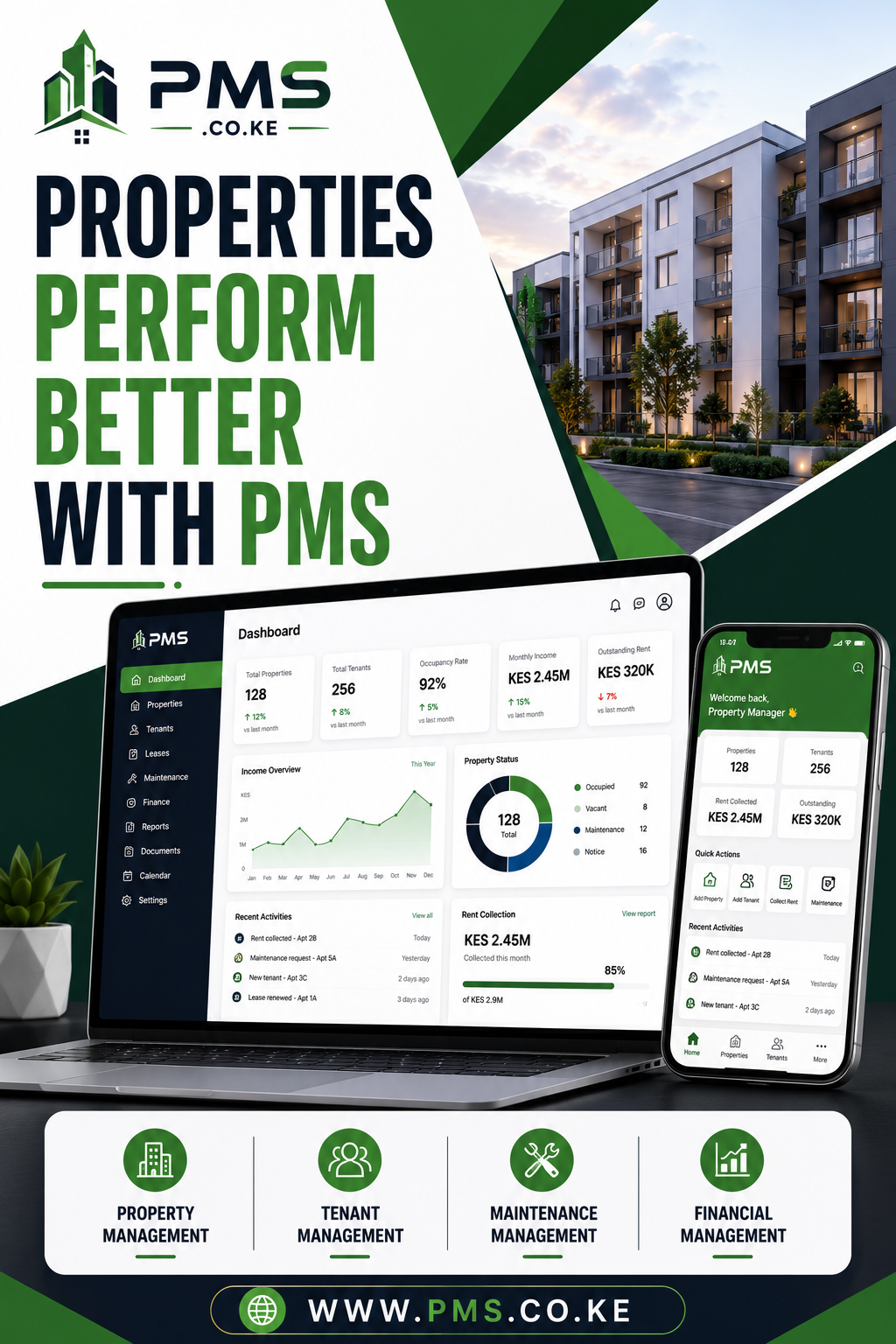
Property maintenance management software helps landlords, property managers, estate managers, apartment operators, and real estate companies organize the maintenance side of their properties from one centralized platform. Instead of relying on phone calls, WhatsApp messages, notebooks, spreadsheets, and scattered conversations, property teams can use digital workflows to record maintenance requests, assign tasks, track repairs, communicate with tenants, monitor costs, and maintain property records.
As rental portfolios grow, maintenance becomes one of the most important areas to manage efficiently. A property with 20 units may generate a manageable number of maintenance requests. However, when a portfolio grows to hundreds of apartments, commercial spaces, or multiple estates, even routine repairs can become difficult to coordinate manually.
Property managers may need to handle plumbing problems, electrical faults, water leaks, broken doors, damaged fixtures, security issues, painting, cleaning, appliance repairs, and preventive maintenance. Without a structured system, requests can easily be forgotten, duplicated, delayed, or assigned to the wrong person.
A centralized maintenance platform creates a clear process from the moment a problem is reported until the repair is completed.
Table of Contents
ToggleWhat Is Property Maintenance Management Software?
Property maintenance management software is a digital system designed to help property owners and managers organize maintenance operations.
The software can bring together:
- Tenant maintenance requests
- Work orders
- Property and unit information
- Maintenance staff
- Contractors
- Repair costs
- Maintenance schedules
- Communication
- Job status
- Maintenance history
- Reports
Instead of receiving a repair request and writing it down somewhere, the manager can create a digital maintenance ticket.
For example:
Tenant: Mary Wanjiku
Property: Apartment Block A
Unit: A-204
Issue: Water leaking under kitchen sink
Priority: High
Assigned technician: Plumber
Status: In progress
Estimated cost: KSh 4,500
This information creates a clear record of the maintenance issue.
A property manager can then monitor the request until the repair has been completed.
Why Maintenance Management Is Important
Maintenance has a direct effect on tenant satisfaction, property value, operating costs, and the reputation of a property management company.
A small problem can become a major expense when it is ignored.
For example, a minor water leak may initially require a simple repair. If the issue is not reported or addressed quickly, it could eventually damage:
- Flooring
- Walls
- Cabinets
- Electrical systems
- Ceilings
- Other apartments
Early detection and organized maintenance can therefore help property managers respond before problems become more expensive.
This is where property maintenance management software can provide significant value.
The software gives managers a structured way to receive, prioritize, assign, and monitor maintenance requests.
Moving Away From Manual Maintenance Tracking
Traditional maintenance management often relies on several communication channels.
A tenant may call the caretaker.
Another tenant may send a WhatsApp message.
A property owner may call the manager.
A contractor may send an SMS.
An employee may write the issue in a notebook.
The result can be fragmented information.
One maintenance request might be forgotten because it was discussed verbally.
Another could be delayed because a WhatsApp message was buried under newer conversations.
A spreadsheet may be updated days later.
A digital maintenance system creates one centralized record.
Every request can have its own ticket, status, responsible person, and history.
Creating Digital Maintenance Requests
One of the core features of a maintenance platform is digital request creation.
A tenant can report an issue such as:
- Broken tap
- Blocked drain
- Electrical fault
- Broken window
- Water leakage
- Faulty door lock
- Damaged tiles
- Broken light
- Air-conditioning problem
The request can then be recorded against the tenant’s property and unit.
This provides important context to the maintenance team.
Instead of receiving a message that simply says “the sink is broken,” the maintenance team can see the exact property, unit, tenant, issue, priority, and reporting date.
Tenant Maintenance Portals
A tenant portal can make maintenance reporting easier.
Depending on the software, tenants may be able to log in and submit requests directly.
They can provide:
- Issue description
- Photos
- Preferred access time
- Additional comments
The property manager then receives the request inside the system.
Some property management platforms provide tenant portals that include maintenance requests alongside tenant account and property information. PMS.co.ke property management system
This can reduce the need for repetitive phone calls.
Attaching Photos to Maintenance Requests
Photos can provide useful information about a repair.
For example, a tenant reporting water damage can upload an image showing the affected area.
A property manager can use the photo to determine whether the issue requires:
- A plumber
- An electrician
- A carpenter
- A general technician
- An emergency response
This can help staff understand the problem before sending someone to the property.
Categorizing Maintenance Issues
Maintenance requests can be categorized to improve organization.
Common categories include:
Plumbing
Examples include:
- Leaking pipes
- Blocked sinks
- Broken taps
- Toilet problems
- Water pressure issues
Electrical
Examples include:
- Power failures
- Broken sockets
- Faulty switches
- Lighting problems
Carpentry
Examples include:
- Broken doors
- Cabinet repairs
- Furniture repairs
General Repairs
Examples include:
- Wall damage
- Broken tiles
- Painting
- Fixtures
Security
Examples include:
- Broken locks
- Gate problems
- Access control issues
Categorization helps managers understand what types of maintenance problems occur most frequently.
Prioritizing Maintenance Requests
Not every maintenance request requires the same response time.
A blocked drain may be important.
A major water leak may be urgent.
A broken security gate could be critical.
A request to repaint a wall may be routine.
A maintenance platform can use priorities such as:
Emergency
Requires immediate attention.
High
Should be handled quickly.
Medium
Can be scheduled within a reasonable period.
Low
Can be handled during routine maintenance.
This allows managers to allocate resources more effectively.
Emergency Maintenance
Emergency repairs can have serious consequences when delayed.
Examples include:
- Major water leaks
- Electrical hazards
- Fire-related problems
- Serious security failures
- Burst pipes
- Major sewage problems
A digital maintenance system can help flag emergency requests so that they receive immediate attention.
The exact emergency workflow will depend on the property manager’s procedures and software capabilities.
Creating Work Orders
Once a maintenance request has been reviewed, the manager can create a work order.
A work order can contain:
- Description of the problem
- Property
- Unit
- Tenant
- Assigned technician
- Priority
- Estimated cost
- Required materials
- Deadline
- Status
This creates accountability.
Instead of saying “please check the plumbing problem in Apartment 12,” management can issue a structured work order.
Assigning Technicians
A property manager may work with several maintenance workers.
For example:
- Plumber
- Electrician
- Carpenter
- Painter
- General technician
- HVAC technician
- Cleaning team
A digital system can help managers assign requests to the appropriate person.
This avoids situations where a technician receives a job outside their area of expertise.
Contractor Management
Some property managers outsource maintenance work.
A contractor database can contain:
- Contractor name
- Service category
- Phone number
- Areas served
- Previous jobs
- Costs
- Performance history
This makes it easier to identify the right contractor for a particular repair.
Tracking Work Order Status
Every maintenance request should have a clear status.
For example:
New
The request has been submitted.
Assigned
A technician has been selected.
In Progress
The repair is underway.
Waiting for Parts
Materials are required before work can continue.
Completed
The repair has been finished.
Closed
Management has reviewed and closed the request.
This makes it easier to identify delayed jobs.
Reducing Forgotten Maintenance Requests
One of the major problems with manual maintenance management is forgotten requests.
A tenant may report a leaking tap today and call again next week because nothing happened.
A digital system keeps the request visible.
Managers can see open tickets from a dashboard.
This creates accountability.
Monitoring Response Times
Maintenance performance can be measured.
For example:
Average response time: 2 hours
Average completion time: 18 hours
Emergency response: 45 minutes
These measurements help management understand whether the maintenance team is performing efficiently.
Measuring Maintenance Completion Time
A property manager can compare:
Request received
↓
Request assigned
↓
Technician arrives
↓
Repair completed
↓
Request closed
This creates a measurable maintenance workflow.
If jobs are consistently taking too long, management can investigate why.
Possible reasons may include:
- Contractor delays
- Lack of spare parts
- Poor communication
- Too many work orders
- Insufficient staff
- Approval delays
Tracking Maintenance Costs
Maintenance expenses can represent a significant portion of property operating costs.
A digital system can record the cost of individual work orders.
For example:
Plumbing repair: KSh 4,500
Electrical repair: KSh 3,000
Painting: KSh 8,000
Door repair: KSh 2,500
This creates a financial history for the property.
Property-Level Maintenance Expenses
Maintenance costs can also be grouped by property.
For example:
Property A
Monthly maintenance: KSh 120,000
Property B
Monthly maintenance: KSh 85,000
Property C
Monthly maintenance: KSh 200,000
Property C may require additional investigation if its costs are significantly higher than similar properties.
Unit-Level Maintenance History
A unit should ideally have its own maintenance history.
For example:
Unit A-203
January — Plumbing repair
March — Electrical repair
June — Door repair
August — Painting
This information can help managers identify recurring problems.
If the same unit repeatedly experiences plumbing issues, management may need to investigate the underlying cause rather than repeatedly paying for temporary repairs.
Preventive Maintenance
Reactive maintenance happens after something breaks.
Preventive maintenance happens before failure occurs.
Examples include:
- Checking plumbing systems
- Servicing elevators
- Inspecting electrical systems
- Testing fire equipment
- Cleaning water tanks
- Servicing generators
- Inspecting roofs
- Maintaining pumps
- Checking security systems
A maintenance platform can help managers schedule recurring inspections and service activities.
Preventive Maintenance Schedules
A property manager can create schedules such as:
Water tank inspection — every 3 months
Generator service — every month
Fire equipment inspection — according to the required schedule
Elevator servicing — according to the maintenance contract
Roof inspection — periodically
The system can then help management remember when maintenance is due.
Reducing Reactive Repairs
Preventive maintenance can help identify problems earlier.
For example, regular inspection may reveal:
- Small pipe leaks
- Worn electrical components
- Damaged roofing
- Faulty pumps
- Weak door locks
Addressing these problems early can potentially prevent larger repairs.
Managing Maintenance Vendors
A property business may work with several contractors.
For example:
ABC Plumbing
XYZ Electrical
General Repairs Ltd
Cleaning Services
Security Maintenance
Keeping contractor information in one place makes it easier to manage supplier relationships.
Management can also compare contractor performance based on:
- Response time
- Cost
- Completion quality
- Number of repeat jobs
- Tenant feedback
Maintenance Quotes
Some repairs require quotations before work begins.
For example:
Contractor A: KSh 25,000
Contractor B: KSh 28,000
Contractor C: KSh 23,500
The property manager can compare the proposals before approving the work.
A digital workflow can keep the quotation connected to the original maintenance request.
Maintenance Approval Workflows
Some organizations require approval before spending money.
For example:
Maintenance request
↓
Cost estimate
↓
Manager approval
↓
Owner approval if required
↓
Work order
↓
Repair
↓
Invoice
↓
Payment
A structured system can make this workflow easier to follow.
Linking Maintenance to Property Accounting
Maintenance costs should ultimately reach the financial records.
For example:
Maintenance work order
↓
Contractor invoice
↓
Property expense
↓
Accounting record
↓
Owner report
Connecting these processes reduces duplicate data entry.
A property management platform can combine maintenance and accounting information so managers can evaluate property performance more comprehensively. PMS.co.ke property management platform
Owner Visibility
Property owners often want to know how their money is being spent.
An owner may ask:
What repairs were completed this month?
How much did they cost?
Which contractor performed the work?
Which units required maintenance?
Are there recurring problems?
A structured maintenance system can make this information easier to report.
Maintenance Reports
Useful reports can include:
- Open maintenance requests
- Completed work orders
- Overdue requests
- Maintenance costs
- Contractor performance
- Maintenance by property
- Maintenance by category
- Preventive maintenance schedule
- Average response time
These reports help management identify patterns.
Identifying Recurring Problems
Suppose a building records 30 plumbing requests in six months.
Instead of treating each repair separately, management can investigate the larger problem.
Possible causes could include:
- Aging pipes
- Water pressure
- Poor installation
- Drainage issues
- Building infrastructure
A maintenance history makes these patterns easier to identify.
Improving Tenant Satisfaction
Maintenance is closely connected to tenant experience.
When tenants report a problem, they want to know:
Was the request received?
Who is handling it?
When will someone arrive?
Has the problem been fixed?
A digital maintenance workflow can provide better visibility throughout the process.
This can improve communication between tenants and property management.
Automated Maintenance Notifications
A system can potentially notify tenants when:
- Their request is received
- A technician is assigned
- A repair is scheduled
- A work order is completed
- Additional information is required
This reduces uncertainty.
Tenants do not need to repeatedly call the property office to ask for updates.
Maintenance Communication History
Every maintenance request can have its own communication record.
This can include:
- Tenant comments
- Manager responses
- Technician updates
- Contractor notes
- Completion details
This creates a complete history of the issue.
Managing Spare Parts
Maintenance teams often require materials.
Examples include:
- Pipes
- Valves
- Electrical cables
- Switches
- Light bulbs
- Locks
- Paint
- Screws
- Plumbing fittings
Inventory tracking can help managers understand what materials are available.
If a required part is unavailable, the system can record that the work is waiting for materials.
Reducing Maintenance Delays
A repair may be delayed because:
- The technician is unavailable
- A part is missing
- Approval has not been granted
- The tenant is unavailable
- A contractor has not responded
A centralized system makes the status visible.
This allows management to identify bottlenecks instead of discovering them only after a tenant complains again.
Managing Multiple Properties
A property maintenance management software platform is especially useful when a company manages multiple properties.
Consider a portfolio with:
Property A — 100 units
Property B — 150 units
Property C — 250 units
Property D — 300 units
Each property may generate different maintenance requirements.
A centralized platform can provide one dashboard while still keeping maintenance records separated by property.
Managing Different Property Types
Maintenance requirements differ according to the type of property.
Residential Apartments
Common issues include:
- Plumbing
- Electrical
- Doors
- Windows
- Appliances
- Water systems
Commercial Buildings
Maintenance may include:
- HVAC
- Elevators
- Security systems
- Lighting
- Plumbing
- Electrical infrastructure
Estates
Maintenance may include:
- Roads
- Security gates
- Landscaping
- Drainage
- Street lighting
- Water systems
A flexible maintenance platform should accommodate different property types.
Maintenance for Vacant Units
Vacant units also require maintenance.
Before a new tenant moves in, management may need to inspect:
- Plumbing
- Electrical systems
- Doors
- Windows
- Paint
- Fixtures
- Cleaning
A digital checklist can help staff prepare the unit.
Move-In Inspection
A property manager can record the condition of a unit before occupation.
For example:
Walls: Good
Flooring: Good
Plumbing: Good
Electrical: Good
Doors: Good
Windows: Good
This provides a baseline for future comparisons.
Move-Out Inspection
When a tenant leaves, management can compare the current condition against the original inspection.
This can help identify:
- Normal wear
- Damage
- Missing fixtures
- Repairs required
The information can also support deposit assessment where appropriate.
Maintenance and Tenant Management
Maintenance information becomes more useful when connected to tenant records.
Instead of having:
Tenant database
and
Maintenance spreadsheet
as separate systems, a connected platform can associate the request with the tenant and unit.
This creates a more complete tenant profile.
Maintenance and Lease Management
Lease information can also provide useful context.
Some maintenance responsibilities may depend on:
- Lease terms
- Property rules
- Tenant responsibilities
- Landlord responsibilities
Connecting lease information with maintenance records can help management review the appropriate responsibilities before approving work.
Maintenance and Rent Collection
Although maintenance and rent collection are different processes, both relate to the same tenant and property.
A comprehensive property platform can connect:
Tenant
↓
Unit
↓
Lease
↓
Rent
↓
Maintenance
This gives management a broader view of the tenancy.
For landlords looking for an integrated solution, Property Management Software Kenya can provide a centralized environment for property operations rather than relying on separate systems for each function.
Data-Driven Maintenance Decisions
Historical maintenance data can support better decisions.
Suppose a property manager notices that one building has significantly higher plumbing expenses than another.
Management can investigate:
- Building age
- Pipe quality
- Water pressure
- Tenant density
- Infrastructure
The goal is to identify the underlying reason rather than simply continue paying repair bills.
Maintenance Budgeting
Historical maintenance data can also support budgeting.
Suppose a property historically spends:
January: KSh 120,000
February: KSh 100,000
March: KSh 130,000
April: KSh 110,000
The manager can use this information when planning future maintenance budgets.
Major projects should still be budgeted separately.
Capital Improvements
Not every maintenance expense is a routine repair.
Some projects are improvements.
Examples include:
- Replacing an old roof
- Installing a new water system
- Renovating common areas
- Replacing old electrical infrastructure
- Upgrading security systems
A good property operation should distinguish routine maintenance from larger capital projects.
Maintenance Accountability
Every work order should have an accountable person or contractor.
This helps answer:
Who was assigned?
When was it assigned?
When did work begin?
What materials were used?
How much did it cost?
When was it completed?
This level of visibility can reduce confusion.
Benefits for Property Managers
The main benefits of property maintenance management software include:
Better Organization
All maintenance requests can be stored centrally.
Faster Response
Managers can identify new and urgent requests quickly.
Better Communication
Tenants can receive updates.
Greater Accountability
Every request can have an assigned person.
Cost Visibility
Management can track maintenance expenses.
Better Reporting
Maintenance data can be analyzed by property and category.
Preventive Maintenance
Scheduled inspections can reduce dependence on emergency repairs.
Improved Tenant Experience
Tenants can report and monitor issues more easily.
Portfolio Scalability
The same workflow can be applied across multiple properties.
Choosing the Right Maintenance Software
Before selecting a property maintenance management software platform, property managers should consider the entire maintenance workflow.
Important questions include:
Can tenants submit maintenance requests?
Can they attach photos?
Can managers assign work orders?
Can jobs have priorities?
Can technicians update statuses?
Can contractors be managed?
Can maintenance costs be recorded?
Can preventive maintenance be scheduled?
Can managers generate reports?
Can the system support multiple properties?
Can maintenance connect with tenant records?
Can it integrate with accounting?
Can staff permissions be configured?
Is it accessible on mobile devices?
Can the system scale with the portfolio?
These questions help ensure that the chosen platform solves the actual operational challenges of the property business.
Moving From Reactive to Preventive Management
The biggest transformation is moving from a reactive model to a structured maintenance strategy.
Reactive model:
Something breaks
↓
Tenant complains
↓
Manager finds technician
↓
Repair is performed
↓
Issue is closed
Preventive model:
Maintenance schedule
↓
Inspection
↓
Issue identified early
↓
Repair planned
↓
Work completed
↓
History recorded
This approach can help property managers become more proactive.
Building a More Efficient Property Operation
Maintenance does not exist independently from other property functions.
A property manager needs to understand:
Who occupies the unit?
What does the lease say?
What maintenance is required?
What has been spent?
What rent has been collected?
What is the property’s financial performance?
An integrated platform can bring these areas together.
This creates a more complete picture of property operations.
Frequently Asked Questions
What is property maintenance management software?
It is software that helps landlords and property managers organize maintenance requests, work orders, technicians, contractors, schedules, costs, communication, and maintenance reports.
Why should landlords use maintenance software?
It can help organize repair requests, reduce forgotten jobs, improve communication, track costs, and create maintenance histories.
Can tenants submit maintenance requests online?
Yes, platforms with tenant portals can allow tenants to submit maintenance requests digitally.
Can tenants upload photos?
Some platforms support attachments, allowing tenants to provide photos or other information about maintenance issues.
Can maintenance requests be prioritized?
Yes. Systems can support priority levels such as emergency, high, medium, and low, depending on the platform.
Can property managers assign technicians?
Yes. Work orders can be assigned to maintenance employees or contractors where the software supports this functionality.
Can maintenance costs be tracked?
Yes. Maintenance expenses can be recorded against work orders, units, or properties depending on the platform.
Can the system manage preventive maintenance?
Some platforms support scheduled maintenance and recurring tasks, allowing managers to plan inspections and servicing.
Can maintenance software manage multiple properties?
Yes. Multi-property maintenance management allows managers to organize work orders across different buildings and estates.
Can maintenance connect with tenant management?
Yes. An integrated property platform can associate maintenance requests with tenants and their units.
Can maintenance information be connected to accounting?
Some property management platforms connect maintenance expenses with financial records and property accounting.
Is maintenance software useful for apartment buildings?
Yes. Apartment buildings can generate many maintenance requests, making centralized work-order management particularly useful.
Can commercial properties use maintenance software?
Yes. Commercial buildings can use maintenance systems for repairs, inspections, contractors, equipment servicing, and facility management.
Does maintenance software eliminate maintenance problems?
No. It does not prevent every physical problem. Its purpose is to improve how maintenance issues are reported, organized, assigned, tracked, and resolved.
What is the most important maintenance feature?
There is no single feature that is best for every property. For many property managers, request tracking, work orders, tenant communication, preventive maintenance, contractor management, cost tracking, and reporting are particularly valuable.
Preparing for Modern Property Maintenance
As rental portfolios become more complex, property maintenance requires more than responding to individual complaints.
Property managers need visibility into the complete maintenance lifecycle.
A request should move from:
Reported → Reviewed → Assigned → Scheduled → In Progress → Completed → Verified → Closed
At every stage, management should know what is happening.
This creates a more accountable maintenance operation and gives property owners better visibility into how their properties are being maintained.
Managing Maintenance Requests More Efficiently
A well-organized property maintenance management software platform gives property managers a structured way to handle repair requests from the moment they are reported until they are completed.
Without a centralized process, maintenance information can become difficult to track. A tenant may report a leaking pipe through a phone call, another tenant may send a WhatsApp message about an electrical problem, while a caretaker may keep handwritten notes about other repairs.
As the number of units increases, this approach can create gaps in communication.
With property maintenance management software, every request can be recorded as an individual maintenance ticket. The ticket can contain the tenant’s details, property, unit, problem description, priority, assigned technician, expected completion date, costs, and current status.
This creates a reliable maintenance history that can be accessed by authorized property staff.
Centralizing Property Maintenance Operations
Property managers often deal with several maintenance activities at the same time.
One apartment may require plumbing repairs while another needs electrical work. A commercial property may need air-conditioning servicing, while a residential building may require common-area lighting repairs.
Managing all these activities manually can become complicated.
Property maintenance management software brings these requests into one central dashboard.
Instead of asking several employees for updates, a property manager can review open work orders from a single location.
The dashboard can show:
- New requests
- Assigned requests
- Ongoing repairs
- Pending approvals
- Jobs waiting for materials
- Completed repairs
- Overdue work orders
- Emergency maintenance
- Preventive maintenance
This gives management a clearer understanding of the property’s current maintenance situation.
Digital Work Orders
Work orders provide structure to maintenance activities.
A work order can include the specific problem, location, assigned technician, estimated cost, priority, and deadline.
For example:
Property: Kilimani Apartments
Unit: B-305
Issue: Bathroom pipe leakage
Priority: High
Assigned technician: Plumbing contractor
Estimated cost: KSh 5,500
Status: Assigned
This is more useful than simply sending a message saying, “Please fix the leaking pipe in B-305.”
The technician knows what needs to be done, while management can track progress.
Assigning Jobs to the Right Technician
Different maintenance problems require different skills.
A plumber should handle plumbing work.
An electrician should handle electrical faults.
A carpenter may handle damaged doors or cabinets.
An HVAC technician may handle air-conditioning systems.
A property maintenance management software platform can help managers organize technicians according to their skills and responsibilities.
This makes it easier to assign the appropriate person to each work order.
Tracking Technician Workloads
Property managers also need to understand how many jobs each technician is handling.
For example:
Technician A — 8 open jobs
Technician B — 4 open jobs
Technician C — 11 open jobs
Technician C may be overloaded while Technician B has available capacity.
This information can help management distribute work more effectively.
Workload visibility becomes increasingly important as a property management company grows.
Contractor Management
Not every property has an in-house maintenance team.
Many landlords and property managers rely on external contractors for specialized work.
These may include:
- Plumbers
- Electricians
- Painters
- Locksmiths
- HVAC technicians
- Lift maintenance companies
- Generator technicians
- Security system technicians
- Cleaning companies
- Landscaping contractors
A centralized maintenance platform can keep contractor information organized.
Management can record contractor details and connect contractors with completed work orders.
Comparing Contractor Performance
Historical maintenance information can help property managers evaluate contractors.
For example, management may compare:
- Response time
- Completion time
- Cost
- Number of repeat repairs
- Quality of work
- Tenant feedback
Suppose one contractor repeatedly takes three days to complete simple repairs while another completes similar jobs within one day.
The property manager can use the historical information when making future decisions.
Maintenance Cost Tracking
Maintenance costs can quickly accumulate across a large property portfolio.
A single repair may appear insignificant, but hundreds of small repairs can become a substantial annual expense.
Property maintenance management software can help managers record expenses against individual work orders.
For example:
Plumbing repair — KSh 6,500
Electrical repair — KSh 3,200
Painting — KSh 8,000
Door repair — KSh 4,000
Water pump repair — KSh 15,000
These records provide a clearer view of where maintenance money is being spent.
Understanding Maintenance Costs by Property
Property-level reporting is particularly useful for landlords managing multiple buildings.
For example:
Property A — KSh 150,000
Property B — KSh 95,000
Property C — KSh 270,000
Property D — KSh 110,000
Property C may require additional investigation.
High maintenance costs could be caused by an aging building, poor-quality infrastructure, recurring plumbing issues, tenant damage, or major renovation projects.
Without organized records, identifying the cause can be difficult.
Tracking Maintenance Costs by Category
Management can also categorize expenses.
For example:
Plumbing — KSh 80,000
Electrical — KSh 45,000
Painting — KSh 30,000
Security — KSh 25,000
Cleaning — KSh 20,000
This allows property managers to understand which areas consume the largest portion of the maintenance budget.
Identifying Recurring Maintenance Problems
One of the biggest advantages of maintaining historical records is the ability to identify recurring problems.
Suppose the same apartment experiences four plumbing repairs within six months.
A manager may initially treat each repair separately.
However, when the maintenance history is visible, a pattern becomes obvious.
The property manager can then investigate the underlying issue.
Instead of repeatedly paying for temporary repairs, management can consider a permanent solution.
Preventive Maintenance Scheduling
Reactive maintenance happens when something breaks.
Preventive maintenance is planned in advance.
Examples include:
- Generator servicing
- Water tank inspections
- Pump maintenance
- Electrical inspections
- Roof inspections
- Elevator servicing
- Fire equipment checks
- HVAC servicing
- Drainage inspections
A property maintenance management software system can help property managers schedule recurring maintenance activities.
This reduces the possibility of important inspections being forgotten.
Creating Recurring Maintenance Tasks
A manager may configure a task such as:
Generator service — Monthly
Water tank inspection — Quarterly
Roof inspection — Twice per year
Electrical inspection — According to the required schedule
Once configured, recurring tasks can appear on the maintenance calendar.
This helps the team plan work rather than simply reacting to emergencies.
Maintenance Calendars
A maintenance calendar gives property managers a visual overview of upcoming activities.
It can show:
Monday — Generator service
Tuesday — Unit B-204 plumbing repair
Wednesday — Common-area lighting inspection
Thursday — Elevator maintenance
Friday — Roof inspection
This can help prevent scheduling conflicts.
Managing Emergency Repairs
Some maintenance issues cannot wait.
Examples include:
- Burst water pipes
- Major flooding
- Serious electrical hazards
- Broken security gates
- Significant sewage problems
- Fire-related issues
These requests should be clearly identified as emergencies.
A property maintenance management software platform can help managers distinguish urgent work from routine requests.
Emergency jobs can then be assigned immediately according to the property’s established procedures.
Setting Maintenance Priorities
Not every request deserves the same priority.
A useful classification could be:
Emergency: Immediate response required.
High: Requires rapid attention.
Medium: Should be handled within the normal maintenance schedule.
Low: Can be scheduled when resources are available.
Prioritization helps prevent less important requests from consuming resources needed for serious problems.
Reducing Maintenance Response Times
Response time measures how quickly management reacts after a request is submitted.
For example:
Request received: 9:00 AM
Technician assigned: 9:30 AM
Technician arrives: 10:30 AM
Repair completed: 12:00 PM
Management can use this information to evaluate performance.
If emergency requests regularly take several hours before anyone responds, management can investigate the reason.
Measuring Completion Times
Response time is only one measurement.
Completion time is also important.
A repair may be acknowledged quickly but take several days to complete.
Management should therefore track:
- Request time
- Assignment time
- Start time
- Completion time
- Closure time
This provides a more complete view of maintenance performance.
Managing Maintenance Approvals
Some repairs can be completed immediately.
Others may require financial approval.
For example, a simple plumbing repair may cost KSh 3,000.
A major roof repair could cost KSh 250,000.
The second project may require approval from the property owner or management committee.
A structured maintenance workflow can record the approval status before work begins.
Quotation Management
Large maintenance jobs may require several quotations.
For example:
Contractor A — KSh 120,000
Contractor B — KSh 105,000
Contractor C — KSh 135,000
Management can compare the quotations based on price, scope, experience, availability, and other relevant considerations.
The selected quotation can then be associated with the maintenance project.
Tracking Materials
Maintenance teams frequently require spare parts and materials.
These can include:
- Pipes
- Valves
- Light bulbs
- Switches
- Electrical cables
- Door locks
- Paint
- Tiles
- Plumbing fittings
- Cleaning materials
Knowing what is available can prevent unnecessary delays.
If a technician arrives at a property but discovers that the required part is unavailable, the repair may have to be postponed.
Linking Maintenance With Inventory
Where inventory management is supported, maintenance requests can be connected with materials.
For example:
Work order: Replace bathroom tap
Material required: Standard mixer tap
Quantity: 1
Stock available: 3
The technician can then complete the job without waiting for a new purchase.
Maintenance Documentation
Some maintenance work requires documentation.
Examples include:
- Contractor invoices
- Service reports
- Inspection reports
- Warranty information
- Equipment manuals
- Photographs
- Completion certificates
Keeping these records connected to the relevant maintenance activity makes them easier to retrieve later.
Equipment Maintenance
Properties often contain equipment that requires regular servicing.
Examples include:
- Generators
- Water pumps
- Elevators
- Air-conditioning units
- CCTV systems
- Access control systems
- Fire equipment
Each asset can have its own maintenance history.
For example:
Generator
Service date: August 2026
Service provider: Contractor
Cost: KSh 25,000
Next service: September 2026
This provides useful information for future maintenance planning.
Asset History
A property manager should be able to understand the history of important equipment.
Suppose a water pump has required repairs five times in one year.
The accumulated maintenance history may indicate that replacement is more economical than continuing to repair the equipment.
This is an example of how historical maintenance data can support better property investment decisions.
Warranty Tracking
Some equipment and installations may have warranties.
A maintenance system can help management keep track of:
- Equipment
- Installation date
- Warranty period
- Supplier
- Warranty terms
- Service history
When a problem occurs during the warranty period, management can determine whether the repair may be covered.
Managing Building Inspections
Regular inspections can help identify issues before tenants report them.
Property managers can schedule inspections for:
- Common areas
- Roofs
- Staircases
- Corridors
- Parking areas
- Electrical rooms
- Water systems
- Security areas
- External walls
Inspection results can then generate maintenance tasks.
Digital Inspection Checklists
A digital checklist can standardize inspections.
For example:
Common Area Inspection
Lighting — Good
Flooring — Good
Walls — Requires attention
Fire equipment — Good
Doors — Good
Cleaning — Good
Security equipment — Requires attention
This makes inspections more consistent.
Move-In Maintenance Checks
Before a tenant moves into a property, management can conduct an inspection.
The checklist may include:
- Plumbing
- Electrical systems
- Doors
- Windows
- Locks
- Walls
- Flooring
- Fixtures
- Appliances
- Water supply
Problems identified during the inspection can be converted into maintenance work orders.
Move-Out Inspections
When a tenant leaves, the property can be inspected again.
Management can compare the current condition with the previous inspection.
This may help identify repairs that need to be completed before the unit is rented again.
Preparing Vacant Units
Vacant properties need to be prepared quickly to reduce the period they remain unavailable.
A maintenance workflow can help coordinate:
- Cleaning
- Painting
- Plumbing checks
- Electrical checks
- Lock replacement
- Fixture repairs
- General inspection
Once the work is completed, the property manager can update the unit’s status.
Connecting Maintenance With Tenant Management
Maintenance is closely connected to tenant information.
A property maintenance management software platform can associate a maintenance request with:
- Tenant
- Property
- Unit
- Lease
- Request history
This means the manager does not have to search through separate systems to identify the tenant or unit involved.
For landlords who want a broader solution, Tenant Management Software can help connect tenant records with other property management processes.
Tenant Communication
Communication is an important part of maintenance.
Tenants want to know whether their request has been received and when the issue will be handled.
A digital platform can help standardize communication.
For example:
Request received
“Your maintenance request has been received.”
Technician assigned
“Your request has been assigned to a technician.”
Repair scheduled
“Maintenance has been scheduled for Tuesday.”
Repair completed
“Your maintenance request has been marked as completed.”
This creates a more professional tenant experience.
Reducing Repeated Tenant Calls
When tenants have no information about their maintenance request, they may repeatedly call the property office.
A tenant portal and automated notifications can reduce these repetitive inquiries.
Instead of asking, “Has someone been assigned to my problem?” the tenant may be able to check the status directly.
Tenant Feedback
After completing a repair, management can request feedback.
For example:
How satisfied were you with the maintenance response?
★★★★★
Feedback can help identify service problems.
If tenants consistently report poor experiences with a particular contractor, management can investigate.
Maintenance Performance Reports
A property maintenance management software system can provide reports that help managers understand operational performance.
Useful reports include:
- Number of maintenance requests
- Open requests
- Completed requests
- Overdue requests
- Average response time
- Average completion time
- Maintenance costs
- Cost by property
- Cost by category
- Contractor performance
- Preventive maintenance status
These reports turn maintenance information into management data.
Monthly Maintenance Reporting
A monthly maintenance report might show:
Total requests: 145
Completed: 128
Open: 17
Emergency requests: 12
Average response time: 2.4 hours
Average completion time: 19 hours
Total maintenance cost: KSh 480,000
This gives management a quick overview of the month.
Comparing Maintenance Performance Over Time
Management can compare monthly performance.
For example:
January — 170 requests
February — 155 requests
March — 145 requests
April — 130 requests
A decline could indicate that preventive maintenance is working.
However, management should consider other factors before drawing conclusions.
Maintenance Cost Forecasting
Historical maintenance records can help estimate future costs.
If a property consistently spends around KSh 500,000 per month on routine maintenance, management can use that information when preparing budgets.
However, unexpected major repairs can still occur.
Forecasts should therefore include appropriate allowances for unexpected expenses.
Managing Maintenance Budgets
A maintenance budget can be divided into categories.
For example:
Plumbing — KSh 100,000
Electrical — KSh 70,000
Painting — KSh 80,000
Equipment servicing — KSh 150,000
Emergency reserve — KSh 100,000
Total — KSh 500,000
Actual spending can then be compared with the budget.
Identifying Overspending
Suppose the electrical maintenance budget is KSh 70,000 but actual spending reaches KSh 130,000.
Management should investigate.
Possible reasons could include:
- Aging infrastructure
- Repeated faults
- Poor-quality installations
- Major unexpected repairs
- Contractor pricing
- Increased property usage
Without categorized maintenance records, identifying the cause can be difficult.
Reducing Unnecessary Maintenance Costs
Cost control does not mean ignoring repairs.
Instead, it means understanding where money is being spent and whether repairs are providing long-term value.
For example, repeatedly repairing the same water pump may cost more over time than replacing it.
Maintenance history can help managers identify such situations.
Maintenance and Property Value
Well-maintained properties can provide a better experience for tenants and may help protect the physical condition of the asset.
Regular maintenance can help address:
- Structural deterioration
- Water damage
- Electrical issues
- Poor appearance
- Equipment failures
- Security problems
A maintenance system does not itself preserve property value, but it can help management organize the activities required to maintain the asset.
Managing Large Residential Estates
Large estates can have hundreds of maintenance requests.
These may involve:
- Individual houses
- Apartments
- Roads
- Security gates
- Street lighting
- Drainage
- Water systems
- Landscaping
- Common facilities
Property maintenance management software can help separate individual-unit maintenance from common-area maintenance.
This gives management a clearer picture of where resources are being used.
Common-Area Maintenance
Not every maintenance issue belongs to a specific tenant.
Common-area problems may include:
- Broken corridor lights
- Damaged gates
- Blocked drainage
- Lift problems
- Parking-area damage
- Landscaping issues
These should be recorded against the appropriate property or common area.
Commercial Property Maintenance
Commercial buildings may have more complex maintenance requirements.
For example:
- HVAC systems
- Elevators
- Backup generators
- Security systems
- Fire systems
- Electrical infrastructure
- Parking facilities
A structured maintenance system can help managers keep track of these assets and their service schedules.
Retail Property Maintenance
Shopping centers and retail properties may have many tenants and shared facilities.
Maintenance requests may come from:
- Shops
- Restaurants
- Offices
- Common areas
- Security teams
- Facility managers
Centralized ticketing helps ensure that requests are not lost.
Office Building Maintenance
Office buildings may experience:
- Air-conditioning problems
- Lighting faults
- Lift issues
- Plumbing problems
- Security system faults
- Internet or structured cabling problems
A maintenance platform can organize these requests according to floor, office, tenant, and issue category.
Property Management Companies
For a property management company, maintenance software becomes even more useful because employees may manage properties on behalf of different owners.
The system should maintain clear relationships between:
Owner
↓
Property
↓
Building
↓
Unit
↓
Tenant
↓
Maintenance request
This helps prevent maintenance expenses from being assigned to the wrong property.
Owner Approval
Some property owners may require approval for repairs above a certain amount.
For example:
Repairs below KSh 10,000 — manager approval
Repairs above KSh 10,000 — owner approval
Major projects — quotation and formal approval
A digital approval workflow can make these requirements easier to enforce.
Integrating Maintenance With Financial Management
Maintenance expenses ultimately affect property finances.
A connected system can help link:
Maintenance request
↓
Work order
↓
Contractor invoice
↓
Expense
↓
Property financial report
This provides greater financial visibility.
Property managers looking for Rental Property Management Software can benefit from having maintenance information connected to the wider property operation instead of managing repairs separately.
Maintaining Accurate Records
Accurate maintenance records are important for future planning.
Every completed job should ideally record:
- What was repaired
- When it was repaired
- Who performed the work
- How much it cost
- Which unit or property was affected
- Whether follow-up is required
This creates a useful historical database.
Using Maintenance Data for Decision-Making
The long-term value of property maintenance management software goes beyond recording repairs.
The accumulated data can help management answer important questions.
Which property requires the most maintenance?
Which units have recurring problems?
Which contractors are most reliable?
Which equipment costs the most to maintain?
What maintenance categories consume the most money?
How quickly are emergency requests being handled?
Which preventive tasks are overdue?
These insights can support better operational decisions.
Scaling Maintenance Operations
A small landlord may manage maintenance through phone calls and spreadsheets.
As the portfolio grows, that process becomes increasingly difficult.
The organization may eventually require:
- Digital work orders
- Automated notifications
- Technician assignments
- Contractor management
- Maintenance calendars
- Cost tracking
- Preventive schedules
- Reports
- Audit trails
This is where property maintenance management software becomes particularly valuable.
Building a Structured Maintenance Workflow
An effective workflow can follow this pattern:
1. Tenant reports issue
↓
2. Request is recorded
↓
3. Manager reviews issue
↓
4. Priority is assigned
↓
5. Technician is selected
↓
6. Work order is created
↓
7. Repair is scheduled
↓
8. Technician performs work
↓
9. Cost is recorded
↓
10. Tenant confirms completion
↓
11. Manager closes request
This creates consistency across the property portfolio.
What Property Managers Should Look For
When evaluating property maintenance management software, property managers should consider whether the system supports their complete workflow.
Important capabilities include:
- Maintenance request management
- Work orders
- Technician assignment
- Contractor management
- Maintenance priorities
- Preventive maintenance
- Property inspections
- Maintenance history
- Cost tracking
- Approval workflows
- Tenant communication
- Mobile access
- Reporting
- User permissions
The best platform is not necessarily the one with the largest number of features. It is the one that fits the organization’s actual maintenance process and can grow with the portfolio.
Preparing for a More Digital Maintenance Operation
Property maintenance is moving toward more organized and data-driven workflows.
Instead of relying on scattered conversations, property managers can centralize requests.
Instead of guessing which repairs are overdue, they can use dashboards.
Instead of manually calculating maintenance expenses, they can use reports.
Instead of waiting for equipment to fail, they can schedule preventive servicing.
Instead of asking contractors for repeated updates, managers can track work orders.
These changes can make maintenance operations easier to manage as a property portfolio grows.
A properly implemented property maintenance management software platform can therefore become an important part of a modern property management strategy, connecting tenants, units, work orders, contractors, expenses, inspections, and maintenance schedules within one organized workflow.
Improving Maintenance Management With Better Workflows
Property maintenance management software gives property managers an opportunity to move from informal repair handling to a structured maintenance operation. When every request is recorded, assigned, monitored, and closed through a defined workflow, it becomes easier to understand what is happening across the property portfolio.
A maintenance workflow should begin when an issue is reported and continue until the repair has been completed and verified.
A practical process can follow:
Maintenance request
↓
Request review
↓
Priority assignment
↓
Technician or contractor assignment
↓
Work order
↓
Repair
↓
Cost recording
↓
Tenant confirmation
↓
Request closure
This structure helps prevent maintenance issues from being forgotten or handled without proper documentation.
Automating Routine Maintenance Activities
One of the biggest advantages of property maintenance management software is the ability to reduce repetitive administrative work.
Property managers can automate or standardize activities such as:
- Maintenance request notifications
- Work-order assignments
- Preventive maintenance reminders
- Inspection schedules
- Contractor notifications
- Tenant updates
- Maintenance reports
- Follow-up reminders
Automation does not remove the need for property managers. Instead, it allows employees to spend less time performing repetitive administrative tasks and more time handling important maintenance decisions.
Managing Preventive Maintenance
Preventive maintenance should be a major component of a professional property management strategy.
Instead of waiting for equipment to fail, property managers can establish recurring maintenance schedules.
Examples include:
- Generator servicing
- Water pump inspections
- Elevator servicing
- Fire equipment checks
- Roof inspections
- Water tank cleaning
- Electrical inspections
- HVAC servicing
- Drainage inspections
A digital maintenance calendar can help ensure that scheduled activities are not forgotten.
Creating Recurring Maintenance Schedules
A recurring maintenance task can contain:
Equipment: Generator
Task: Full service
Frequency: Monthly
Assigned contractor: Approved generator technician
Next due date: September 2026
Status: Scheduled
The system can then help management track whether the task was completed.
This is especially useful for properties with equipment that requires regular servicing.
Managing Property Inspections
Regular inspections allow property managers to identify problems before they become expensive repairs.
A property inspection can cover:
- Plumbing
- Electrical systems
- Roofing
- Walls
- Flooring
- Doors
- Windows
- Security
- Common areas
- Water systems
Inspection results can be converted into maintenance work orders where action is required.
Digital Inspection Checklists
A standardized inspection checklist helps ensure that employees inspect the same areas consistently.
For example:
Apartment Inspection
Plumbing — Pass
Electrical — Pass
Doors — Pass
Windows — Pass
Walls — Attention required
Flooring — Pass
Fixtures — Pass
The inspection record can then remain attached to the property or unit.
Maintaining Unit Histories
Every rental unit can develop a maintenance history over time.
For example:
Unit A-101
January — Tap replacement
March — Electrical repair
May — Door lock replacement
August — Plumbing repair
This history can help property managers understand the condition of individual units.
If a particular unit repeatedly requires the same type of repair, management can investigate the underlying cause.
Identifying High-Maintenance Units
A property maintenance management software platform can help identify units with unusually high maintenance activity.
Suppose a building has 100 apartments but five units generate 40% of maintenance requests.
That pattern deserves attention.
Possible causes include:
- Aging fixtures
- Plumbing problems
- Poor construction
- Tenant misuse
- Water pressure
- Electrical issues
Management can investigate the root cause instead of continuing to pay for repeated repairs.
Tracking Common-Area Maintenance
Common areas require their own maintenance records.
Examples include:
- Corridors
- Staircases
- Parking areas
- Gardens
- Swimming pools
- Lifts
- Security gates
- Water systems
- Shared lighting
A maintenance platform can categorize these requests separately from tenant-specific repairs.
This provides better reporting.
Managing Emergency Maintenance
Emergency maintenance requires fast response.
Examples may include:
- Burst pipes
- Major flooding
- Serious electrical hazards
- Security gate failures
- Sewage overflow
- Fire-related problems
Property managers should establish emergency procedures before incidents occur.
A digital system can support those procedures by clearly identifying emergency requests and directing them to the appropriate responsible person.
Emergency Contractor Lists
Property managers should maintain a list of trusted emergency contractors.
This could include:
- Emergency plumber
- Emergency electrician
- Locksmith
- Generator technician
- Security technician
- Water-system specialist
Having this information readily available can reduce response delays.
Measuring Emergency Response
Management should monitor emergency response times.
For example:
Request received: 8:15 PM
Technician contacted: 8:20 PM
Technician arrived: 9:00 PM
Repair completed: 10:30 PM
This provides an objective record of performance.
Managing Contractor Relationships
Contractor management is another important component of property maintenance management software.
Property managers may work with dozens of contractors across different properties.
A centralized system can help maintain records of:
- Contractor name
- Service type
- Contact details
- Assigned jobs
- Completed jobs
- Costs
- Performance
- Service history
This information can help management make better contractor decisions.
Comparing Contractor Costs
Suppose three contractors provide quotations for the same repair.
Contractor A — KSh 40,000
Contractor B — KSh 35,000
Contractor C — KSh 38,000
Price alone should not necessarily determine the choice.
Management can also consider:
- Previous work quality
- Response time
- Warranty
- Availability
- Experience
- Reliability
Historical records make these comparisons easier.
Tracking Contractor Performance
A property manager can evaluate contractors using measurable indicators.
For example:
Average response time
Average completion time
Average job cost
Number of repeat repairs
Tenant feedback
These measurements can help identify reliable service providers.
Recording Maintenance Expenses
Every maintenance job should have a clear financial record.
For example:
Work order: Kitchen plumbing repair
Labor: KSh 3,000
Materials: KSh 1,500
Transport: KSh 500
Total: KSh 5,000
This provides greater financial transparency.
Connecting Maintenance to Property Accounting
Maintenance expenses affect the profitability of a property.
A connected system can help move information through the workflow:
Maintenance request
↓
Work order
↓
Contractor invoice
↓
Property expense
↓
Financial report
This reduces duplicate data entry and makes it easier to understand property-level costs.
For property managers looking for an integrated Property Management System Kenya, connecting maintenance with accounting, tenant management, rent collection, and reporting can provide a more complete operational solution.
Tracking Maintenance Budgets
Property managers can establish maintenance budgets for individual properties.
For example:
Property A annual maintenance budget: KSh 1,500,000
Actual spending: KSh 1,100,000
Remaining budget: KSh 400,000
Management can monitor actual spending against the planned budget.
Identifying Budget Variances
Suppose a property has an annual maintenance budget of KSh 1 million but reaches KSh 1.4 million before the end of the year.
The difference should be investigated.
Possible causes could include:
- Major equipment failure
- Unexpected repairs
- Poor preventive maintenance
- Aging infrastructure
- Contractor costs
- Renovation work
Maintenance reports make these patterns easier to identify.
Tracking Maintenance by Category
Categorized maintenance expenses provide additional insight.
For example:
Plumbing — KSh 250,000
Electrical — KSh 150,000
Painting — KSh 100,000
Security — KSh 80,000
Equipment — KSh 220,000
Management can quickly see where the largest maintenance expenses are occurring.
Using Historical Data
Historical maintenance information can support future planning.
Suppose a property consistently spends approximately KSh 600,000 annually on repairs.
Management can use that history when preparing future budgets.
If equipment is approaching the end of its expected useful life, management can also plan for replacement rather than waiting for failure.
Maintenance and Capital Planning
Some maintenance projects are large enough to require long-term planning.
Examples include:
- Roof replacement
- Elevator modernization
- Major plumbing replacement
- Electrical infrastructure upgrades
- Security system upgrades
- Major painting projects
Maintenance history can help management determine when these projects may become necessary.
Reducing Repeat Repairs
Repeated repairs can be expensive.
Imagine a water pump that costs KSh 15,000 to repair each time and requires five repairs in one year.
Total repair cost:
KSh 75,000
If a replacement pump costs KSh 90,000 but provides better reliability, management may consider whether replacement provides better long-term value.
The maintenance history provides the evidence required for such a decision.
Tenant Satisfaction and Maintenance
Maintenance has a direct impact on tenant experience.
Tenants expect reasonable response times when they report problems.
A structured maintenance system can help create better communication.
Instead of:
“I sent a message last week and nobody responded.”
The tenant can receive:
“Your request was received.”
“Your technician has been assigned.”
“Your repair is scheduled.”
“Your maintenance request has been completed.”
This creates greater transparency.
Tenant Maintenance Portals
A tenant portal can provide self-service functionality.
Depending on the platform, tenants may be able to:
- Submit maintenance requests
- Upload photos
- View request status
- Read updates
- Confirm completion
- Review maintenance history
This can reduce administrative pressure on property staff.
Communication Through Multiple Channels
Different tenants prefer different communication channels.
Depending on the software, property managers may communicate through:
- SMS
- Tenant portals
- In-app notifications
The goal should be to maintain a consistent record while using convenient communication methods.
Recording Tenant Feedback
After a repair is completed, the property manager can request feedback.
For example:
Was the issue resolved?
Yes / No
How would you rate the service?
1–5
Was the technician professional?
Yes / No
Feedback can help management identify service quality issues.
Managing Maintenance Complaints
Sometimes a tenant may report that a repair was not completed properly.
Instead of creating an entirely new disconnected record, management can reopen or link the issue to the original work order where supported.
This preserves the history of the repair.
Property Maintenance Reports
A good maintenance reporting system should help management answer important questions.
For example:
How many requests were received this month?
How many were completed?
Which properties have the most requests?
Which units have recurring problems?
What was the total maintenance expenditure?
Which contractors completed the most work?
What percentage of preventive tasks were completed?
How many emergency requests occurred?
These questions can guide operational decisions.
Monthly Maintenance Dashboard
A monthly dashboard might show:
Total requests — 185
Completed — 164
Open — 21
Emergency requests — 15
Average response time — 2 hours
Average completion time — 20 hours
Total maintenance cost — KSh 620,000
This provides management with a quick overview of performance.
Comparing Properties
Property managers can compare maintenance activity across properties.
For example:
Property A — 75 requests
Property B — 110 requests
Property C — 180 requests
Property C may require closer investigation.
It could have more units, older infrastructure, more equipment, or a higher number of tenant complaints.
Raw numbers should therefore always be considered alongside property size and condition.
Maintenance Cost Per Unit
A useful metric is maintenance cost per occupied unit.
For example:
Total maintenance cost: KSh 500,000
Occupied units: 100
Maintenance cost per unit: KSh 5,000
This allows management to compare properties of different sizes more effectively.
Maintenance Cost Per Property
Management can also calculate annual or monthly maintenance expenditure for each property.
This helps identify properties that may require:
- Infrastructure upgrades
- Preventive maintenance
- Budget adjustments
- Equipment replacement
Maintenance and Property Value
Proper maintenance supports the physical condition of a property.
Ignoring repairs can allow small problems to become major issues.
For example:
Small roof leak
↓
Water damage
↓
Ceiling damage
↓
Wall damage
↓
Electrical risk
↓
Expensive renovation
Early maintenance intervention can help reduce the possibility of this type of escalation.
Maintenance and Tenant Retention
Tenants generally expect their rental environment to be maintained properly.
Poor maintenance can contribute to dissatisfaction.
If repairs remain unresolved for long periods, tenants may consider moving to another property.
A responsive maintenance operation can therefore contribute to a better tenant experience.
Improving Operational Accountability
A digital system provides accountability because every work order can have an owner.
Management can see:
Who received the request?
Who was assigned?
What action was taken?
How much did it cost?
Was the work completed?
Was the tenant notified?
This reduces ambiguity.
Audit Trails for Maintenance
An audit trail can record changes to maintenance records.
For example:
August 20 — Request created
August 20 — Technician assigned
August 21 — Work started
August 21 — Cost updated
August 22 — Work completed
August 22 — Request closed
This creates a clear timeline.
Managing Staff Permissions
Not every employee should have access to every function.
A maintenance technician may need to update work orders.
An accountant may need to see costs.
A property manager may need access to all maintenance activities.
An owner may only need reports.
Role-based permissions can help maintain appropriate access.
Mobile Maintenance Management
Property managers and technicians are often away from their desks.
Mobile access can allow them to:
- View work orders
- Update job status
- Add notes
- Upload photos
- Check property details
- Record completion
- Communicate with management
This makes maintenance management more practical in the field.
Maintenance Photos and Documentation
Before-and-after photographs can be useful.
For example:
Before repair — damaged ceiling
After repair — repaired and repainted ceiling
These records can help demonstrate completed work.
They can also support owner reporting and internal quality checks.
Managing Maintenance During Tenant Turnover
Tenant turnover creates a high volume of maintenance and preparation work.
After a tenant moves out, management may need to:
- Inspect the unit
- Repair damage
- Paint walls
- Clean the property
- Check plumbing
- Check electrical systems
- Replace damaged fixtures
- Change locks
- Prepare the unit for the next tenant
A digital workflow can organize these activities.
Connecting Maintenance With Leasing
Maintenance records can also support leasing decisions.
If a unit requires extensive repairs, management can mark it as unavailable until the work is complete.
Once all required work orders are closed, the unit can be prepared for marketing or occupation.
This creates better coordination between maintenance and leasing teams.
Managing Vacant Property Maintenance
Vacant properties should not be ignored.
Regular inspections can identify:
- Water leaks
- Security issues
- Pest problems
- Electrical faults
- Weather damage
- Broken fixtures
Scheduled inspections help keep vacant units in good condition.
Managing Estate-Wide Maintenance
Large estates may have maintenance requirements beyond individual apartments.
These can include:
- Roads
- Drainage
- Street lighting
- Gates
- Security systems
- Landscaping
- Water infrastructure
- Waste management
A centralized maintenance platform can separate estate-wide tasks from unit-specific requests.
Managing Apartment Common Facilities
Apartment buildings may have shared facilities such as:
- Swimming pools
- Gyms
- Parking areas
- Elevators
- Children’s play areas
- Clubhouses
Each facility can have its own maintenance schedule.
This helps management maintain common facilities systematically.
Maintenance Data and Long-Term Planning
Over time, maintenance records become a valuable source of operational data.
Management can identify:
- Aging buildings
- Expensive equipment
- High-maintenance units
- Recurring faults
- Contractor performance
- Seasonal maintenance patterns
This information can support long-term property planning.
Selecting the Right Property Maintenance Platform
Choosing property maintenance management software should be based on actual business requirements.
Property managers should ask:
Can tenants submit maintenance requests?
Can managers assign work orders?
Can technicians update job statuses?
Can photos and documents be attached?
Can emergency requests be prioritized?
Can preventive maintenance be scheduled?
Can contractors be managed?
Can maintenance costs be recorded?
Can reports be generated?
Can the system handle multiple properties?
Can maintenance connect with tenant records?
Can expenses connect with property accounting?
Is mobile access available?
Are staff permissions supported?
Does the platform scale with the portfolio?
These questions can help property businesses identify a solution that fits their operational requirements.
Avoiding Overcomplicated Software
More features do not automatically mean better software.
A platform should be easy for property managers, technicians, accountants, and tenants to understand.
If employees struggle to use the system, they may return to manual processes.
Usability should therefore be considered alongside functionality.
Starting With the Most Important Workflows
A property company does not have to automate everything at once.
Start with:
- Maintenance requests
- Work orders
- Technician assignment
- Status tracking
- Cost recording
- Preventive schedules
- Reporting
Additional functionality can be introduced as the team becomes comfortable with the system.
Training the Maintenance Team
Employees should receive practical training.
Training should cover:
- Creating work orders
- Updating statuses
- Assigning technicians
- Recording costs
- Uploading documents
- Closing jobs
- Creating preventive tasks
- Generating reports
The goal is to make the software part of everyday operations.
Establishing Maintenance Policies
Software works best when supported by clear policies.
For example:
Emergency request — immediate escalation
High priority — same-day response
Medium priority — scheduled response
Low priority — routine maintenance
The exact standards should be determined by the property business.
Creating Standard Operating Procedures
A maintenance SOP can define:
Who receives requests?
Who approves repairs?
Who assigns technicians?
Who approves costs?
Who closes work orders?
Who reviews maintenance reports?
Who communicates with owners?
Clear responsibilities reduce confusion.
Measuring Return on Investment
Property managers should evaluate whether maintenance software is producing measurable improvements.
Possible measurements include:
Reduced response times
Fewer forgotten requests
Lower administrative workload
Better contractor accountability
Improved tenant satisfaction
More accurate maintenance costs
Better preventive maintenance compliance
Improved reporting
The value of software should be evaluated against the actual improvements it creates.
Why Digital Maintenance Management Is Becoming Important
As property portfolios grow, the number of maintenance activities increases.
Manual systems become increasingly difficult to coordinate.
A centralized platform can provide a more organized approach by connecting:
Tenants
Properties
Units
Maintenance requests
Work orders
Technicians
Contractors
Expenses
Inspections
Reports
This creates a single operational environment for maintenance management.
The Future of Property Maintenance
The future of property maintenance is likely to become increasingly digital.
Artificial intelligence, automation, connected devices, mobile applications, and data analytics may eventually make it possible to identify maintenance requirements before tenants report them.
For example, connected water systems could potentially detect unusual consumption patterns that indicate a leak.
Equipment monitoring could identify abnormal operating conditions.
Historical data could help predict when certain equipment is likely to require servicing.
Automated communication could keep tenants informed without requiring staff to manually send every update.
These technologies are developing, but the foundation remains accurate property and maintenance data.
The Importance of Accurate Data
Automation depends on good information.
If the system does not know:
- Which unit has the problem
- Which equipment is installed
- When it was last serviced
- Who is responsible
- What the repair cost
- When the next inspection is due
then advanced reporting becomes less useful.
Property managers should therefore focus on maintaining accurate records from the beginning.
Building a More Proactive Property Operation
The ultimate goal of digital maintenance management is not simply to record repairs.
It is to create a more proactive property operation.
Instead of:
Problem → Complaint → Emergency Repair
management can move toward:
Inspection → Detection → Planned Maintenance → Prevention
This approach can provide better visibility and potentially reduce avoidable emergency work.
Frequently Asked Questions
What is property maintenance management software?
It is software designed to help property managers organize maintenance requests, work orders, inspections, preventive maintenance, contractors, costs, communication, and reports.
Who can use property maintenance software?
Landlords, property managers, estate managers, property management companies, apartment operators, commercial property managers, and facility teams can use maintenance software.
Can tenants report maintenance problems online?
Yes, platforms that provide tenant portals or maintenance request functionality can allow tenants to submit repair requests digitally.
Can tenants upload photos?
Some platforms support photo and document attachments, allowing tenants to provide additional information about a problem.
Can managers assign maintenance jobs?
Yes. Work-order systems can allow managers to assign jobs to technicians or contractors.
Can the software track repair status?
Yes. Maintenance requests can be tracked using statuses such as new, assigned, in progress, waiting, completed, and closed.
Can property managers track maintenance costs?
Yes. Maintenance expenses can be recorded against individual work orders, units, or properties depending on the system.
Can the system manage preventive maintenance?
Many maintenance platforms support recurring tasks and scheduled inspections.
Can it manage multiple properties?
Yes. Multi-property maintenance systems can organize requests and work orders across different properties.
Can maintenance be connected to tenant records?
Yes. Integrated property management platforms can associate maintenance requests with tenants, units, leases, and properties.
Can maintenance connect to accounting?
Some property management systems connect maintenance expenses with property accounting and financial reporting.
Can property owners see maintenance information?
Depending on user permissions, owners can receive maintenance reports showing completed work, costs, and outstanding issues.
Can maintenance software reduce tenant complaints?
It can help improve response tracking and communication, which may reduce complaints caused by forgotten requests or poor visibility. It cannot eliminate complaints caused by genuine property problems.
Can the system manage contractors?
Many platforms provide contractor-related functionality, including contractor records, assignments, job histories, and costs.
Is preventive maintenance better than reactive maintenance?
Preventive maintenance can help identify and address certain problems before they become major failures. However, reactive maintenance will still be necessary for unexpected problems.
Can the system manage emergency repairs?
A maintenance platform can help identify and prioritize emergency requests, but emergency response procedures should also be established by the property management organization.
Is mobile access important?
For managers and technicians who work outside the office, mobile access can make it easier to view work orders, update statuses, upload photos, and communicate with the team.
Conclusion
Property maintenance management software can transform the way landlords, property managers, estate managers, and real estate companies organize repairs and maintain their properties.
Instead of depending on notebooks, spreadsheets, phone calls, and scattered messages, property teams can create a centralized maintenance workflow where every request has a clear record, priority, responsible person, status, cost, and completion history.
The benefits go beyond simply tracking repairs.
A well-implemented system can help property managers coordinate technicians, manage contractors, schedule preventive maintenance, monitor expenses, maintain equipment histories, communicate with tenants, and generate useful operational reports.
Preventive maintenance is particularly important because it allows property managers to move beyond simply reacting to problems. Regular inspections and scheduled servicing can help identify issues before they become expensive emergencies.
Financial visibility is another important advantage.
When maintenance costs are connected to properties and work orders, managers can understand how much they are spending and where the money is going. This information can support budgeting, contractor evaluation, equipment replacement decisions, and long-term property planning.
Tenant communication also becomes more structured.
When tenants can submit requests digitally and receive updates about their maintenance issues, they have greater visibility into the process. Property managers can also maintain a history of communication and completed repairs.
For property management companies handling multiple buildings, centralized maintenance records become even more valuable. Management can compare properties, identify high-maintenance units, evaluate contractors, monitor response times, and understand recurring problems across the portfolio.
The best approach is to treat maintenance as part of the wider property management operation rather than as a separate activity. Connecting maintenance with tenant records, leases, property information, accounting, rent collection, and reporting creates a more complete operational picture.
For businesses looking for a broader Rental Property Management Software, an integrated platform can provide a foundation for managing both financial and operational activities from one environment.
Ultimately, successful maintenance management depends on three things: accurate information, clearly defined workflows, and consistent follow-up.
Software provides the tools, but property managers still need effective policies, trained employees, reliable contractors, and proper communication procedures.
As property portfolios continue to grow, relying entirely on manual maintenance tracking becomes increasingly difficult. Digital systems provide an opportunity to create more organized, measurable, and scalable maintenance operations.
A well-managed maintenance process can help property managers respond faster, control costs, protect property assets, improve tenant communication, and make better long-term decisions.
For landlords and property managers seeking to modernize their operations, adopting property maintenance management software can therefore be an important step toward creating a more efficient, transparent, and professionally managed property portfolio.
