
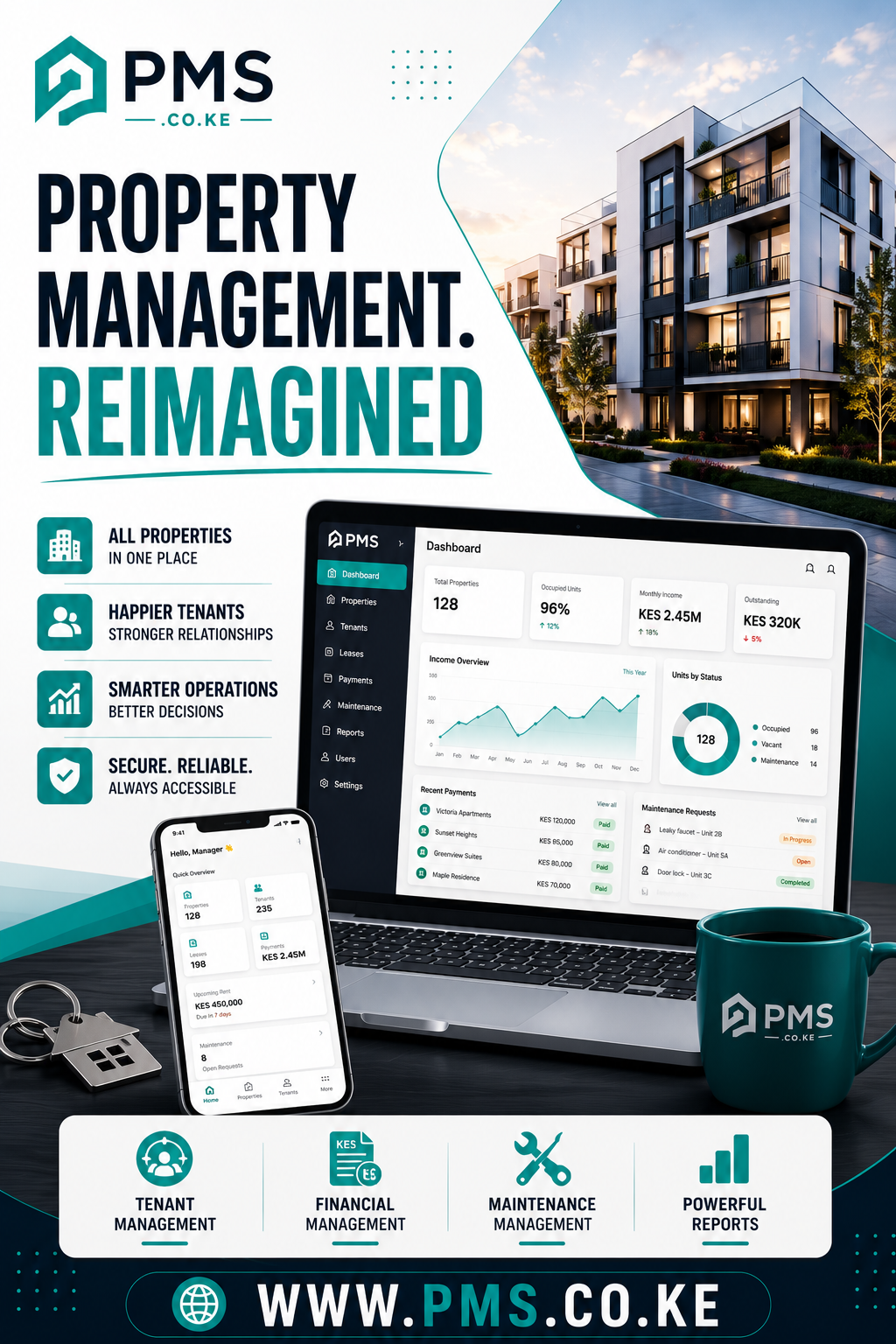
Landlord software Kenya is becoming an important tool for property owners who want to simplify rental property management, improve rent collection, organize tenant records, and gain better control over their investments. As the number of rental apartments, commercial properties, residential estates, and mixed-use developments continues to grow, landlords are increasingly moving away from notebooks, spreadsheets, paper receipts, and manual processes.
Managing rental property involves much more than collecting rent. A landlord may need to manage tenants, track rental income, monitor arrears, issue receipts, manage leases, record expenses, handle maintenance requests, monitor vacancies, and prepare financial reports. When these activities are handled manually, even a relatively small property portfolio can become difficult to manage.
Modern landlord software Kenya provides a centralized solution for these tasks. Instead of maintaining separate records for each property and tenant, landlords can use one digital platform to manage their rental operations.
This article explores how landlord management software works, the challenges of traditional property management, essential features to consider, and the benefits of adopting digital tools for rental properties in Kenya.
The Changing Property Management Landscape in Kenya
Kenya’s property market has created opportunities for individuals and businesses to generate income through rental properties. From apartments and bedsitters to office buildings, shopping centers, student hostels, and commercial spaces, rental properties are an important part of the real estate sector.
However, managing rental properties becomes more complicated as a landlord’s portfolio grows.
A landlord managing five units may be able to keep track of payments using a notebook or spreadsheet. A landlord managing 100 or 500 units faces a completely different challenge.
There may be hundreds of:
- Tenant records
- Monthly rent payments
- Lease agreements
- Maintenance requests
- Utility charges
- Payment receipts
- Outstanding balances
- Property expenses
Trying to manage all this information manually can result in delays and errors.
This is where landlord software Kenya provides significant value by bringing property information, tenant records, payments, and reports into one centralized platform.
Why Landlords Are Moving Away From Manual Management
Traditional property management methods depend heavily on manual work.
A landlord may use an Excel spreadsheet to record rent payments, WhatsApp to communicate with tenants, paper files to store agreements, and mobile money messages to confirm payments.
While these methods may work temporarily, they become difficult to manage as the number of tenants increases.
Manual Payment Tracking
One of the biggest challenges is confirming which tenant has paid.
A manager may need to compare M-PESA transaction messages with tenant records before updating a spreadsheet.
This process can lead to:
- Delayed updates
- Incorrect balances
- Missing transactions
- Duplicate entries
- Payment disputes
Automated systems reduce these problems by connecting payments with tenant accounts.
Paper-Based Records
Paper documents can be difficult to organize and retrieve.
Important documents may include:
- Lease agreements
- Tenant identification details
- Payment receipts
- Inspection reports
- Maintenance records
- Correspondence
Digital storage makes these documents easier to organize and retrieve.
Manual Rent Reminders
Landlords often spend considerable time reminding tenants about upcoming payments.
This involves sending individual messages or making phone calls.
With automated software, reminders can be scheduled and sent to tenants based on their payment dates and account status.
What Is Landlord Software?
Landlord software Kenya refers to digital property management software designed to help property owners manage rental properties, tenants, rent payments, expenses, leases, maintenance, and financial records.
Instead of using several disconnected tools, landlords can manage their operations from one platform.
Depending on the system, landlords may be able to:
- Register properties
- Create rental units
- Add tenants
- Set rental rates
- Generate invoices
- Track payments
- Monitor arrears
- Issue receipts
- Manage expenses
- Track maintenance
- Generate reports
The objective is to reduce manual administration while improving visibility over the property portfolio.
How Landlord Management Software Works
The basic workflow is straightforward.
Step 1: Add Properties
The landlord creates property records within the platform.
For example, a portfolio may include:
- Apartment buildings
- Rental estates
- Commercial offices
- Shops
- Student accommodation
Each property can have its own units and financial records.
Step 2: Add Rental Units
Each property is divided into individual units.
A unit record may include:
- Unit number
- Property
- Unit type
- Rental amount
- Occupancy status
- Tenant information
This makes it easier to determine which units are occupied and which are available.
Step 3: Register Tenants
Tenant profiles can contain:
- Name
- Phone number
- Email address
- Identification details
- Lease information
- Rental amount
- Payment history
Centralizing tenant information makes communication and account management easier.
Step 4: Generate Rent Charges
The system generates recurring rental charges based on the tenant’s agreement.
Additional charges can also be included where applicable, such as:
- Service charges
- Parking
- Water
- Garbage collection
- Other property-related fees
Step 5: Record Payments
When tenants make payments, transactions are recorded against their accounts.
An integrated payment solution can automate this process, reducing the need for manual data entry.
Step 6: Generate Reports
The landlord can access reports showing:
- Rent collected
- Outstanding rent
- Occupancy
- Expenses
- Property performance
This provides a clearer view of the financial health of the portfolio.
Common Challenges Faced by Kenyan Landlords
Understanding these challenges explains why digital property management is becoming increasingly valuable.
Tracking Multiple Tenants
Managing one or two tenants is relatively simple.
Managing hundreds is different.
Each tenant has a unique:
- Rental amount
- Due date
- Payment history
- Lease agreement
- Outstanding balance
A centralized system makes these records easier to manage.
Monitoring Rent Arrears
Late payments can negatively affect cash flow.
Without a dedicated system, identifying all tenants with outstanding balances can require manually reviewing records.
A digital platform can automatically identify overdue accounts and display them on a dashboard.
Managing Vacant Units
Vacant units generate no rental income.
Landlords therefore need to know which units are:
- Occupied
- Vacant
- Reserved
- Under maintenance
Real-time occupancy information helps landlords respond quickly to vacancies.
Handling Maintenance
Maintenance is another major responsibility.
Common requests include:
- Plumbing problems
- Electrical faults
- Broken doors
- Water leaks
- Painting
- Appliance repairs
Without a proper tracking system, maintenance requests can easily be forgotten.
Property management software can record requests, assign tasks, and track their progress.
Essential Features of Landlord Software
When choosing landlord software Kenya, property owners should look beyond basic rent collection.
A comprehensive platform should provide several integrated features.
Automated Rent Collection
Rent collection is one of the most important functions.
The software should make it easy for tenants to pay while allowing landlords to monitor incoming payments.
For Kenyan properties, support for mobile money payments can make the process particularly convenient.
Automation can help:
- Reduce payment delays
- Match payments to tenants
- Update balances
- Generate receipts
- Improve financial visibility
Tenant Management
A strong tenant management module provides a complete profile for every resident.
The system can store:
- Tenant contacts
- Lease information
- Payment history
- Rental charges
- Outstanding balances
- Deposit information
- Communication records
Instead of searching through files, landlords can retrieve tenant information from one dashboard.
Property and Unit Management
Landlords with multiple properties need a structured way to organize their portfolio.
A property management platform should allow users to group units according to:
- Property
- Building
- Floor
- Unit type
- Occupancy status
For example, an apartment development with 100 units can be managed as one property while each unit maintains its own tenant and financial records.
Rental Invoicing
Creating rent invoices manually every month is unnecessary when the process can be automated.
The software can generate recurring invoices based on predefined rental agreements.
Invoices can include:
- Rent
- Service charges
- Utility charges
- Previous balance
- Total payable
- Due date
This gives tenants clear information about what they are expected to pay.
Digital Receipts and Payment Records
After payment, tenants should receive confirmation.
Digital receipts provide a convenient record of transactions and can include:
- Tenant name
- Property
- Unit
- Amount paid
- Payment date
- Transaction reference
- Remaining balance
Digital records are easier to retrieve than physical receipts and help reduce disputes.
Rent Arrears Management
Keeping track of overdue rent is essential for maintaining healthy cash flow.
A landlord management platform can identify accounts with outstanding balances and organize them according to the amount or length of the overdue period.
Managers can then prioritize follow-ups.
A useful arrears dashboard may show:
- Tenant
- Unit
- Amount outstanding
- Due date
- Days overdue
- Previous payments
This gives landlords a clear picture of collection performance.
Benefits for Kenyan Landlords
Adopting landlord software Kenya can transform the way property owners manage their investments.
Saves Time
Automation reduces repetitive administrative tasks.
Instead of manually:
- Updating spreadsheets
- Calculating balances
- Creating receipts
- Preparing reports
- Sending reminders
landlords can allow the software to handle these activities automatically.
Improves Accuracy
Automated calculations and transaction records reduce the risk of human errors.
This is especially important when managing hundreds of tenant accounts.
Provides Real-Time Visibility
Landlords can quickly see:
- Total rent collected
- Outstanding rent
- Occupancy
- Expenses
- Property performance
This information supports faster and better decisions.
Improves Tenant Communication
Automated notifications ensure tenants receive important information on time.
Messages can cover:
- Rent due dates
- Payment confirmations
- Outstanding balances
- Lease renewals
- Maintenance updates
Better communication contributes to stronger landlord-tenant relationships.
Supports Portfolio Growth
A landlord who starts with a few units may eventually acquire additional properties.
Using landlord software Kenya from the beginning creates a scalable management structure that can accommodate portfolio growth without relying entirely on additional administrative staff.
Who Should Use Landlord Management Software?
Digital landlord management tools can benefit a wide range of property owners.
Individual Landlords
Owners with apartments, houses, or rental units can use software to automate rent collection and tenant management.
Property Investors
Investors managing multiple properties can centralize their portfolio and monitor financial performance.
Property Management Companies
Professional managers can use the platform to manage properties on behalf of multiple owners.
Estate Developers
Developers managing newly occupied developments can use software to organize units, tenants, rent, and maintenance.
Commercial Property Owners
Owners of offices, shops, warehouses, and other commercial spaces can manage tenants, leases, billing, and expenses from one platform.
Why Digital Management Is Becoming Essential
Property ownership can be profitable, but profitability depends on effective management.
A landlord may have excellent properties and strong rental demand, but poor record keeping, delayed collections, and unmanaged maintenance can reduce returns.
Landlord software Kenya addresses these operational challenges by bringing critical property management functions together.
Instead of asking:
- Who has paid?
- Who still owes rent?
- Which units are vacant?
- What expenses were incurred?
- When does this lease expire?
landlords can access the answers from a centralized dashboard.
This visibility creates a more organized and professional rental operation.
Advanced Features of Landlord Software Kenya for Smarter Rental Property Management
Managing rental property successfully requires more than recording monthly payments. As a portfolio grows, landlords need reliable tools for tenant communication, financial reporting, maintenance, lease administration, arrears management, and property performance monitoring. This is where landlord software Kenya becomes particularly valuable.
A modern property management platform connects these activities so that landlords do not have to rely on multiple spreadsheets, paper files, messaging applications, and disconnected accounting tools. Instead, rental operations can be managed from a centralized system that provides accurate information whenever it is needed.
In Part 1, we explored the fundamentals of digital landlord management, including tenant records, property management, rent invoicing, payment tracking, and arrears monitoring. This section looks at the advanced capabilities that can make property management even more efficient.
M-PESA Integration for Convenient Rent Payments
Mobile money has become an important part of everyday financial transactions in Kenya. For landlords, integrating M-PESA payments into their management processes can make rent collection significantly easier.
A properly configured landlord software Kenya solution can connect rental accounts with supported M-PESA payment channels.
When a tenant makes a payment, the system can record important transaction information such as:
- Tenant account
- Amount paid
- Transaction reference
- Payment date
- Property
- Rental unit
- Outstanding balance
This reduces the need for landlords or accountants to manually check individual transactions and update records.
Automatic Payment Reconciliation
Payment reconciliation is one of the most important accounting functions in rental property management.
Without automation, a property manager may need to compare M-PESA messages with tenant records and then manually update a spreadsheet.
This creates unnecessary work.
Automated reconciliation can match payments to the appropriate tenant account and update the ledger.
For example, when a tenant pays monthly rent, the system can:
- Receive the payment information.
- Identify the relevant tenant.
- Match the transaction to the rental account.
- Record the payment.
- Update the outstanding balance.
- Generate a receipt.
- Include the transaction in financial reports.
This process improves accuracy and reduces administrative workload.
Automated Rent Reminders
Late payments can affect a landlord’s cash flow.
However, not every late payment is intentional. Tenants may simply forget the due date or overlook a previous invoice.
Automated reminders help address this problem.
A property management platform can send notifications before and after the due date.
For example:
Before the Due Date
A tenant can receive a friendly reminder that rent will soon be due.
On the Due Date
The system can send another notification containing the amount payable and payment instructions.
After the Due Date
If the account remains unpaid, the tenant can receive an overdue reminder.
This process reduces the amount of manual follow-up required from landlords.
Tenant Statements
Tenants often need clear information about their accounts.
A digital tenant statement can display:
- Previous balance
- Current rent
- Additional charges
- Payments made
- Payment dates
- Outstanding amount
- Transaction references
Providing this information reduces misunderstandings and makes it easier for tenants to verify their accounts.
It also gives landlords a reliable record when resolving payment disputes.
Tenant Portals
A tenant portal allows residents to interact with property management services digitally.
Depending on the platform, tenants may be able to:
- View rent invoices
- Check balances
- Download receipts
- Review payment history
- Submit maintenance requests
- Access lease documents
- Update contact information
This self-service approach reduces unnecessary office visits and phone calls.
It also creates a more professional experience for tenants.
Automated Lease Management
Lease agreements contain important information that landlords need to monitor.
A digital lease management module can store:
- Tenant name
- Unit number
- Lease start date
- Lease expiry date
- Monthly rent
- Deposit amount
- Renewal terms
- Lease documents
The system can also provide reminders when agreements approach their expiry dates.
This gives landlords enough time to discuss renewals with tenants and reduce unnecessary vacancies.
Managing Security Deposits
Security deposits require accurate records.
A landlord may need to know:
- How much was originally collected
- When the deposit was received
- Whether deductions were made
- Why deductions were made
- Whether a balance was refunded
Keeping this information within the tenant’s digital account provides a clear history throughout the tenancy.
It can also simplify the process of closing an account when a tenant moves out.
Expense Management
Rental income is only one side of property finances.
Landlords also have expenses associated with operating their properties.
These can include:
- Plumbing repairs
- Electrical work
- Painting
- Security
- Cleaning
- Landscaping
- Waste collection
- Property maintenance
- Utility expenses
A centralized expense module allows landlords to record and categorize these costs.
This makes it easier to determine the actual financial performance of each property.
Maintenance Request Management
Maintenance problems can negatively affect tenant satisfaction when they are not handled quickly.
A modern property management platform can provide a structured process for handling maintenance requests.
A tenant submits a request describing the issue.
The property manager can then:
- Review the request.
- Assign it to a technician or contractor.
- Record the estimated cost.
- Track progress.
- Mark the task as completed.
- Record the final expense.
This creates accountability and makes it easier to identify recurring maintenance problems.
Tracking Property Expenses
Landlords managing several properties need to know how much each property costs to operate.
A good system can categorize expenses by property, building, or unit.
For example, management may compare:
Property A
- Rental income
- Maintenance costs
- Security expenses
- Utility costs
against:
Property B
- Rental income
- Maintenance costs
- Security expenses
- Utility costs
This provides better insight into which properties are performing efficiently.
Financial Reporting
One of the biggest advantages of landlord software Kenya is the ability to generate financial reports without manually compiling information from different records.
Common reports include:
Rent Collection Report
Shows the amount collected during a selected period.
Arrears Report
Identifies tenants with outstanding balances.
Expense Report
Shows property-related expenses and categories.
Income Report
Provides a summary of rental revenue.
Occupancy Report
Shows occupied and vacant units.
Tenant Statement
Provides an individual tenant’s financial history.
These reports save time and make financial reviews easier.
Real-Time Landlord Dashboard
A dashboard provides an overview of the rental portfolio at a glance.
Instead of searching through multiple spreadsheets, landlords can immediately view important indicators.
A dashboard may display:
- Total properties
- Total units
- Occupied units
- Vacant units
- Rent collected
- Outstanding rent
- Recent transactions
- Maintenance requests
This information helps landlords identify issues quickly.
Multi-Property Management
Many property investors eventually expand their portfolios.
A landlord may start with one apartment building and later acquire:
- Additional apartments
- Commercial offices
- Rental houses
- Student accommodation
- Shops
- Mixed-use developments
Managing these properties separately can become complicated.
A centralized platform allows landlords to manage multiple properties while keeping their records organized.
Each property can maintain its own:
- Units
- Tenants
- Rental rates
- Income
- Expenses
- Maintenance records
At the same time, the landlord can view the entire portfolio from one dashboard.
Multi-User Access
Property businesses often involve several employees.
A landlord may have:
- Property managers
- Accountants
- Receptionists
- Maintenance staff
- Finance officers
Giving every employee unrestricted access is not ideal.
Role-based permissions allow administrators to control what each user can view or modify.
For example:
Accountant: Financial records and reports.
Property Manager: Tenants, units, leases, and maintenance.
Maintenance Officer: Maintenance requests and assigned tasks.
Landlord: Portfolio-wide reports and financial information.
This improves security and accountability.
Cloud-Based Access
Cloud technology allows landlords to manage properties without being physically present at the property.
A cloud-based system can be accessed through supported devices such as:
- Computers
- Laptops
- Tablets
- Smartphones
This is particularly useful for landlords managing properties in different locations.
Instead of carrying physical files from one property to another, authorized users can access the required information online.
Data Backup and Security
Property management systems contain valuable information.
This includes:
- Tenant records
- Financial transactions
- Lease documents
- Contact information
- Property information
A reliable landlord software Kenya platform should therefore provide appropriate security measures.
Important capabilities include:
- Secure authentication
- Role-based access
- Data backups
- Activity logs
- Protected databases
- Controlled user permissions
Regular backups also reduce the risk of losing important information because of hardware failure or accidental deletion.
Audit Trails and Accountability
An audit trail records important activities performed within the system.
For example, administrators may be able to determine:
- Who created a tenant record
- Who modified a payment
- Who generated a receipt
- When a record was changed
- Which user accessed specific information
This creates greater accountability and can help investigate discrepancies.
Property Performance Analysis
Data collected through rental management software can provide valuable insights into property performance.
Landlords can analyze:
- Collection rates
- Occupancy rates
- Rental income
- Operating expenses
- Maintenance costs
- Tenant turnover
These insights help identify properties or units that require attention.
For example, consistently high maintenance expenses could indicate that a building requires renovation or replacement of aging infrastructure.
Improving Tenant Communication
Communication plays an important role in maintaining good landlord-tenant relationships.
A digital platform can automate important messages such as:
- Rent reminders
- Payment confirmations
- Invoice notifications
- Lease renewal reminders
- Maintenance updates
- General property announcements
This creates a more consistent communication process.
Reducing Administrative Work
Manual property management requires significant time.
Employees may spend hours:
- Updating spreadsheets
- Preparing invoices
- Checking payments
- Sending reminders
- Creating receipts
- Preparing reports
Automation reduces these repetitive tasks.
The time saved can instead be spent on activities that require human attention, such as tenant relations, property inspections, investment planning, and maintenance supervision.
Supporting Business Growth
One of the most important advantages of landlord software Kenya is scalability.
A management system should not only solve today’s problems but also support future growth.
As the portfolio expands, the landlord can add:
- More properties
- More units
- More tenants
- Additional users
without rebuilding the entire management process.
This makes digital management particularly valuable for property investors with long-term expansion plans.
Choosing a Solution That Fits Your Property Portfolio
Before selecting software, landlords should evaluate their actual operational requirements.
Consider:
- Number of properties
- Number of rental units
- Number of tenants
- Payment methods
- Accounting requirements
- Maintenance processes
- Reporting needs
- Number of system users
- Data security requirements
- Future expansion plans
A small landlord may need basic tenant and rent management, while a large property management company may require advanced accounting, maintenance, multi-property management, and detailed reporting.
The right solution should match the complexity of the business.
Why Integration Matters
Using separate systems for rent collection, accounting, tenant management, and maintenance can create information gaps.
For example, if payment records are maintained in one application while tenant records are kept in another, employees may have to transfer information manually.
An integrated platform keeps related information connected.
A payment can update the tenant’s account, the rent ledger, and financial reports without requiring duplicate data entry.
This creates a more efficient property management workflow.
Preparing for the Future of Property Management
Technology continues to influence how rental properties are managed.
Future property management systems are likely to place greater emphasis on:
- Automation
- Mobile access
- Data analytics
- Artificial intelligence
- Digital documentation
- Integrated payments
- Smart property technologies
Landlords who establish digital processes early can adapt more easily as new technologies become available.
The Value of Centralized Property Management
A rental property generates large amounts of information every month.
Without a centralized system, this information can become scattered across:
- Spreadsheets
- Paper files
- Mobile messages
- Payment notifications
- Accounting records
Centralization brings these records together.
With landlord software Kenya, property owners can create a single source of information for their rental operations.
This improves organization, reduces duplication, and makes important information easier to retrieve.
Implementing Landlord Software Kenya, Best Practices, Future Trends, FAQs, and Conclusion
The decision to adopt landlord software Kenya can significantly improve the way rental properties are managed. However, choosing software is only the beginning. To achieve the best results, landlords need to implement the system correctly, organize their property data, train users, communicate changes to tenants, and continuously review how the platform is being used.
For landlords managing a few units, software can simplify everyday administration. For larger property owners and property management companies, it can become the central platform for managing thousands of transactions, tenant records, maintenance activities, and financial reports.
This final section explains how to implement a digital landlord management system successfully, mistakes to avoid, future trends, frequently asked questions, and why digital property management is becoming essential for the Kenyan real estate sector.
How to Implement Landlord Software Successfully
Moving from manual property management to a digital system requires proper preparation.
A rushed implementation can result in incorrect tenant balances, incomplete property records, or confusion among staff and tenants.
A structured approach makes the transition much easier.
Step 1: Review Your Current Management Process
Before introducing new software, document how your rental business currently operates.
Review:
- How rent is collected
- How tenants are registered
- How invoices are generated
- How receipts are issued
- How expenses are recorded
- How arrears are followed up
- How maintenance requests are handled
- How reports are prepared
This helps identify the processes that need the most improvement.
For example, if payment reconciliation takes several hours every week, automated payment matching should be one of the first priorities.
Step 2: Organize Property Data
Accurate information is essential for successful implementation.
Before uploading records, organize:
- Property names
- Building information
- Unit numbers
- Tenant names
- Contact information
- Rental rates
- Lease dates
- Security deposits
- Existing balances
Duplicate or outdated information should be reviewed before migration.
Clean data helps ensure that the new system produces accurate reports from the beginning.
Step 3: Configure Rental Rules
Every property may have different rental arrangements.
For example, some units may have:
- Different monthly rental rates
- Service charges
- Parking fees
- Water charges
- Electricity charges
- Different payment dates
The system should be configured to reflect the actual agreements between landlords and tenants.
This prevents incorrect invoices and balances.
Step 4: Integrate Payment Methods
Convenient payment options are important for successful rent collection.
For Kenyan rental properties, M-PESA integration can make payment processing easier for tenants and property managers.
Where supported, payment integration can automate:
- Transaction recording
- Payment matching
- Receipt generation
- Account updates
- Collection reporting
The goal is to minimize manual payment handling.
Step 5: Train Your Team
Software is only useful when users understand how to operate it.
Property managers and other staff should receive training on:
- Tenant registration
- Property setup
- Invoice generation
- Payment monitoring
- Arrears management
- Reporting
- Maintenance tracking
- User permissions
Training should also cover basic security practices, such as protecting login credentials and avoiding unauthorized access.
Step 6: Communicate With Tenants
Tenants should be informed before major changes to the payment process.
Explain:
- How rent should be paid
- Available payment channels
- Where to find invoices
- How receipts are provided
- How to access account statements
- Where to report problems
Clear communication reduces confusion and encourages adoption.
Step 7: Test the System
Before fully deploying the platform, conduct testing.
Check whether:
- Tenant accounts are accurate
- Rental charges are correct
- Payments are matched properly
- Receipts are generated
- Notifications are delivered
- Reports calculate correctly
- User permissions work as expected
Testing is particularly important when migrating a large number of tenant accounts.
Step 8: Monitor Performance After Implementation
Implementation should not end when the software goes live.
Landlords should periodically review:
- Collection rates
- Arrears
- Occupancy
- Maintenance costs
- Tenant response
- Staff productivity
This helps identify areas where additional configuration or training may be required.
Common Mistakes Landlords Should Avoid
Although software can automate many processes, poor implementation can limit its benefits.
Choosing Software Based Only on Cost
Price should not be the only consideration.
A low-cost solution may lack essential features or provide limited scalability.
Evaluate:
- Features
- Reliability
- Security
- Support
- Integrations
- Ease of use
- Scalability
The objective should be to find a solution that provides long-term value.
Ignoring User Permissions
Not every employee needs access to every part of the system.
For example, maintenance staff may not need access to financial reports.
Using role-based permissions helps protect sensitive information and limits accidental changes.
Failing to Keep Data Updated
Even the best software cannot provide accurate reports if the underlying information is outdated.
Landlords should regularly update:
- Tenant contacts
- Rental rates
- Lease dates
- Unit occupancy
- Payment records
- Maintenance information
Accurate data is the foundation of effective property management.
Continuing Manual Processes Unnecessarily
Some businesses adopt software but continue maintaining multiple spreadsheets and paper records for the same information.
This creates duplicate work.
Once the system has been properly configured and tested, landlords should gradually reduce unnecessary manual processes.
Neglecting Tenant Communication
Introducing digital systems without explaining them to tenants can create resistance.
Tenants should understand the benefits and know where to get assistance when they have questions.
Good communication makes the transition smoother.
Measuring the Benefits of Landlord Software
Landlords should measure whether the software is actually improving their operations.
Several indicators can be monitored.
Rent Collection Rate
Compare rent collected before and after implementation.
A more efficient process should help improve collection performance.
Administrative Time
Measure how much time employees spend on:
- Payment reconciliation
- Receipt generation
- Invoice preparation
- Reporting
- Tenant follow-ups
Automation should reduce the time required for these activities.
Arrears
Track outstanding balances over time.
A reduction in arrears can indicate that automated reminders and better payment visibility are improving collections.
Occupancy
Monitor vacancy levels and tenant turnover.
Better lease management and timely renewal reminders can help reduce unnecessary vacancies.
Maintenance Response
Track:
- Number of maintenance requests
- Response time
- Completion time
- Maintenance expenses
This can help landlords identify operational bottlenecks.
How Software Can Improve Property Profitability
The goal of property management is not simply to collect rent. It is to protect and improve the financial performance of the investment.
Digital management contributes to profitability in several ways.
Better Rent Collection
Faster payment processing and automated reminders can improve cash flow.
Lower Administrative Costs
Automation reduces repetitive manual work.
Better Expense Visibility
Detailed expense reports make it easier to identify unnecessary costs.
Reduced Vacancies
Lease reminders and occupancy monitoring can help landlords act before units remain vacant for long periods.
Better Maintenance Planning
Maintenance records help identify recurring problems and support better budgeting.
Together, these improvements can contribute to stronger property performance.
Future Trends in Landlord Software
The property management industry is continuing to evolve.
Several technologies are expected to influence the next generation of digital landlord platforms.
Artificial Intelligence
Artificial intelligence can analyze large amounts of property data and identify patterns.
Future systems may help landlords predict:
- Potential late payments
- Tenant turnover
- Maintenance requirements
- Occupancy trends
- Revenue changes
This can allow property managers to take action before problems become serious.
Mobile-First Property Management
Mobile applications are likely to become increasingly important.
Landlords may be able to perform essential tasks directly from smartphones, including:
- Viewing collections
- Checking arrears
- Approving expenses
- Reviewing maintenance requests
- Communicating with tenants
This makes property management more flexible.
Advanced Analytics
Property management platforms are increasingly using dashboards and data visualization.
Instead of reading long spreadsheets, landlords can quickly understand:
- Collection trends
- Revenue performance
- Occupancy
- Expenses
- Tenant turnover
Better analytics support more informed investment decisions.
Digital Documents
Paper-based documentation is gradually being replaced by digital records.
Landlords can store:
- Lease agreements
- Receipts
- Inspection reports
- Tenant documents
- Maintenance records
Digital documentation makes information easier to retrieve and reduces physical storage requirements.
Smart Property Integration
As smart building technology becomes more accessible, property management platforms may increasingly connect with building systems.
Potential integrations could include:
- Access control
- Utility monitoring
- Security systems
- Smart meters
- Building sensors
This could provide landlords with a more comprehensive view of property operations.
Frequently Asked Questions
What is landlord software?
Landlord software is a digital platform that helps property owners manage rental properties, tenants, payments, leases, expenses, maintenance, and financial reports.
Is landlord software suitable for small property owners?
Yes. Even owners managing a small number of units can benefit from organized tenant records, automated rent tracking, digital receipts, and simplified reporting.
Can landlord software manage multiple properties?
Yes. Professional platforms can allow landlords to manage multiple buildings, estates, apartments, commercial properties, and other rental units from one centralized account.
Can tenants pay rent through M-PESA?
Many property management platforms can integrate with supported M-PESA payment channels, allowing rental payments to be recorded and reconciled digitally.
Can landlords track rent arrears?
Yes. A property management platform can identify outstanding balances and provide reports showing which tenant accounts require follow-up.
Can the software manage maintenance?
Many comprehensive platforms include maintenance management features that allow tenants to report issues and property managers to assign, monitor, and close maintenance tasks.
Can landlords access the system remotely?
Cloud-based platforms can allow authorized users to access property information through internet-connected devices, making it easier to manage properties remotely.
Is property data secure?
Security depends on the software provider and its implementation. Landlords should look for solutions that provide appropriate authentication, access controls, backups, secure data storage, and activity monitoring.
Why Landlords Should Embrace Digital Property Management
The role of a landlord has changed significantly.
Property owners are no longer simply collecting rent and maintaining buildings. They are managing complex businesses that require accurate financial information, effective communication, efficient maintenance, and strong tenant relationships.
Landlord software Kenya brings these activities together in one organized environment.
Instead of relying on disconnected spreadsheets and manual records, landlords can build a centralized digital management process.
This provides greater visibility into the entire rental portfolio.
The Importance of Scalability
A property management system should support the landlord’s future goals.
A landlord who currently manages ten units may eventually acquire:
- More apartment blocks
- Commercial properties
- Student housing
- Rental estates
- Mixed-use buildings
Changing software every time the portfolio grows can be expensive and disruptive.
Choosing scalable software from the beginning makes expansion easier.
Creating a Better Tenant Experience
Tenant satisfaction is an important part of successful property management.
A professional digital system makes it easier for tenants to:
- Receive invoices
- Make payments
- Obtain receipts
- Check balances
- Submit maintenance requests
- Receive important notifications
When routine interactions are convenient and transparent, landlords can build stronger relationships with their tenants.
Improving Financial Transparency
Accurate records are essential for property owners who want to understand how their investments are performing.
Digital records make it easier to compare:
- Expected rent
- Actual collections
- Outstanding balances
- Operating expenses
- Net income
This information gives landlords a clearer understanding of their financial position.
For investors with several properties, the ability to compare performance across different buildings can be particularly valuable.
Conclusion
Property management in Kenya is becoming increasingly digital, and landlord software Kenya provides landlords with a practical way to modernize their rental operations. Instead of depending on paper files, spreadsheets, manual payment reconciliation, and repetitive tenant follow-ups, property owners can use a centralized platform to manage their properties more efficiently.
From tenant registration and automated rent collection to M-PESA integration, digital receipts, lease management, maintenance tracking, expense management, and financial reporting, modern software brings essential property management functions together.
The benefits extend beyond saving time. A well-implemented system can improve financial visibility, reduce administrative errors, strengthen tenant communication, simplify arrears management, and provide landlords with better information for making investment decisions.
For landlords with growing portfolios, scalability is another major advantage. A digital platform can accommodate additional properties, units, tenants, and staff without requiring the entire management process to be rebuilt. This allows property owners to concentrate on growing their investments while automation handles many routine administrative activities.
The future of property management will increasingly involve mobile technology, automation, analytics, digital documentation, artificial intelligence, and integrated payment systems. Landlords who establish strong digital management processes today will be better prepared to take advantage of these developments.
Ultimately, successful rental property management depends on having accurate information, efficient processes, timely payments, and clear communication. Landlord software Kenya brings these elements together, giving property owners the tools they need to manage rental businesses in a more organized, transparent, and scalable way.
- Landlord software Kenya
- Landlord software Kenya
- Landlord software Kenya
- Landlord software Kenya
- Landlord software Kenya
- Landlord software Kenya
- Landlord software Kenya
- Landlord software Kenya
- Landlord software Kenya
- Landlord software Kenya
- Landlord software Kenya
- Landlord software Kenya
- Landlord software Kenya
- Landlord software Kenya
- Landlord software Kenya
- Landlord software Kenya
- Landlord software Kenya
- Landlord software Kenya
- Landlord software Kenya
- Landlord software Kenya
- Landlord software Kenya
- Landlord software Kenya
- Landlord software Kenya
- Landlord software Kenya
- Landlord software Kenya
- Landlord software Kenya
- Landlord software Kenya
- Landlord software Kenya
- Landlord software Kenya
- Landlord software Kenya
- Landlord software Kenya
- Landlord software Kenya
- Landlord software Kenya
- Landlord software Kenya
- Landlord software Kenya
- Landlord software Kenya
- Landlord software Kenya
- Landlord software Kenya
