
Landlord Portfolio Analytics System
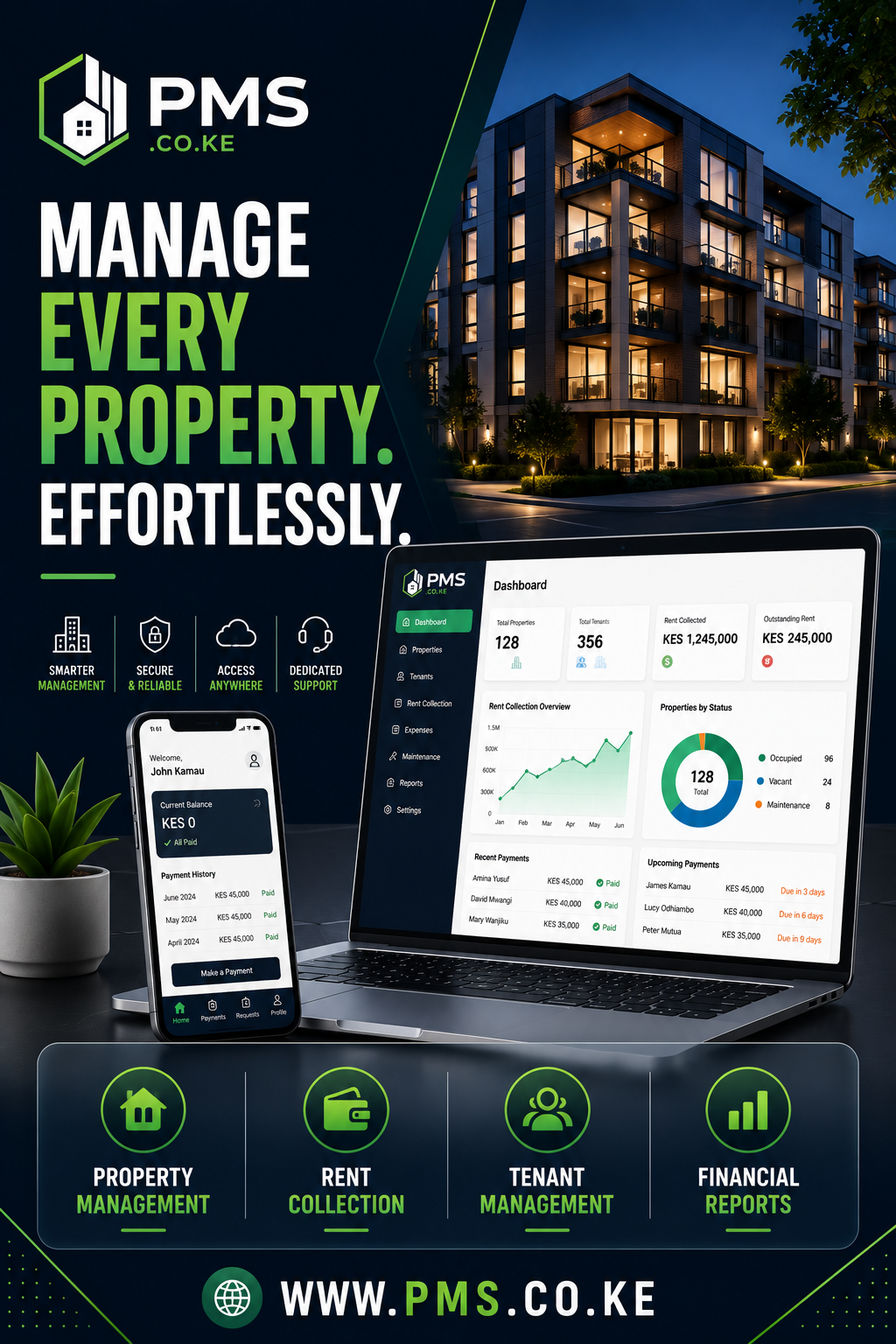
Managing multiple rental properties is no longer just about collecting rent and maintaining buildings. Today’s landlords require accurate data, financial insights, and performance metrics to maximize returns and make informed investment decisions. A Landlord Portfolio Analytics System provides a centralized platform that helps landlords analyze every aspect of their real estate portfolio, from rental income and occupancy rates to maintenance costs and long-term profitability.
As Kenya’s real estate market continues to expand, landlords are increasingly investing in residential apartments, commercial buildings, office spaces, student accommodation, and mixed-use developments. While these investments create opportunities for sustainable income, they also generate vast amounts of financial and operational data that can quickly become difficult to manage manually.
A Landlord Portfolio Analytics System simplifies this complexity by collecting information from multiple properties and presenting it through interactive dashboards, reports, and predictive analytics. Rather than relying on spreadsheets or isolated accounting records, landlords gain a comprehensive understanding of how every property contributes to overall portfolio performance.
Whether managing five rental units or hundreds of properties across different counties, implementing a Landlord Portfolio Analytics System enables landlords to improve decision-making, strengthen cash flow management, reduce operational inefficiencies, and identify new investment opportunities. Instead of reacting to problems after they occur, landlords can proactively monitor performance and make strategic adjustments that support sustainable business growth.
Table of Contents
- Understanding Property Portfolio Analytics
- Why Data-Driven Property Management Matters
- Challenges of Managing Large Property Portfolios
- How Analytics Platforms Work
- Key Features Every Analytics Solution Should Include
- Financial Performance Monitoring
- Occupancy and Vacancy Analysis
- Rental Income Performance
- Maintenance Cost Analytics
- Portfolio Growth Planning
Understanding Property Portfolio Analytics
Property portfolio analytics refers to the process of collecting, organizing, analyzing, and presenting information about multiple rental properties to support informed decision-making. A Landlord Portfolio Analytics System brings together financial records, lease information, tenant data, maintenance activities, occupancy statistics, and rental income into one integrated platform.
Instead of reviewing separate reports for each property, landlords can compare the performance of their entire portfolio through centralized dashboards. This holistic view makes it easier to identify profitable investments, monitor underperforming assets, and allocate resources more effectively.
A modern Landlord Portfolio Analytics System transforms raw operational data into actionable insights that support strategic planning. Rather than simply showing historical information, it helps landlords identify emerging trends, anticipate challenges, and forecast future portfolio performance.
Why Data-Driven Property Management Matters
The real estate industry is becoming increasingly competitive, making accurate data more valuable than ever before. Landlords who rely solely on intuition or manual recordkeeping often struggle to identify opportunities for improving profitability.
A Landlord Portfolio Analytics System enables data-driven decision-making by providing real-time visibility into key performance indicators such as rental income, occupancy rates, maintenance costs, lease renewals, and cash flow.
Data-driven management offers several important advantages:
- Improved financial transparency
- Better budgeting and forecasting
- Faster identification of operational issues
- Enhanced investment planning
- More effective resource allocation
- Improved tenant retention strategies
- Stronger long-term profitability
When landlords understand how each property contributes to overall performance, they can prioritize investments that generate the highest returns while addressing issues before they affect portfolio profitability.
Challenges of Managing Large Property Portfolios
Managing multiple rental properties manually becomes increasingly challenging as portfolios expand. Every property generates leases, tenant records, invoices, maintenance requests, inspection reports, payment histories, and financial statements. Without a centralized system, maintaining accurate records requires considerable administrative effort.
Common challenges include:
- Fragmented financial information
- Manual spreadsheet updates
- Delayed reporting
- Difficulty comparing property performance
- Inconsistent recordkeeping
- Limited forecasting capabilities
- Slow decision-making
- Reduced operational visibility
A Landlord Portfolio Analytics System addresses these challenges by consolidating information from across the portfolio into one secure environment. This reduces duplication, improves reporting accuracy, and enables landlords to monitor performance from a single dashboard.
How Analytics Platforms Work
A Landlord Portfolio Analytics System integrates information from various property management processes, creating a centralized database that continuously updates as business activities occur.
The platform typically collects data from:
- Lease agreements
- Tenant records
- Rental payments
- Receivables
- Maintenance requests
- Property expenses
- Occupancy records
- Inspection reports
- Financial transactions
Once the information is consolidated, analytical tools process the data to generate dashboards, visual reports, trend analyses, and financial forecasts.
For example, when a tenant renews a lease or a maintenance expense is recorded, the system automatically updates property performance metrics without requiring manual calculations.
This automation improves reporting accuracy while giving landlords immediate access to current portfolio performance.
Key Features Every Analytics Solution Should Include
An effective Landlord Portfolio Analytics System should provide comprehensive reporting tools that simplify property management while supporting strategic decision-making.
Interactive Dashboards
Visual dashboards present portfolio performance using charts, graphs, and key performance indicators that simplify financial analysis.
Property Comparison Reports
Compare rental income, expenses, occupancy rates, and profitability across multiple properties.
Revenue Analysis
Monitor rental collections, outstanding receivables, and long-term revenue trends.
Occupancy Monitoring
Track occupancy levels, lease expirations, tenant turnover, and vacancy performance.
Financial Forecasting
Estimate future portfolio performance using historical financial data and current operational information.
Maintenance Analytics
Analyze maintenance expenditure by property, identify recurring issues, and optimize maintenance budgets.
Custom Reporting
Generate tailored reports for investors, accountants, property managers, and financial institutions.
These capabilities help landlords monitor every aspect of portfolio performance while supporting informed investment decisions.
Financial Performance Monitoring
Understanding financial performance is essential for maximizing returns on property investments. A Landlord Portfolio Analytics System enables landlords to monitor income and expenditure across every property within their portfolio.
Key financial indicators include:
- Monthly rental income
- Annual revenue growth
- Operating expenses
- Maintenance expenditure
- Net operating income
- Cash flow
- Outstanding receivables
- Return on investment
Instead of manually preparing financial summaries, landlords receive automatically updated dashboards that provide immediate insight into overall portfolio health.
This visibility supports faster decision-making and more accurate financial planning.
Occupancy and Vacancy Analysis
Occupancy rates have a direct impact on rental income and long-term profitability. A Landlord Portfolio Analytics System enables landlords to monitor occupancy trends across all managed properties, helping identify buildings or units that require greater marketing attention.
The platform provides insights into:
- Occupancy percentages
- Lease expiry schedules
- Tenant turnover
- Average vacancy periods
- Seasonal occupancy patterns
These analytics help landlords reduce vacancy durations and improve portfolio performance through proactive leasing strategies.
Rental Income Performance
Rental income represents the foundation of every successful property investment. A Landlord Portfolio Analytics System allows landlords to analyze rental performance across different property types, locations, and tenant categories.
Revenue reports highlight:
- Income growth
- Collection performance
- Rent arrears
- Rental trends
- Property profitability
- Lease revenue projections
These insights support pricing decisions while improving long-term financial planning.
Maintenance Cost Analytics
Maintenance directly affects tenant satisfaction, property value, and investment returns. Tracking maintenance expenditure across multiple properties allows landlords to identify cost-saving opportunities without compromising service quality.
Using a Landlord Portfolio Analytics System, maintenance costs can be categorized by:
- Property
- Asset type
- Contractor
- Maintenance category
- Time period
This information supports better budgeting while identifying recurring maintenance issues that require long-term solutions.
Portfolio Growth Planning
Successful landlords continually evaluate opportunities to expand their property investments. A Landlord Portfolio Analytics System provides the analytical foundation needed to assess portfolio readiness for growth.
By monitoring financial performance, occupancy trends, rental income, maintenance expenditure, and cash flow, landlords can determine whether existing assets generate sufficient returns to support new acquisitions.
Integrated platforms such as PMS combine portfolio analytics with lease management, tenant administration, receivables management, maintenance tracking, and financial reporting, enabling landlords across Kenya to manage growing portfolios efficiently from a single centralized platform.
Benefits for Landlords
Managing multiple rental properties requires balancing financial performance, tenant satisfaction, operational efficiency, and long-term investment growth. A Landlord Portfolio Analytics System provides landlords with the tools they need to understand exactly how every property contributes to overall portfolio success.
Instead of relying on manual reports and scattered spreadsheets, landlords receive real-time dashboards that consolidate financial and operational information into one easy-to-understand view. This centralized approach makes it easier to compare property performance, identify underperforming investments, and make informed business decisions.
One of the greatest advantages of implementing a Landlord Portfolio Analytics System is improved financial visibility. Landlords can instantly review rental income, operating expenses, maintenance costs, occupancy rates, lease renewals, and projected returns without waiting for month-end reports.
The platform also helps landlords identify opportunities to maximize profitability. For example, if one property consistently experiences higher vacancy rates than similar buildings, analytics can reveal whether pricing, location, maintenance quality, or tenant retention strategies are contributing factors.
Key benefits include:
- Centralized portfolio monitoring
- Improved rental income visibility
- Better budgeting and forecasting
- Faster investment decisions
- Improved occupancy management
- Stronger cash flow planning
- Reduced operational inefficiencies
- Better long-term portfolio performance
As property portfolios continue expanding across Kenya, digital analytics provide landlords with the information needed to remain competitive while reducing administrative complexity.
Benefits for Property Managers
Property managers oversee daily operations across multiple residential, commercial, and mixed-use developments. Coordinating leases, maintenance, tenant communication, inspections, and financial reporting becomes increasingly demanding as portfolios grow.
A Landlord Portfolio Analytics System simplifies these responsibilities by providing accurate operational intelligence in real time.
Instead of manually preparing weekly performance reports, managers access live dashboards displaying occupancy levels, maintenance workloads, rental collections, receivables, lease expirations, and property performance indicators.
The system enables property managers to:
- Compare performance between properties.
- Identify maintenance trends.
- Monitor tenant turnover.
- Forecast occupancy changes.
- Analyze financial performance.
- Generate reports automatically.
- Improve operational planning.
- Respond quickly to emerging issues.
Because information updates automatically, managers spend less time gathering data and more time improving service delivery.
The Landlord Portfolio Analytics System also improves collaboration between finance teams, maintenance departments, leasing officers, and property owners by ensuring everyone works from the same reliable information.
Benefits for Real Estate Investors
Property investment decisions require accurate financial information.
Whether purchasing a new apartment complex, office building, shopping centre, or mixed-use development, investors need reliable data to evaluate expected returns.
A Landlord Portfolio Analytics System provides comprehensive investment insights by combining historical financial performance with predictive analytics.
Investors can analyze:
- Property profitability
- Rental income trends
- Occupancy performance
- Maintenance expenditure
- Operating costs
- Cash flow projections
- Portfolio diversification
- Return on investment
Instead of evaluating properties individually, investors receive portfolio-wide analytics that simplify strategic planning.
The platform also supports acquisition decisions by identifying which property categories consistently deliver stronger financial performance.
For investors expanding throughout Nairobi, Mombasa, Kisumu, Nakuru, Eldoret, and other growing markets, analytics reduce investment uncertainty while improving confidence.
Benefits for Finance Teams
Finance professionals play an essential role in maintaining healthy property operations.
Preparing budgets, reconciling accounts, forecasting income, tracking receivables, and generating financial statements all require accurate information.
A Landlord Portfolio Analytics System automates much of this work by continuously updating financial dashboards using real-time operational data.
Instead of compiling reports manually, finance teams gain immediate access to:
- Portfolio income
- Operating expenses
- Maintenance costs
- Outstanding receivables
- Cash flow trends
- Budget performance
- Financial forecasts
- Investment returns
Automation improves reporting accuracy while significantly reducing month-end workloads.
Finance managers also benefit from standardized reporting formats that simplify communication with executives, investors, lenders, auditors, and regulatory authorities.
Improving Efficiency Through Automation
Automation is transforming modern property management by eliminating repetitive administrative tasks and improving operational consistency. A Landlord Portfolio Analytics System automates data collection, financial calculations, report generation, and performance monitoring, enabling organizations to operate more efficiently.
Instead of manually updating spreadsheets whenever payments are received or leases change, the platform automatically synchronizes information across all operational modules.
Automation supports numerous processes, including:
Automated Portfolio Reporting
Performance reports update continuously using current operational information, reducing manual reporting effort.
Real-Time Financial Dashboards
Rental income, maintenance expenditure, receivables, occupancy rates, and profitability indicators are refreshed automatically throughout the day.
Lease Performance Monitoring
The system monitors lease renewals, expirations, and occupancy changes without requiring manual calculations.
Revenue Analysis
Income trends are calculated automatically across individual properties and entire portfolios.
Maintenance Performance Tracking
Maintenance requests, contractor performance, repair costs, and asset conditions contribute to operational analytics automatically.
Portfolio Benchmarking
The platform compares property performance against portfolio averages, helping identify exceptional or underperforming assets.
Automation improves consistency while allowing employees to focus on strategic decision-making instead of repetitive administrative work.
Compliance, Security and Risk Management
Property businesses manage large volumes of sensitive financial and tenant information. Protecting this data is essential for maintaining trust, meeting regulatory requirements, and ensuring business continuity.
A Landlord Portfolio Analytics System incorporates comprehensive security features designed to safeguard operational and financial records.
Common security capabilities include:
- Role-based user permissions
- Secure cloud hosting
- Data encryption
- Automated backups
- Multi-factor authentication
- Audit trails
- Activity logs
- Disaster recovery procedures
These features protect confidential information while ensuring only authorized personnel access sensitive records.
Audit trails improve accountability by recording every financial adjustment, lease modification, maintenance update, and reporting activity.
For organizations operating throughout Kenya, maintaining secure digital records also simplifies tax reporting, financial audits, and regulatory compliance.
Why PMS is the Ideal Solution
Analytics deliver the greatest value when integrated into a complete property management ecosystem rather than operating as an isolated reporting tool.
PMS combines the capabilities of a Landlord Portfolio Analytics System with lease management, tenant administration, receivables tracking, maintenance management, inspection scheduling, financial reporting, and operational dashboards.
Because every module shares a centralized database, portfolio analytics remain continuously updated as operational activities occur.
For example:
- New lease agreements immediately influence occupancy analytics.
- Rental collections automatically update revenue reports.
- Maintenance expenses affect profitability calculations.
- Tenant renewals improve occupancy forecasts.
- Receivables influence cash flow analysis.
This seamless integration eliminates duplicate data entry while improving reporting accuracy across the organization.
PMS enables landlords to:
- Monitor multiple properties from one dashboard.
- Analyze portfolio performance in real time.
- Improve financial planning.
- Strengthen investment decision-making.
- Track occupancy and vacancies.
- Monitor maintenance expenditure.
- Generate executive reports instantly.
- Scale operations as portfolios expand.
For landlords managing residential apartments, office buildings, retail centres, student housing, and mixed-use developments across Kenya, PMS provides a modern digital platform that transforms complex operational data into meaningful business intelligence.
A Landlord Portfolio Analytics System integrated within PMS empowers landlords to make faster decisions, improve portfolio profitability, optimize operational efficiency, and position their real estate investments for sustainable long-term growth.
Future Trends in Landlord Portfolio Analytics
The property management industry is rapidly embracing digital transformation, and analytics has become one of the most valuable tools available to landlords. As property portfolios continue growing across Kenya, a Landlord Portfolio Analytics System will evolve from being a reporting platform into an intelligent business management solution capable of supporting every major investment decision.
Rather than simply displaying historical information, future analytics platforms will continuously monitor property performance, identify opportunities for improvement, and recommend actions that increase profitability. This evolution will enable landlords to make faster, data-driven decisions while reducing financial uncertainty.
Artificial Intelligence for Smarter Portfolio Management
Artificial Intelligence (AI) is expected to become a core component of every modern Landlord Portfolio Analytics System. AI-powered analytics will examine rental collections, occupancy rates, maintenance records, tenant behaviour, operating expenses, and market conditions to produce highly accurate recommendations.
Instead of manually reviewing reports, landlords will receive intelligent insights such as:
- Properties likely to experience declining occupancy.
- Buildings requiring preventative maintenance.
- Units suitable for rental price adjustments.
- Areas with growing investment potential.
- Properties generating below-average returns.
- Forecasted revenue growth opportunities.
Machine learning algorithms will continuously improve these recommendations by learning from historical portfolio performance and changing market conditions.
Predictive Investment Analytics
Future analytics solutions will move beyond historical reporting to predictive investment modelling.
A Landlord Portfolio Analytics System will help landlords evaluate future investment opportunities before purchasing new properties by analysing:
- Expected rental income
- Capital appreciation potential
- Local demand trends
- Vacancy risks
- Maintenance projections
- Portfolio diversification
- Cash flow forecasts
- Long-term profitability
These predictive capabilities reduce investment risk while supporting sustainable portfolio expansion.
Cloud-Based Portfolio Intelligence
Cloud computing has transformed the accessibility of property management software.
A cloud-enabled Landlord Portfolio Analytics System allows landlords, finance managers, accountants, and property managers to securely access portfolio information from anywhere with an internet connection.
Benefits include:
- Real-time reporting
- Automatic software updates
- Secure document storage
- Multi-user collaboration
- Reduced IT infrastructure costs
- Improved disaster recovery
- Centralized information management
For landlords managing properties across Nairobi, Mombasa, Kisumu, Nakuru, Eldoret, Thika, and other regions of Kenya, cloud technology simplifies portfolio oversight regardless of location.
Mobile Analytics
Today’s landlords increasingly rely on smartphones and tablets to manage operations while travelling.
Future versions of a Landlord Portfolio Analytics System will offer complete mobile functionality, allowing users to:
- Review rental income
- Monitor occupancy
- Approve reports
- Track maintenance costs
- View investment performance
- Analyze financial dashboards
- Receive real-time alerts
- Compare property performance
Mobile accessibility enables landlords to respond quickly to changing business conditions while improving operational flexibility.
Business Intelligence Dashboards
Business intelligence will continue becoming more advanced.
Interactive dashboards within a Landlord Portfolio Analytics System will present portfolio information using dynamic charts and visual reports that simplify complex financial analysis.
Common dashboard indicators will include:
- Portfolio profitability
- Occupancy performance
- Revenue growth
- Maintenance expenditure
- Tenant retention
- Receivables analysis
- Investment returns
- Cash flow forecasts
These visual insights help landlords make confident decisions without manually preparing extensive reports.
Getting Started with a Landlord Portfolio Analytics System
Successfully implementing a Landlord Portfolio Analytics System begins with evaluating existing property management processes and identifying areas where digital analytics can improve efficiency.
Organizations should follow a structured implementation approach to maximize long-term value.
Assess Current Portfolio Management Processes
Begin by reviewing how information is currently managed across your property portfolio.
Consider questions such as:
- How is rental income monitored?
- How are maintenance costs tracked?
- How are investment reports prepared?
- How much time is spent updating spreadsheets?
- How are occupancy trends measured?
- How are financial forecasts generated?
Understanding these processes helps identify opportunities for automation.
Define Business Objectives
Every landlord has unique business goals.
Examples include:
- Improving portfolio profitability
- Increasing rental income
- Reducing vacancies
- Improving budgeting
- Enhancing financial reporting
- Supporting investment planning
- Strengthening cash flow management
- Expanding property portfolios
Clearly defined objectives ensure the Landlord Portfolio Analytics System delivers measurable business value.
Organize Existing Data
Accurate analytics depend on reliable information.
Before implementation, landlords should prepare:
- Lease agreements
- Tenant records
- Rental history
- Maintenance records
- Property expenses
- Financial statements
- Inspection reports
- Receivables information
Well-structured historical data improves reporting accuracy from the beginning.
Employee Training
Technology produces the greatest results when employees understand both the software and the operational processes it supports.
Training should include:
- Dashboard navigation
- Financial reporting
- Portfolio analysis
- Data entry standards
- Investment reporting
- Occupancy monitoring
- Performance interpretation
Well-trained employees improve reporting consistency while maximizing the value of the platform.
Continuous Improvement
Property portfolios evolve continuously.
Organizations should regularly review performance metrics, update reporting requirements, monitor investment performance, and refine operational workflows.
A Landlord Portfolio Analytics System supports continuous improvement by providing measurable insights that guide future business decisions.
Conclusion
Managing a successful property portfolio requires more than collecting rent and maintaining buildings. Modern landlords need accurate financial information, operational visibility, and predictive analytics that support informed investment decisions.
A Landlord Portfolio Analytics System provides these capabilities by centralizing portfolio information, monitoring financial performance, analyzing occupancy trends, tracking maintenance expenditure, and generating comprehensive business intelligence.
For landlords operating throughout Kenya, adopting a digital analytics platform strengthens cash flow management, improves budgeting, supports investment planning, and enhances overall portfolio profitability.
Integrated solutions such as PMS extend these benefits by combining analytics with lease management, tenant administration, receivables management, maintenance coordination, inspections, and financial reporting within one centralized platform. This unified approach reduces administrative workload while enabling landlords to make confident, data-driven decisions that support sustainable growth.
As Kenya’s property market continues expanding, organizations that implement a Landlord Portfolio Analytics System will be better positioned to maximize returns, improve operational efficiency, strengthen tenant satisfaction, and achieve long-term investment success.
