
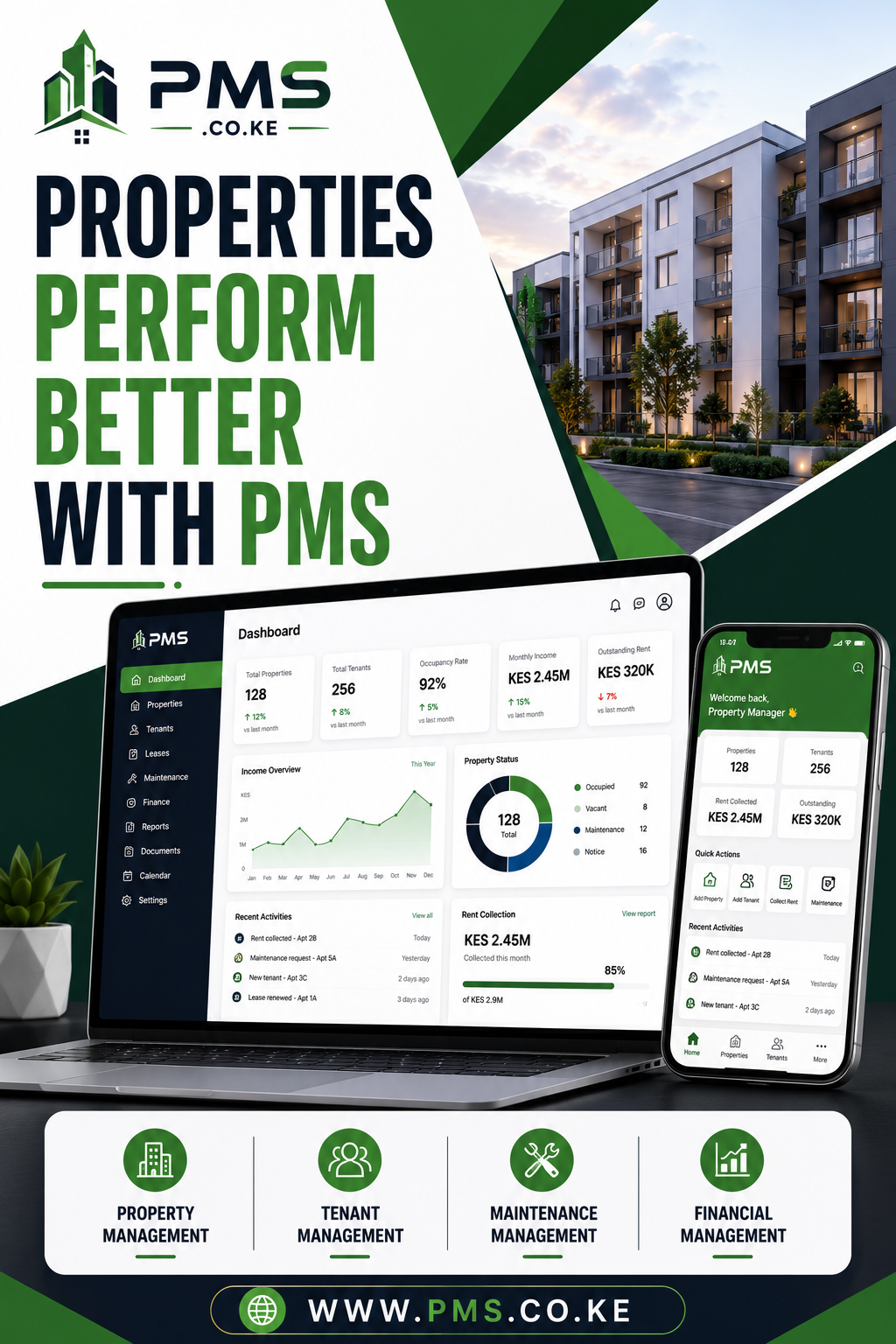
Residential Landlord Management Software helps landlords, property owners, and rental managers organize the daily operations of residential properties from a centralized platform. Instead of relying on notebooks, spreadsheets, messaging applications, and separate payment records, landlords can use Residential Landlord Management Software to manage tenants, rental units, rent payments, maintenance requests, leases, expenses, and property records more efficiently.
For landlords managing several apartments, houses, flats, or residential units, having a centralized system can reduce administrative work, improve financial visibility, and make tenant management easier. Residential Landlord Management Software can also help landlords keep accurate records and provide better services to tenants.
What Is Residential Landlord Management Software?
Residential Landlord Management Software is a digital platform designed to help landlords manage residential rental properties and their associated administrative activities.
Depending on the platform, landlords can manage:
- Rental properties
- Individual units
- Tenant records
- Lease agreements
- Rent payments
- Outstanding balances
- Maintenance requests
- Property expenses
- Income records
- Tenant communication
- Reports
- Documents
Instead of managing information across different files, the landlord can access important property information from one centralized system.
Why Landlords Need Residential Landlord Management Software
Managing rental properties manually becomes increasingly difficult as the number of units grows.
A landlord may need to keep track of:
- Which tenants have paid rent
- Which tenants have outstanding balances
- When leases expire
- Which units are vacant
- Maintenance requests
- Property expenses
- Tenant contact details
- Monthly rental income
Using separate spreadsheets and paper records can increase the risk of errors and make it difficult to retrieve information quickly.
Residential Landlord Management Software organizes these processes and provides landlords with better control over their rental operations.
Property Management
A landlord can use the software to create records for individual properties.
Property information may include:
- Property name
- Property location
- Property type
- Number of units
- Unit numbers
- Rental rates
- Occupancy status
- Property expenses
This makes it easier to manage multiple residential properties from one platform.
Rental Unit Management
Each property can contain multiple rental units.
Residential Landlord Management Software can help landlords monitor:
- Occupied units
- Vacant units
- Reserved units
- Unit rental rates
- Current tenants
- Lease information
- Payment status
A clear unit management system gives landlords an overview of their property portfolio.
Tenant Management
Tenant information is an important component of rental property administration.
A landlord can maintain records containing:
- Tenant names
- Phone numbers
- Email addresses
- Identification details
- Occupied unit
- Lease information
- Payment history
- Outstanding balances
- Communication records
Centralized tenant records make it easier to retrieve information whenever it is needed.
Rent Collection Management
Rent collection is one of the most important responsibilities of a residential landlord.
Residential Landlord Management Software can help track:
- Monthly rent charges
- Payments received
- Outstanding balances
- Payment dates
- Partial payments
- Payment history
- Tenant balances
Instead of manually checking several payment records, landlords can view rental income information from a centralized dashboard.
Rent Payment Tracking
A good system should make it easy to determine whether a tenant has paid.
For each tenant, the landlord can potentially view:
- Amount billed
- Amount paid
- Payment date
- Outstanding balance
- Previous payments
- Payment status
This provides better financial visibility and reduces confusion around rental payments.
Automated Rent Records
Automated records can make rental administration more efficient.
When a payment is recorded, the system can update the tenant’s account and maintain a historical record.
This can help landlords avoid repeatedly updating spreadsheets or manually calculating balances.
Tenant Statements
Tenant statements provide a detailed history of financial activity.
A statement may include:
- Previous balances
- Rent charges
- Payments
- Adjustments
- Outstanding amounts
- Current balance
Statements can help landlords and tenants understand exactly how an account balance was calculated.
Lease Management
Lease agreements contain important information about rental arrangements.
Residential Landlord Management Software can help landlords keep track of:
- Lease start dates
- Lease expiry dates
- Rental amounts
- Security deposits
- Tenant information
- Renewal dates
- Unit information
Keeping lease information organized helps landlords avoid missing important dates.
Lease Expiry Notifications
A property management platform can help landlords monitor upcoming lease expirations.
This allows landlords to prepare for:
- Lease renewal
- Rent adjustments
- Tenant communication
- Property inspections
- Vacancy management
Early awareness of lease expiry dates can improve property planning.
Maintenance Management
Maintenance is another major part of residential property management.
Tenants may report problems involving:
- Plumbing
- Electricity
- Water systems
- Doors
- Windows
- Roofing
- Appliances
- Common areas
Residential Landlord Management Software can organize these requests and help landlords track them until completion.
Maintenance Request Tracking
A maintenance workflow may include:
- Tenant submits a request.
- Landlord reviews the issue.
- Maintenance personnel are assigned.
- Work is completed.
- The request is marked as resolved.
This creates a record of maintenance activities for future reference.
Property Expense Management
Landlords need to track expenses associated with maintaining rental properties.
Expenses may include:
- Repairs
- Utilities
- Cleaning
- Security
- Landscaping
- Property management costs
- Maintenance materials
- Service providers
Recording these expenses provides a clearer picture of property profitability.
Occupancy Management
Residential Landlord Management Software can help landlords monitor property occupancy.
A dashboard may show:
- Total units
- Occupied units
- Vacant units
- Available units
- Upcoming vacancies
This allows landlords to identify vacancies quickly and begin finding new tenants.
Financial Reporting
Reporting provides landlords with insights into property performance.
Reports may include:
- Rental income
- Outstanding rent
- Expenses
- Property profitability
- Occupancy
- Tenant balances
- Payment history
- Maintenance costs
Financial reports can help landlords understand how individual properties and units are performing.
Tenant Communication
Good communication contributes to better landlord-tenant relationships.
A property management platform can help organize communications relating to:
- Rent reminders
- Maintenance updates
- Notices
- Lease renewals
- Property announcements
- Payment confirmations
Centralizing communication can make tenant management more organized.
Document Management
Landlords often need to store important documents.
These may include:
- Lease agreements
- Tenant documents
- Property records
- Maintenance documents
- Receipts
- Notices
- Inspection reports
Digital document management makes these records easier to retrieve and organize.
Residential Landlord Management Software for Kenya
Residential Landlord Management Software is increasingly useful for landlords managing apartments, rental houses, estates, and residential units across Kenya.
Landlords operating properties in Nairobi, Mombasa, Kisumu, Nakuru, Eldoret, Thika, and other locations can use property management technology to centralize rental operations.
A suitable system can help manage:
- Tenants
- Units
- Rent collection
- Payment records
- Maintenance
- Expenses
- Leases
- Reports
For landlords with multiple properties, centralized management can significantly reduce administrative complexity.
Mobile Access
Landlords and property managers may need access to information while away from their offices.
A cloud-based Residential Landlord Management Software platform can provide access through computers, tablets, or smartphones, depending on the system.
Mobile access can be useful when landlords need to:
- Check tenant balances.
- Review maintenance requests.
- Confirm payments.
- View property information.
- Check vacancies.
Security and Access Control
Rental management systems contain sensitive property and tenant information.
A professional platform should provide appropriate security measures such as:
- Secure login
- User permissions
- Data backups
- Access controls
- Secure connections
- Activity tracking
Different employees can also be given different permissions depending on their responsibilities.
Why Choose a Centralized Rental Management Platform?
A centralized system provides landlords with one location for managing their rental operations.
Instead of maintaining separate records for:
- Tenants
- Payments
- Maintenance
- Leases
- Expenses
- Properties
the landlord can manage these areas within one connected system.
This reduces duplication and makes it easier to obtain a complete view of property performance.
Choosing Residential Landlord Management Software
Before selecting a system, landlords should consider:
Property Management Features
Does the platform support multiple properties and rental units?
Tenant Management
Can tenant records be created and maintained easily?
Rent Management
Can the system track rent charges, payments, and outstanding balances?
Maintenance
Can tenants and property managers record and monitor maintenance requests?
Reporting
Does the platform provide useful financial and property reports?
Scalability
Can the software support additional properties and tenants as the landlord expands?
Security
Does the system protect tenant and financial information?
Ease of Use
Can landlords and staff learn the system without extensive technical training?
Conclusion
Residential Landlord Management Software provides landlords with a centralized way to manage properties, tenants, rent payments, leases, maintenance, expenses, documents, and reports. By replacing fragmented manual processes with an organized digital system, landlords can improve efficiency and gain greater visibility into their rental operations.
For landlords managing residential properties in Kenya, a suitable platform can simplify rent collection management, tenant administration, maintenance coordination, occupancy monitoring, and financial reporting. As rental portfolios grow, adopting Residential Landlord Management Software can provide the organization and control needed to manage properties more efficiently.
