
Rental Asset Management Platform
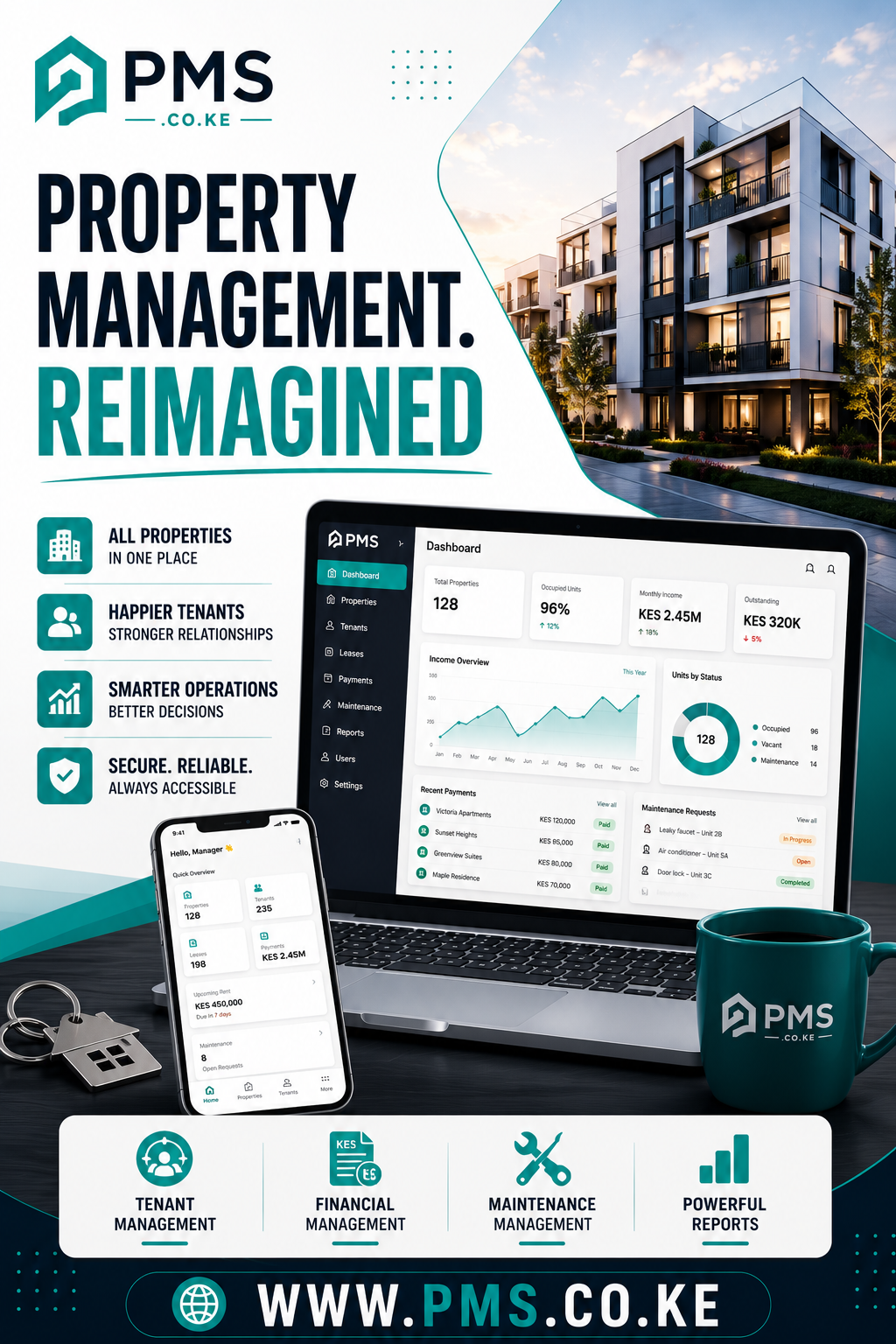
Managing rental properties involves much more than collecting rent and keeping tenant records. Property owners and managers must oversee physical assets, monitor property performance, schedule maintenance, manage leases, track financial performance, and ensure that every property continues generating maximum value. A Rental Asset Management Platform brings all these responsibilities together into a centralized digital solution, enabling property professionals to manage their entire portfolio more efficiently while improving long-term profitability.
Across Kenya, the real estate industry continues to grow as investors expand residential apartments, commercial buildings, office complexes, student housing, and mixed-use developments. As property portfolios become larger and more complex, traditional management methods such as spreadsheets, paper files, and disconnected software applications are no longer sufficient. A modern Rental Asset Management Platform provides real-time visibility into every property asset, helping organizations make informed decisions while reducing administrative workload.
Every rental property contains valuable assets that require ongoing monitoring. These include buildings, apartments, offices, parking spaces, elevators, generators, water systems, security equipment, furniture, appliances, and shared facilities. Without proper asset management, maintenance schedules may be overlooked, repairs delayed, equipment lifecycles shortened, and operating costs increased. Rental Asset Management Platform technology helps eliminate these challenges by providing accurate records, automated reminders, maintenance coordination, and comprehensive reporting.
Property owners also need reliable financial information to understand how each asset contributes to overall portfolio performance. By combining asset records with lease management, maintenance history, tenant information, occupancy data, and financial reporting, a Rental Asset Management Platform provides a complete picture of every investment under management.
Whether managing residential apartments in Nairobi, commercial office spaces in Mombasa, student accommodation in Eldoret, shopping centres in Kisumu, or mixed-use developments across Kenya, adopting a centralized asset management solution enables property managers to improve operational efficiency, protect investments, and maximize long-term returns.
Table of Contents
- Understanding Rental Asset Management
- Why Effective Asset Management Matters
- Core Features of Modern Asset Management Platforms
- Managing Property Assets Efficiently
- Maintenance Planning and Lifecycle Management
- Financial Visibility and Asset Performance
- Reporting and Business Intelligence
- Supporting Better Property Decisions
- Applications Across Different Property Portfolios
Understanding Rental Asset Management
Property management extends beyond tenants and leases. Every building contains physical assets that require regular monitoring, maintenance, and financial oversight. A Rental Asset Management Platform enables organizations to record, organize, monitor, and manage these assets throughout their lifecycle.
Instead of maintaining separate spreadsheets for maintenance schedules, equipment inventories, financial records, and inspections, all information is stored within a centralized platform. Property managers can instantly access asset histories, maintenance records, depreciation information, warranties, inspection reports, and performance metrics.
This integrated approach improves operational efficiency while ensuring valuable property assets receive the attention they require to remain productive and reliable.
Why Effective Asset Management Matters
Property assets represent significant financial investments. Failing to maintain them properly can result in higher repair costs, unexpected equipment failures, dissatisfied tenants, and declining property value. Rental Asset Management Platform technology enables organizations to monitor every asset proactively, ensuring issues are identified before they become major problems.
Effective asset management helps organizations:
- Protect property investments
- Extend asset lifespan
- Reduce maintenance costs
- Improve operational efficiency
- Increase tenant satisfaction
- Support financial planning
- Improve compliance
- Maximize property value
For property owners across Kenya, maintaining assets effectively contributes directly to stronger financial performance and long-term investment success.
Core Features of Modern Asset Management Platforms
A comprehensive Rental Asset Management Platform includes powerful tools designed to simplify every aspect of property asset administration.
Typical features include:
- Asset inventory management
- Property registers
- Maintenance scheduling
- Inspection management
- Lease integration
- Tenant management
- Asset lifecycle tracking
- Warranty management
- Financial reporting
- Occupancy monitoring
- Document management
- Automated reminders
- Performance dashboards
- Role-based user permissions
- Mobile accessibility
Together, these capabilities provide complete visibility into the condition, value, and performance of every property asset.
Managing Property Assets Efficiently
One of the primary advantages of a Rental Asset Management Platform is centralized asset visibility. Property managers can maintain detailed records for every physical asset within their portfolio, ensuring accurate information is always available.
Assets commonly managed include:
- Residential units
- Commercial offices
- Retail spaces
- Parking areas
- Lifts and elevators
- Water pumps
- Backup generators
- Security systems
- Air conditioning systems
- Furniture and appliances
Each asset record may include purchase dates, maintenance history, warranty information, inspection reports, assigned contractors, and expected replacement timelines.
Having this information readily available enables property managers to make informed operational and financial decisions.
Maintenance Planning and Lifecycle Management
Preventive maintenance is essential for protecting valuable property assets. A Rental Asset Management Platform helps organizations schedule maintenance based on time intervals, equipment usage, inspection results, or manufacturer recommendations.
Managers can plan:
- Routine inspections
- Preventive maintenance
- Equipment servicing
- Safety checks
- Asset replacements
- Contractor visits
- Emergency repairs
- Warranty servicing
Regular maintenance extends asset lifespans while reducing unexpected failures and costly emergency repairs.
Lifecycle management also helps organizations forecast future capital expenditures and prioritize investment decisions.
Financial Visibility and Asset Performance
Understanding the financial performance of property assets is essential for successful portfolio management. Rental Asset Management Platform software combines operational and financial information, allowing managers to evaluate how individual assets contribute to overall profitability.
Financial insights may include:
- Maintenance expenses
- Operating costs
- Asset depreciation
- Rental income
- Return on investment
- Capital expenditure
- Repair history
- Asset valuation
These reports enable property owners to identify underperforming assets, improve budgeting, and optimize investment strategies.
Reporting and Business Intelligence
Modern property management depends on accurate reporting. A Rental Asset Management Platform generates detailed reports that help organizations monitor asset condition, maintenance performance, occupancy trends, and financial health.
Typical reports include:
- Asset inventory reports
- Maintenance schedules
- Asset utilization
- Inspection summaries
- Financial performance
- Property profitability
- Lifecycle analysis
- Capital planning
- Contractor performance
- Portfolio summaries
These reports support strategic planning while providing valuable insights for owners, investors, and management teams.
Supporting Better Property Decisions
Property managers make important decisions every day regarding maintenance, leasing, budgeting, and capital investments. Rental Asset Management Platform technology provides accurate operational data that supports confident decision-making.
Managers can use the platform to:
- Prioritize maintenance projects
- Evaluate asset performance
- Plan property improvements
- Forecast replacement costs
- Monitor investment returns
- Improve budgeting accuracy
- Reduce operational risks
- Optimize portfolio performance
Data-driven decision-making helps organizations maximize both operational efficiency and financial returns.
Applications Across Different Property Portfolios
A Rental Asset Management Platform supports many different types of property investments across Kenya.
Residential property managers use the platform to monitor apartments, houses, shared facilities, maintenance schedules, and tenant services.
Commercial property owners oversee office buildings, retail units, meeting facilities, parking areas, and shared infrastructure.
Student accommodation providers manage rooms, furniture, appliances, maintenance requests, and occupancy throughout academic terms.
Hospitality businesses operating serviced apartments can monitor accommodation assets, maintenance activities, and guest facilities.
Real estate investment companies use centralized asset management to oversee diverse portfolios spanning multiple locations while improving reporting and operational consistency.
Mixed-use developments benefit from integrated management of residential, retail, commercial, and shared community assets from one centralized system.
For organizations looking for a complete property management solution, PMS naturally combines asset management, tenant administration, lease management, maintenance coordination, occupancy monitoring, inspections, financial reporting, and portfolio analytics into a single integrated platform. This enables property managers to protect valuable investments while delivering efficient services and supporting long-term portfolio growth.
Benefits of Rental Asset Management Platform for Different Stakeholders
A modern Rental Asset Management Platform creates value for every stakeholder involved in property ownership and management. From investors and property managers to maintenance teams, finance departments, and tenants, centralized asset management improves visibility, strengthens accountability, and enhances operational efficiency.
As property portfolios continue to expand across Kenya, managing assets through a unified platform allows organizations to make informed decisions while reducing manual work and improving service delivery.
Property Owners and Investors
Property owners need accurate information about the performance and condition of their investments. Rental Asset Management Platform software provides real-time insights into asset value, maintenance costs, occupancy, and financial returns.
Key benefits include:
- Better portfolio visibility
- Higher return on investment
- Reduced operational costs
- Improved asset utilization
- Longer asset lifespan
- Better budgeting
- Improved investment planning
- Increased property value
With centralized reporting, investors can evaluate the health of their portfolio and make strategic decisions based on reliable data.
Property Managers
Managing multiple buildings, tenants, and physical assets becomes significantly easier with Rental Asset Management Platform technology.
Property managers can:
- Track all property assets
- Schedule preventive maintenance
- Monitor inspections
- Manage leases alongside assets
- Coordinate contractors
- Generate operational reports
- Monitor occupancy trends
- Improve daily workflows
By reducing manual administration, managers have more time to focus on tenant satisfaction and property performance.
Maintenance Teams
Maintenance teams play an important role in preserving property value. Rental Asset Management Platform software helps maintenance personnel stay organized by providing complete visibility into service schedules and repair requirements.
Benefits include:
- Preventive maintenance planning
- Work order tracking
- Asset maintenance history
- Contractor coordination
- Faster issue resolution
- Better resource allocation
- Reduced emergency repairs
- Improved maintenance efficiency
Proper maintenance planning extends equipment life while reducing costly breakdowns.
Finance Departments
Financial teams require accurate operational data to support budgeting and reporting.
Using Rental Asset Management Platform, finance teams can monitor:
- Maintenance expenses
- Asset depreciation
- Capital expenditure
- Operating costs
- Rental income
- Budget performance
- Financial forecasts
- Portfolio profitability
These insights improve financial planning and support long-term investment strategies.
Tenants
Although tenants may not access the platform directly, they experience its benefits through improved property management.
Advantages include:
- Faster maintenance services
- Better property conditions
- Reliable shared facilities
- Improved communication
- Safer environments
- Better overall living and working experiences
Well-maintained properties contribute to higher tenant satisfaction and stronger lease renewal rates.
Improving Efficiency Through Automation
Automation has transformed modern property management by reducing repetitive administrative work and improving operational consistency. Rental Asset Management Platform software automates many of the routine tasks involved in managing property assets.
Automated Maintenance Scheduling
Routine servicing no longer depends on manual calendars or reminders.
The system automatically schedules:
- Preventive maintenance
- Equipment inspections
- Safety checks
- Generator servicing
- Lift inspections
- Water system maintenance
- Electrical inspections
- HVAC servicing
This ensures assets receive timely maintenance and remain in excellent working condition.
Automated Asset Tracking
Whenever new assets are added, serviced, relocated, or retired, Rental Asset Management Platform automatically updates the asset register.
Managers always have access to accurate information regarding:
- Asset location
- Maintenance history
- Current condition
- Warranty status
- Expected replacement dates
This improves record accuracy while reducing administrative effort.
Automated Notifications
The platform automatically reminds staff about important events, including:
- Upcoming maintenance
- Warranty expirations
- Scheduled inspections
- Contractor appointments
- Asset replacements
- Compliance checks
- Lease-related maintenance
- Asset servicing deadlines
Automation helps ensure important activities are never overlooked.
Automated Reporting
Instead of manually compiling reports, Rental Asset Management Platform generates detailed operational and financial reports automatically.
Examples include:
- Asset performance reports
- Maintenance summaries
- Inspection reports
- Cost analysis
- Asset utilization
- Lifecycle reports
- Financial performance
- Portfolio dashboards
These reports support better planning while saving valuable administrative time.
Compliance, Security and Risk Management
Property management involves valuable financial and operational information that must be protected. Rental Asset Management Platform includes security features that safeguard sensitive data while supporting regulatory compliance and organizational accountability.
Role-Based User Access
Different employees require different levels of access.
Typical user roles include:
- Property Owners
- Property Managers
- Maintenance Managers
- Finance Teams
- Contractors
- Administrators
Each role accesses only the information necessary for its responsibilities.
Secure Asset Records
The platform securely stores:
- Asset inventories
- Maintenance history
- Warranty documents
- Inspection reports
- Financial records
- Property documentation
- Contractor information
Centralized digital storage improves record management while reducing the risk of lost documents.
Audit Trails
Every significant activity within Rental Asset Management Platform can be recorded automatically.
Audit logs include:
- User logins
- Asset updates
- Maintenance changes
- Inspection records
- Financial modifications
- Administrative actions
These records improve accountability and simplify future audits.
Backup and Disaster Recovery
Reliable backup systems protect valuable operational information.
Modern platforms provide:
- Automated backups
- Secure cloud storage
- Historical record preservation
- Disaster recovery planning
- Configuration recovery
These capabilities ensure business continuity even during unexpected system failures.
Reducing Operational Risks
Accurate asset management helps organizations reduce risks such as:
- Missed maintenance
- Equipment failures
- Asset loss
- Budget overruns
- Compliance violations
- Unexpected repair costs
Digital management significantly improves operational reliability.
Why PMS is the Ideal Rental Asset Management Platform
Managing rental assets efficiently requires more than maintaining an inventory. Property managers need a comprehensive solution that integrates asset management with leasing, maintenance, occupancy monitoring, inspections, tenant management, and financial reporting. PMS has been designed to deliver exactly that.
The platform enables organizations to manage all aspects of their property portfolio from a single centralized system while maintaining complete visibility over every asset throughout its lifecycle.
Key capabilities include:
- Centralized asset management
- Tenant management
- Lease administration
- Occupancy monitoring
- Preventive maintenance scheduling
- Inspection management
- Financial reporting
- Property dashboards
- Multi-property management
- Document management
- Automated notifications
- Role-based user permissions
Because PMS supports portfolios of all sizes, it is suitable for landlords, property management companies, real estate developers, housing associations, and commercial property owners throughout Kenya. Its integrated approach simplifies operations while improving efficiency and long-term asset performance.
Future Trends in Rental Asset Management Platform
Technology continues reshaping property management, and Rental Asset Management Platform solutions will become even more intelligent as digital transformation accelerates.
Artificial Intelligence
AI will increasingly help organizations:
- Predict maintenance requirements
- Forecast asset failures
- Recommend replacement schedules
- Analyze investment performance
- Optimize maintenance budgets
Predictive Analytics
Historical asset data will support:
- Capital planning
- Maintenance forecasting
- Lifecycle optimization
- Investment analysis
- Budget preparation
These insights will help property managers make smarter long-term decisions.
Internet of Things (IoT)
Smart buildings are becoming increasingly common.
Future Rental Asset Management Platform solutions will integrate with:
- Smart electricity meters
- Water monitoring systems
- Smart access control
- Environmental sensors
- Energy management systems
These integrations will provide real-time operational intelligence.
Mobile Asset Management
Mobile applications will continue enabling managers to:
- Conduct inspections
- Update asset records
- Approve maintenance
- Monitor portfolios remotely
- Communicate with contractors
This flexibility improves responsiveness and operational efficiency.
Greater Automation
Future platforms will automate:
- Maintenance scheduling
- Contractor assignments
- Asset lifecycle tracking
- Compliance monitoring
- Financial reporting
Automation will continue reducing manual work while improving consistency.
Getting Started with Rental Asset Management Platform
Implementing Rental Asset Management Platform successfully begins with creating a complete inventory of all property assets across your portfolio. Organizations should document buildings, equipment, shared facilities, appliances, infrastructure, maintenance history, warranties, and inspection records before importing the information into the system.
After setting up the platform, administrators should configure user roles, organize assets by property, establish preventive maintenance schedules, and define automated reminders for servicing, inspections, and warranty renewals. Training staff ensures they understand how to manage asset records, generate reports, and monitor maintenance activities efficiently.
Regularly reviewing asset performance, maintenance costs, occupancy trends, and financial reports allows organizations to identify improvement opportunities and maximize the value of their investments. For property owners and managers across Kenya, adopting a centralized asset management solution provides the operational control needed to protect assets, improve service quality, and support long-term portfolio growth.
Conclusion
Managing rental assets effectively is essential for protecting property investments and maximizing long-term profitability. As property portfolios become larger and more complex, manual asset management methods often result in missed maintenance, inaccurate records, higher operational costs, and reduced efficiency. Rental Asset Management Platform provides the centralized visibility, automation, and reporting capabilities needed to manage property assets throughout their entire lifecycle.
By integrating asset inventories, maintenance scheduling, inspections, lease management, financial reporting, and occupancy monitoring into one unified platform, property managers can streamline operations while making better-informed decisions. This not only extends the lifespan of valuable assets but also improves tenant satisfaction and enhances overall portfolio performance.
Whether managing residential apartments, commercial buildings, mixed-use developments, student accommodation, or large investment portfolios, organizations that implement Rental Asset Management Platform solutions are better equipped to improve efficiency, reduce costs, and achieve sustainable growth. With a comprehensive platform like PMS, Kenyan property owners and managers can confidently manage every property asset while building stronger, more profitable real estate portfolios.
