
Digital Tenant Records Management – Complete Guide for Modern Property Management
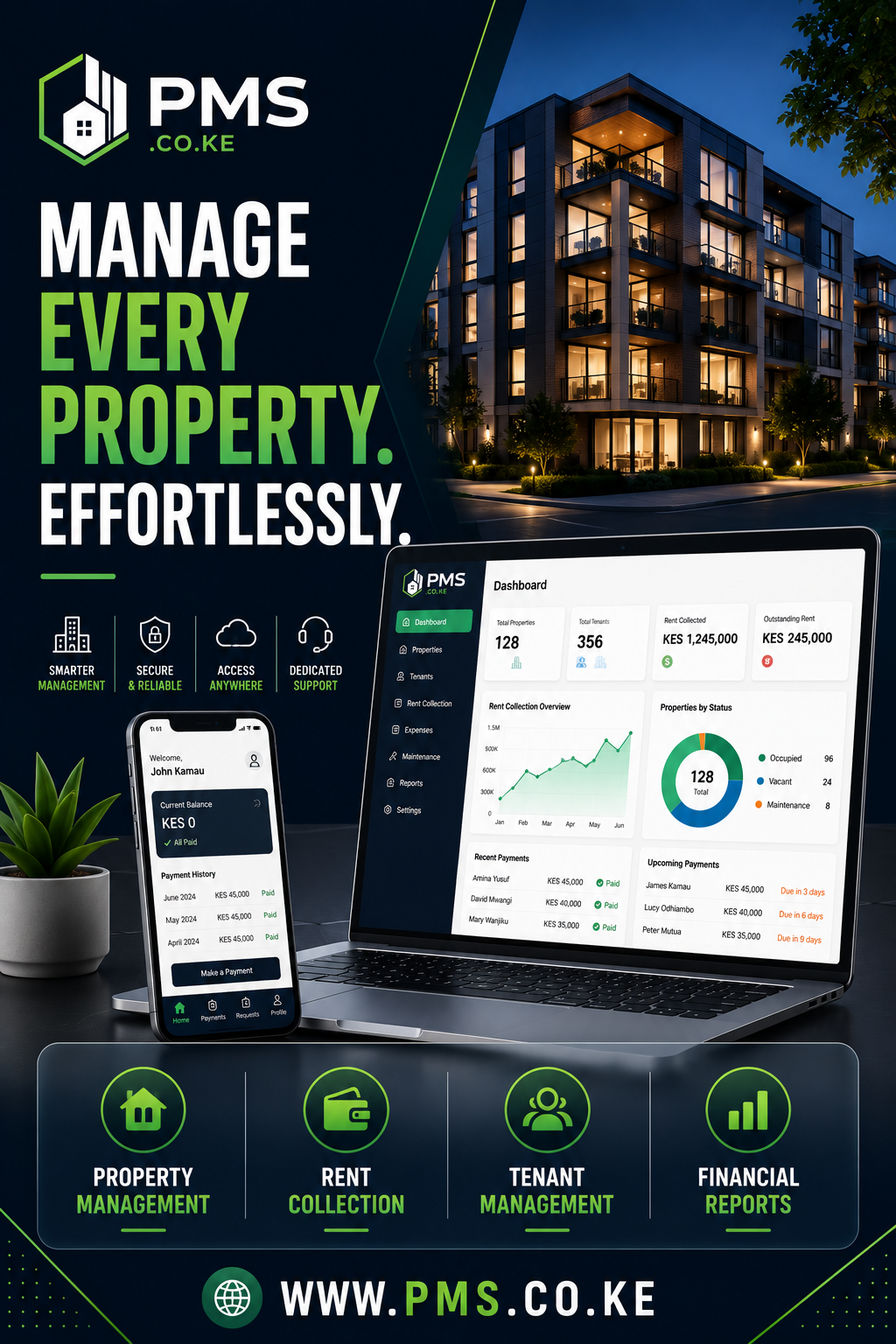
Managing tenant information efficiently is one of the most important responsibilities in modern property management. Every tenant relationship generates valuable records including personal information, lease agreements, rent payment history, security deposits, maintenance requests, communication logs, inspection reports, notices, identification documents, and occupancy records. As property portfolios continue expanding across Kenya, managing these records manually becomes increasingly difficult, often leading to misplaced documents, delayed responses, inconsistent information, and administrative inefficiencies.
Landlords, estate managers, property management companies, developers, commercial property owners, housing organizations, and institutional investors require secure systems capable of organizing large volumes of tenant information while maintaining accuracy and accessibility.
Digital Tenant Records Management provides a centralized platform that securely stores, organizes, updates, and retrieves every tenant record from one integrated environment.
Instead of relying on filing cabinets, spreadsheets, handwritten notes, email folders, and disconnected software systems, property managers gain immediate access to complete tenant information whenever required.
Every tenant profile can contain personal details.
Lease agreements.
Payment history.
Service charge records.
Maintenance requests.
Communication history.
Inspection reports.
Notice letters.
Emergency contacts.
Supporting documents.
Occupancy history.
These records remain continuously synchronized throughout the tenancy lifecycle.
Automation significantly improves administrative efficiency.
New tenants are registered digitally.
Documents are attached immediately.
Payment history updates automatically.
Lease information synchronizes continuously.
Maintenance activities become linked directly to tenant accounts.
Managers therefore spend less time searching for information while improving operational accuracy.
Data consistency also improves considerably.
Because every department works from one centralized database, duplicate records and conflicting information are significantly reduced.
Property managers, accountants, leasing teams, maintenance coordinators, and customer service personnel all access the same accurate tenant information.
Tenant service similarly improves.
Whenever tenants contact management regarding payments, maintenance, lease renewals, or account enquiries, administrators retrieve complete account histories instantly.
This enables faster response times while improving customer satisfaction.
Security remains a critical consideration.
Tenant records frequently contain confidential personal information, financial data, identification documents, tenancy agreements, and legal correspondence.
Digital Tenant Records Management protects this information through secure authentication, role-based access controls, encrypted databases, automated backups, and comprehensive audit trails.
Scalability provides another important advantage.
Whether managing one apartment building or thousands of residential and commercial properties distributed across multiple locations, the platform continues supporting efficient record administration without increasing operational complexity.
Historical information also becomes significantly more valuable.
Organizations can review previous leases, payment histories, maintenance records, communication logs, tenant retention, occupancy trends, and account activity over multiple years.
These insights strengthen operational planning while improving long-term portfolio management.
As Kenya’s property sector continues embracing digital transformation, centralized tenant record management has become an essential operational requirement.
For landlords, developers, estate managers, property management companies, commercial property owners, and institutional investors throughout Kenya, implementing Digital Tenant Records Management improves operational efficiency, strengthens data security, enhances customer service, reduces administrative workloads, and creates a scalable foundation for sustainable property management.
Table of Contents
- Understanding Digital Tenant Records Management
- Why Digital Tenant Records Matter
- Core Features of Digital Tenant Records Management
- Tenant Profiles and Record Administration
- Document Storage and Digital File Management
- Payment History and Financial Records
- Security, Compliance, and Information Management
- Challenges of Manual Tenant Record Management
Understanding Digital Tenant Records Management
Every tenancy generates a large amount of operational information.
Lease agreements.
Payment records.
Identification documents.
Maintenance requests.
Communication logs.
Inspection reports.
Renewal notices.
Occupancy history.
Managing these records manually becomes increasingly difficult as property portfolios grow.
Digital Tenant Records Management centralizes all tenant information within one secure digital platform.
Every tenant receives a complete electronic profile that remains updated throughout the tenancy lifecycle.
Whenever rent payments are received, financial records update automatically.
Maintenance requests become linked directly to tenant accounts.
Lease renewals extend contractual histories.
Communication remains permanently documented.
Managers therefore gain complete visibility into every tenant relationship while eliminating repetitive administrative tasks.
Historical information remains equally accessible.
Organizations can review previous contracts, payment performance, maintenance activities, occupancy records, and communication histories whenever required.
This strengthens customer service while improving operational decision-making.
Why Digital Tenant Records Matter
Accurate tenant records directly influence service quality, financial reporting, occupancy management, compliance, and legal administration.
Without centralized records, important information frequently becomes fragmented across multiple departments.
Paper documents become misplaced.
Spreadsheets become outdated.
Communication histories become incomplete.
Duplicate records increase.
Administrative workloads continue growing.
Digital Tenant Records Management eliminates these challenges through centralized information management.
Every department accesses the same accurate tenant information from one secure environment.
Managers therefore improve productivity while strengthening operational consistency.
Property owners also benefit because reporting becomes more reliable while tenant administration becomes more transparent.
Core Features of Digital Tenant Records Management
Professional tenant record management platforms combine numerous administrative capabilities.
Digital tenant registration.
Electronic document storage.
Lease management.
Payment history.
Maintenance records.
Communication logs.
Inspection reports.
Occupancy tracking.
Notice management.
Historical reporting.
Audit trails.
Owner reporting.
Business intelligence dashboards.
Automated record synchronization.
Secure user permissions.
Together these capabilities make Digital Tenant Records Management an essential component of professional property management.
Tenant Profiles and Record Administration
Efficient tenant administration begins with accurate information.
Each tenant profile should contain complete personal information, emergency contacts, tenancy details, payment history, lease documentation, communication records, and occupancy history.
Digital Tenant Records Management provides structured digital profiles that remain synchronized continuously.
Managers update information once.
Every authorized department immediately accesses the latest records.
Historical information also remains securely preserved.
Tenant administration therefore becomes faster, more organized, and significantly more accurate.
Document Storage and Digital File Management
Property organizations manage thousands of important documents throughout the tenancy lifecycle.
Lease agreements.
Identification documents.
Inspection reports.
Maintenance approvals.
Payment receipts.
Legal correspondence.
Renewal agreements.
Supporting documentation.
Digital Tenant Records Management centralizes these documents within secure electronic storage.
Digital filing eliminates paper archives while improving accessibility and document organization.
Authorized users retrieve information within seconds rather than searching physical filing systems.
Payment History and Financial Records
Every tenant account generates valuable financial information.
Rent payments.
Service charges.
Security deposits.
Refunds.
Outstanding balances.
Payment adjustments.
Historical transactions.
Digital Tenant Records Management continuously synchronizes these financial records with tenant accounts.
Managers therefore maintain accurate payment histories while improving reconciliation, reporting, and customer service.
Historical payment analysis further supports tenant evaluation and long-term financial planning.
Security, Compliance, and Information Management
Tenant information requires strong protection.
Personal identification.
Financial records.
Lease agreements.
Communication.
Legal documentation.
All require secure administration.
Digital Tenant Records Management protects confidential information through encrypted databases, secure authentication, role-based permissions, automated backups, and comprehensive audit trails.
Organizations strengthen compliance while reducing operational risk and improving accountability.
Challenges of Manual Tenant Record Management
Many landlords and property organizations continue relying on filing cabinets, spreadsheets, handwritten records, email folders, and disconnected software applications.
Although manageable for small portfolios, these methods become increasingly inefficient as organizations expand.
Documents become misplaced.
Information becomes duplicated.
Reporting slows.
Customer service suffers.
Administrative workloads continue increasing.
Digital Tenant Records Management eliminates these limitations by centralizing tenant information, improving record accuracy, strengthening security, automating document management, reducing administrative workloads, and supporting scalable property management.
For landlords, property management companies, estate managers, developers, commercial property owners, and institutional investors throughout Kenya, implementing Digital Tenant Records Management provides the secure operational foundation required for efficient, professional, and sustainable property management.
Benefits for Property Managers
Property managers handle hundreds or even thousands of tenant records throughout the lifecycle of a tenancy. Every tenant interaction generates information that must be stored accurately and retrieved quickly whenever needed. Personal information, lease agreements, rent payment history, maintenance requests, notices, inspection reports, service charges, communication records, and supporting documentation all require proper administration.
As rental portfolios continue expanding across Kenya, maintaining these records manually becomes increasingly challenging.
Digital Tenant Records Management provides property managers with a centralized platform that organizes every tenant record within one secure digital environment.
One of the greatest advantages is immediate access to information.
Instead of searching through filing cabinets, paper folders, spreadsheets, or email conversations, managers can retrieve complete tenant profiles within seconds.
Every lease agreement.
Every payment history.
Every maintenance request.
Every communication record.
Every inspection report.
Every notice.
Every document remains linked directly to the tenant account.
Administrative productivity improves significantly.
Routine activities such as updating tenant information, attaching new documents, reviewing account history, preparing reports, or responding to tenant enquiries become much faster because every record remains centrally organized.
The platform also improves operational consistency.
Since every department accesses the same centralized information, duplicate records, conflicting updates, and inconsistent documentation are significantly reduced.
Property managers therefore spend less time correcting administrative errors while improving service delivery.
Communication with tenants also becomes more efficient.
Whenever tenants contact the management office regarding payments, maintenance issues, lease renewals, or account enquiries, administrators immediately access complete account histories.
This enables faster response times while strengthening tenant confidence.
Historical records provide another important advantage.
Managers can review previous lease agreements, payment behaviour, maintenance history, inspection reports, notices, and communication logs over multiple years.
This historical visibility supports informed decision-making while simplifying long-term tenant administration.
Operational reporting similarly becomes much more efficient.
Managers can generate tenant summaries, occupancy reports, payment histories, maintenance records, lease information, and portfolio statistics without manually compiling information from multiple systems.
As property portfolios continue expanding throughout Kenya, Digital Tenant Records Management enables organizations to maintain high administrative standards while improving efficiency and reducing operational complexity.
Benefits for Property Owners and Landlords
Property owners depend upon accurate tenant information to manage investments successfully.
Reliable records support financial reporting, legal compliance, tenancy management, dispute resolution, occupancy planning, and long-term investment decisions.
Without centralized information, landlords often experience delays when retrieving important documents or reviewing tenant history.
Digital Tenant Records Management provides owners with secure access to complete tenant information whenever required.
One of the greatest advantages is improved transparency.
Property owners can review lease agreements, payment histories, occupancy records, maintenance activities, service charge collections, and tenant communication through centralized reporting dashboards.
Financial planning also becomes more reliable.
Historical tenant payment behaviour, occupancy trends, lease durations, and rental performance provide valuable information for budgeting and investment planning.
Legal administration similarly improves.
Signed lease agreements, notices, inspection reports, tenant identification documents, and supporting records remain securely organized.
Whenever documentation becomes necessary during legal proceedings or tenancy reviews, information remains immediately available.
Risk management benefits considerably.
Accurate historical records reduce disputes while improving accountability between landlords, tenants, and property management companies.
Communication also improves because standardized reporting provides owners with reliable operational information regarding every managed tenancy.
For landlords and investors throughout Kenya, Digital Tenant Records Management strengthens confidence while supporting sustainable long-term portfolio growth.
Benefits for Administrative and Customer Service Teams
Administrative personnel and customer service teams frequently respond to tenant enquiries regarding rent payments, lease agreements, maintenance requests, notices, account balances, occupancy status, and supporting documentation.
Without organized records, responding accurately becomes time-consuming.
Digital Tenant Records Management simplifies these responsibilities through centralized information management.
Customer service representatives immediately retrieve complete tenant histories without consulting multiple departments.
Account information remains current.
Documents remain organized.
Communication histories remain complete.
Response times therefore improve significantly.
Administrative staff also benefit because repetitive document filing, record retrieval, and manual information updates become largely automated.
Digital workflows improve productivity while reducing paperwork throughout the organization.
Managers similarly gain greater visibility into administrative performance because record activity remains continuously documented through audit trails and reporting dashboards.
These improvements strengthen operational efficiency while enhancing the overall tenant experience.
Improving Efficiency Through Digital Information Management
Efficient property management depends upon accurate information being available whenever required.
Traditional paper filing systems frequently delay decision-making because information remains scattered across multiple storage locations.
Digital Tenant Records Management transforms property administration by centralizing all tenant information within one secure platform.
Information updates automatically whenever tenancy activities occur.
Rent payments synchronize immediately.
Lease renewals extend tenant histories.
Maintenance requests become linked to tenant profiles.
Communication remains permanently documented.
Managers therefore eliminate repetitive administrative work while maintaining accurate records throughout the tenancy lifecycle.
Historical information similarly becomes much easier to analyze.
Organizations evaluate tenant retention, payment performance, maintenance history, lease durations, occupancy patterns, and customer service performance using reliable historical information.
Automation further improves efficiency through electronic document storage, digital search capabilities, automated backups, and centralized reporting.
Instead of managing paperwork, employees focus on delivering higher-quality tenant services.
As property organizations continue growing across Kenya, digital record management provides the operational scalability necessary to maintain professional administration standards.
Security, Compliance, and Operational Accountability
Tenant records contain confidential personal and financial information that requires secure long-term protection.
Organizations must therefore maintain strong information security while ensuring authorized personnel retain appropriate access.
Digital Tenant Records Management strengthens security through encrypted databases, secure authentication, role-based access controls, automated backups, and comprehensive audit trails.
Every document.
Every payment record.
Every lease agreement.
Every communication.
Every account update.
All activities remain securely documented.
Comprehensive audit trails improve accountability by recording user activity throughout the platform.
Organizations also strengthen compliance because historical records remain organized and immediately available during financial reviews, audits, dispute resolution, regulatory inspections, or legal proceedings.
Standardized record management further improves governance by ensuring every tenant file follows consistent organizational procedures.
These capabilities reduce operational risk while strengthening professional credibility.
Why RentalDesk Is the Ideal Solution
RentalDesk is specifically designed to help landlords, estate managers, developers, commercial property owners, housing organizations, institutional investors, and property management companies modernize tenant administration through one integrated property management platform.
Digital Tenant Records Management becomes significantly more valuable when integrated with tenant onboarding, lease administration, rent collection, M-Pesa payment automation, maintenance management, accounting, owner reporting, occupancy management, and portfolio analytics.
RentalDesk combines these capabilities within one centralized solution.
Property managers receive complete digital tenant profiles containing lease agreements, payment histories, maintenance records, communication logs, inspection reports, service charge information, notices, occupancy history, and supporting documentation.
Property owners benefit from secure reporting dashboards while administrative teams improve efficiency through automated document management.
RentalDesk supports residential apartments, gated communities, office buildings, shopping centres, mixed-use developments, student accommodation, commercial properties, and institutional housing throughout Kenya.
By centralizing tenant information and automating record administration, RentalDesk helps organizations improve operational efficiency, strengthen information security, enhance customer service, reduce administrative workloads, and support sustainable long-term property management.
Future Trends
Tenant information management continues evolving through cloud computing, artificial intelligence, automation, digital identity verification, predictive analytics, and intelligent document management technologies.
Future Digital Tenant Records Management platforms will automatically organize documents, identify missing information, recommend administrative actions, and provide predictive insights regarding tenant behaviour.
Artificial intelligence will improve document classification, communication management, payment analysis, and occupancy forecasting.
Cloud-based platforms will continue enhancing accessibility while allowing authorized users to retrieve tenant information securely from any location.
Digital signatures, biometric authentication, automated compliance monitoring, and intelligent search capabilities will further improve administrative efficiency.
As Kenya’s property industry embraces digital transformation, organizations implementing intelligent record management systems will strengthen competitiveness while improving service quality and operational performance.
Getting Started
Implementing Digital Tenant Records Management begins with evaluating current tenant administration processes and identifying opportunities for digital transformation.
Organizations should review document storage, lease management, payment history, maintenance records, communication procedures, reporting workflows, and compliance requirements.
The next step involves migrating tenant records into one centralized digital platform.
User permissions, document categories, communication templates, reporting structures, and security policies should then be configured according to organizational requirements.
Employee training remains equally important.
Property managers, administrative personnel, accountants, customer service representatives, and property owners should understand how centralized digital records improve operational efficiency and customer service.
RentalDesk provides complete implementation services including tenant migration, lease setup, M-Pesa integration, document management, maintenance administration, reporting dashboards, owner portals, staff training, and ongoing technical support.
By implementing Digital Tenant Records Management, landlords and property management companies throughout Kenya can improve administrative efficiency, strengthen information security, reduce paperwork, enhance tenant satisfaction, simplify compliance, and establish a scalable digital foundation for modern property management.
