
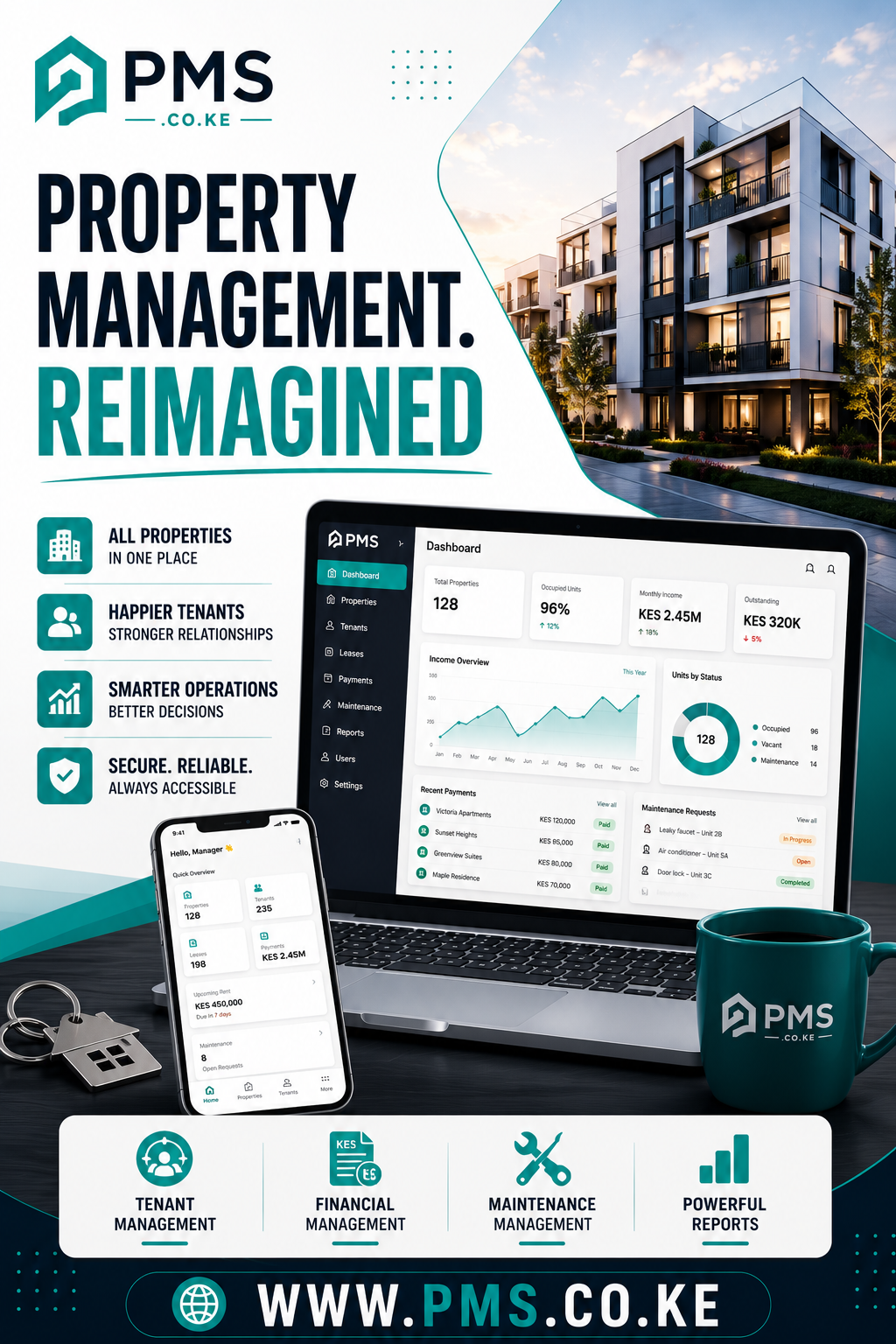
Estate accounting software Kenya is helping property managers, estate administrators, landlords, and homeowners’ associations improve the way they handle financial operations. As residential estates and gated communities continue to grow, managing income, service charges, expenses, budgets, supplier payments, and financial reports using spreadsheets or paper records can become increasingly difficult.
A modern Estate accounting software Kenya solution brings financial information into one centralized platform, making it easier to monitor transactions, track outstanding payments, manage expenses, prepare reports, and maintain accurate records. For estates with multiple units, shared facilities, contractors, and recurring expenses, digital accounting can significantly reduce administrative work while improving financial visibility.
Whether an estate contains a few dozen homes or hundreds of residential units, accurate financial management is essential. Property managers need to know how much money has been collected, what expenses have been incurred, which residents have outstanding balances, and whether the estate is operating within its approved budget.
This guide explains how estate accounting software works, the challenges of traditional estate accounting, essential features to look for, and the benefits of moving estate financial management into a digital environment.
What Is Estate Accounting Software?
Estate accounting software is a digital financial management system designed to help residential estates, gated communities, apartment developments, and property management companies manage their accounting activities.
Unlike general accounting tools that may not understand the unique requirements of property management, specialized estate accounting platforms are designed around the financial activities of properties and their residents.
A comprehensive Estate accounting software Kenya platform can help managers handle:
- Service charge billing
- Resident payments
- Outstanding balances
- Estate expenses
- Supplier payments
- Budget management
- Financial statements
- Income tracking
- Payment reconciliation
- Financial reporting
- Transaction records
The objective is to provide a single source of financial information for the entire estate.
Why Estate Accounting Is Important
Financial management is at the heart of every professionally managed residential community.
An estate receives money from residents and may spend those funds on numerous shared services and facilities.
Common expenses include:
- Security services
- Garbage collection
- Landscaping
- Cleaning
- Water
- Electricity
- Road maintenance
- Gate maintenance
- Generator servicing
- Swimming pool maintenance
- Lift servicing
- Insurance
- Repairs
- Administrative costs
Without proper accounting, managers may struggle to determine whether the estate is financially healthy.
Accurate accounting helps answer important questions such as:
- How much has the estate collected this month?
- How much remains outstanding?
- What are the biggest expenses?
- Is spending within budget?
- How much is available for maintenance?
- Which accounts have overdue balances?
- How much has been paid to suppliers?
A digital accounting platform makes these answers easier to obtain.
Challenges of Manual Estate Accounting
Many estates still rely on spreadsheets, notebooks, paper receipts, and disconnected accounting systems.
While these methods may work for very small communities, they become increasingly difficult to maintain as the number of units increases.
Manual Data Entry
Financial teams may have to manually enter:
- Resident payments
- Invoices
- Expenses
- Supplier transactions
- Bank deposits
- Adjustments
- Receipts
Repeated data entry consumes time and increases the possibility of mistakes.
Calculation Errors
Manual calculations can produce incorrect:
- Resident balances
- Service charge amounts
- Penalties
- Expense totals
- Monthly reports
Even a small accounting error can lead to disputes between management and residents.
Difficult Payment Reconciliation
Estates may receive payments through different channels.
These can include:
- M-PESA
- Bank transfers
- Cheques
- Cash
- Online payment gateways
Matching each payment to the correct resident can be difficult when records are maintained manually.
A digital system can automate much of this process.
Managing M-PESA Payments
M-PESA is an important part of Kenya’s digital payment ecosystem.
For residential estates, integrating payments into Estate accounting software Kenya can simplify the process of recording and reconciling transactions.
When a resident makes a payment, the system can associate the transaction with the appropriate account and update the outstanding balance.
This can reduce:
- Manual reconciliation
- Payment entry errors
- Delayed receipts
- Unidentified transactions
Residents also benefit from faster payment confirmation.
Tracking Resident Accounts
Every residential unit should have an accurate financial account.
A digital system can maintain:
- Unit information
- Owner details
- Tenant information
- Billing history
- Payment history
- Outstanding balances
- Credit balances
- Adjustments
- Receipts
Managers can quickly review an account without searching through paper files or multiple spreadsheets.
Automated Billing
Recurring charges are one of the biggest administrative tasks in estate management.
Instead of preparing invoices manually every month, software can automatically generate them based on predefined billing rules.
Managers can configure:
- Monthly charges
- Quarterly charges
- Annual charges
- Special assessments
- Penalties
- Utility charges
- One-time fees
Automation improves consistency and reduces administrative workload.
Service Charge Accounting
Service charges are often the primary source of income for residential estates.
The funds collected support common services and facilities.
An effective Estate accounting software Kenya platform helps track:
- Amount billed
- Amount collected
- Outstanding balances
- Overdue accounts
- Payment dates
- Collection rates
Managers can therefore monitor the financial performance of the estate in real time.
Expense Management
Tracking expenses is just as important as tracking income.
Estate managers need to know exactly where community funds are being spent.
The software can categorize expenses into areas such as:
Security
- Security guards
- CCTV maintenance
- Access control
- Security equipment
Cleaning
- Cleaning contractors
- Cleaning materials
- Common-area maintenance
Landscaping
- Gardening services
- Landscaping equipment
- Tree maintenance
Utilities
- Water
- Electricity
- Fuel
- Internet services
Repairs
- Plumbing
- Electrical work
- Building repairs
- Road maintenance
Categorizing expenses makes financial analysis easier.
Vendor and Supplier Payments
Estates often work with several suppliers and contractors.
These may include:
- Security companies
- Cleaning companies
- Landscapers
- Electricians
- Plumbers
- Waste collection providers
- Lift maintenance companies
An accounting system keeps supplier information organized and records payments against the appropriate expense category.
Managers can quickly determine:
- How much a supplier has been paid
- Outstanding supplier invoices
- Contract costs
- Payment history
This improves vendor accountability.
Budget Management
An estate needs a realistic budget to maintain financial stability.
A budget outlines expected income and expenses for a specific period.
Typical budget categories include:
- Security
- Utilities
- Maintenance
- Cleaning
- Landscaping
- Insurance
- Administration
- Reserve funds
With Estate accounting software Kenya, managers can compare actual spending against approved budgets.
For example, if an estate has budgeted a certain amount for maintenance but actual expenditure is significantly higher, the system can highlight the difference.
This allows management to investigate the cause before the situation becomes serious.
Financial Reporting
Financial reports provide the information required for informed decision-making.
A specialized accounting system can generate reports such as:
- Income statements
- Expense reports
- Cash flow reports
- Outstanding balance reports
- Payment reports
- Budget variance reports
- Supplier reports
- General ledger reports
Instead of manually compiling figures, managers can generate reports from existing transaction data.
Improving Financial Transparency
Transparency is particularly important when residents contribute money toward shared services.
Homeowners want to understand how their contributions are being used.
Clear financial reporting can show:
- Total collections
- Total expenditure
- Major expense categories
- Outstanding balances
- Available funds
- Budget performance
Better transparency can reduce financial disputes and strengthen trust between residents, committees, and property managers.
Benefits for Property Managers
Property managers have numerous responsibilities, and accounting can consume a significant amount of their time.
A digital platform reduces administrative work by automating repetitive financial tasks.
Key benefits include:
- Faster transaction recording
- Reduced paperwork
- Easier payment reconciliation
- Automated billing
- Faster report generation
- Better expense tracking
- Improved cash-flow visibility
- Centralized records
This allows managers to spend more time on property operations and resident services.
Benefits for Estate Committees
Estate committees are responsible for overseeing how community funds are managed.
Access to accurate financial information allows committee members to make better decisions about:
- Maintenance projects
- Service providers
- Reserve funds
- Annual budgets
- Service charge levels
- Community improvements
Instead of depending entirely on manually prepared reports, committee members can work with organized and up-to-date financial information.
Benefits for Residents
Residents also benefit from better estate accounting.
They can receive:
- Accurate invoices
- Digital receipts
- Payment confirmations
- Clear account statements
- Transparent financial information
- Faster responses to billing queries
When residents have confidence in the accuracy of their accounts, payment disputes can be reduced.
Why Kenyan Estates Need Digital Accounting
Kenya’s residential property sector is becoming increasingly sophisticated. Large apartment developments, gated communities, and managed estates require systems that can handle growing numbers of residents and increasingly complex financial transactions.
Manual accounting becomes harder to maintain as the number of units increases.
Estate accounting software Kenya provides the scalability required to manage larger communities while maintaining accurate financial records.
The transition from spreadsheets and paper records to specialized digital accounting can improve efficiency, accountability, and financial visibility across the entire estate.
The Role of Automation in Estate Financial Management
Automation is one of the biggest advantages of modern accounting platforms.
Tasks that previously required manual intervention can be handled automatically, including:
- Recurring invoice generation
- Payment recording
- Receipt generation
- Balance updates
- Payment reminders
- Financial calculations
- Report generation
Automation reduces repetitive administrative work while helping maintain consistency.
For property management companies handling several estates, these efficiencies can have a significant impact on overall productivity.
Building a More Accountable Estate
Effective financial management is not only about recording transactions. It is also about creating accountability.
Every transaction should have a clear record showing:
- What was paid
- Who paid it
- When it was paid
- What the payment was for
- Which account received it
- Who processed the transaction
A centralized accounting system creates a reliable financial trail that can be reviewed when necessary.
This becomes particularly valuable during audits, committee reviews, annual meetings, and financial planning.
Estate accounting software Kenya gives property managers and estate committees a centralized way to manage increasingly complex financial operations. As residential communities expand, accounting involves much more than recording payments. Managers must monitor service charges, reconcile M-PESA and bank transactions, manage suppliers, control expenses, prepare budgets, maintain financial records, and provide homeowners with accurate information.
In Part 1, we looked at the fundamentals of estate accounting and the challenges of manual financial management. Part 2 focuses on advanced capabilities, automation, financial controls, integrations, security, and the practical benefits of moving estate accounting into a centralized digital platform.
Advanced Features of Estate Accounting Software
Modern estate accounting platforms are designed to handle the complete financial lifecycle of a residential community.
Automated Recurring Invoices
Recurring billing is one of the most time-consuming activities for estate administrators.
Instead of creating invoices manually every billing period, the system can automatically generate charges according to predefined rules.
These may include:
- Monthly service charges
- Quarterly charges
- Annual charges
- Utility fees
- Parking charges
- Facility fees
- Special assessments
- Late payment penalties
Automation ensures invoices are generated consistently and reduces the risk of residents being missed during billing.
Automated Payment Reconciliation
Payment reconciliation is another area where automation can save significant time.
An estate may receive hundreds of payments every month through different channels. Manually matching each transaction with the correct homeowner can create unnecessary administrative work.
A modern Estate accounting software Kenya solution can help match payments with resident accounts and update balances.
This makes it easier to identify:
- Paid accounts
- Partially paid accounts
- Unallocated payments
- Overdue balances
- Credit balances
Finance teams can therefore spend less time checking individual transactions.
M-PESA and Digital Payment Integration
Mobile payments are particularly important for Kenyan estates.
Integration with M-PESA allows residents to make payments conveniently while giving management better visibility over incoming funds.
A properly integrated system can:
- Receive payment information.
- Identify the relevant resident account.
- Allocate the payment.
- Update the outstanding balance.
- Generate a receipt.
- Maintain the transaction history.
This creates a smoother payment experience for both residents and administrators.
Bank Reconciliation
M-PESA is not the only payment channel used by estates.
Some residents and organizations use bank transfers or other electronic payment methods.
Bank reconciliation features help managers compare recorded transactions against bank activity.
This helps identify:
- Missing transactions
- Duplicate entries
- Unidentified deposits
- Incorrect amounts
- Outstanding transactions
Regular reconciliation improves the accuracy of financial records.
Real-Time Account Balances
One of the most useful features of digital accounting is real-time balance information.
Instead of waiting until the end of the month, managers can see the current financial position of each account.
For example, an administrator can quickly determine:
- How much a homeowner owes
- When the last payment was made
- What invoices remain unpaid
- Whether an account has a credit
- The total outstanding amount across the estate
This makes financial follow-up faster and more accurate.
Automated Payment Reminders
Late payments can affect an estate’s ability to pay for essential services.
Automated reminders help managers communicate with residents before and after payment deadlines.
Notifications can be sent for:
- Upcoming invoices
- Payment due dates
- Overdue balances
- Payment confirmations
- Account statements
Consistent reminders can improve collection performance without requiring staff to contact every resident individually.
Accounts Receivable Management
Accounts receivable management focuses on money owed to the estate.
The system can categorize outstanding balances based on age, such as:
- Current balances
- 30-day overdue balances
- 60-day overdue balances
- 90-day overdue balances
- Long-outstanding accounts
This gives managers a clearer picture of collection performance.
They can identify accounts that require immediate follow-up and prioritize collection activities accordingly.
Expense Approval Workflows
Estate expenses should be controlled carefully.
A digital approval workflow can require authorized users to review expenses before payments are made.
For example:
Expense submitted → Review → Approval → Payment → Accounting record
This creates greater financial control and reduces the risk of unauthorized expenditure.
Purchase and Supplier Management
Large estates purchase goods and services from many vendors.
The accounting system can maintain supplier information such as:
- Supplier name
- Contact information
- Service category
- Invoice history
- Payment history
- Contract information
- Outstanding amounts
This allows managers to understand the financial relationship with each supplier.
Budget Versus Actual Analysis
Creating a budget is only the first step.
Managers must also compare planned expenditure against actual spending.
A digital system can show whether the estate is:
- Under budget
- On budget
- Over budget
For example, if the annual maintenance budget is being consumed faster than expected, management can investigate the cause and adjust future spending.
This helps prevent unexpected financial shortfalls.
Cash Flow Management
Cash flow determines whether an estate can meet its financial obligations on time.
A Estate accounting software Kenya platform provides visibility into expected income and upcoming expenses.
Managers can monitor:
- Expected service charge collections
- Supplier payments
- Utility bills
- Maintenance costs
- Payroll-related expenses
- Reserve fund contributions
Better cash-flow visibility supports more effective financial planning.
Reserve Fund Management
Well-managed estates need funds for major future projects.
Reserve funds may be used for:
- Road repairs
- Roof replacement
- Generator replacement
- Major plumbing work
- Painting
- Security infrastructure
- Lift replacement
- Drainage projects
Accounting software can help separate reserve fund transactions from routine operational expenses.
This gives committees a clearer understanding of how much money is available for major capital projects.
Financial Dashboards
Financial dashboards make complex information easier to understand.
A manager can see important indicators such as:
- Total collections
- Outstanding balances
- Monthly expenses
- Budget utilization
- Cash position
- Supplier liabilities
- Reserve fund balances
Instead of reviewing multiple spreadsheets, decision-makers can access key information from a centralized dashboard.
Detailed Financial Reports
Reporting is essential for estate management.
Modern accounting systems can generate reports based on different time periods and categories.
Examples include:
Income Reports
Show money received during a selected period.
Expense Reports
Show where estate funds have been spent.
Outstanding Balance Reports
Identify accounts that have unpaid charges.
Cash Flow Reports
Show incoming and outgoing funds.
Budget Reports
Compare planned expenditure with actual spending.
Transaction Reports
Provide detailed records of financial activity.
These reports can support management meetings, audits, annual general meetings, and financial planning.
Improving Audit Readiness
Financial audits require organized documentation.
A centralized accounting system makes it easier to retrieve:
- Payment records
- Invoices
- Receipts
- Expense documents
- Supplier transactions
- Bank reconciliation information
- Budget reports
Maintaining these records digitally can reduce the amount of time required to prepare for an audit.
Role-Based User Access
Not every person involved in estate management should have access to all financial information.
Estate accounting software Kenya can use role-based permissions to control what different users can see and change.
For example:
Property Manager
Can manage residents, invoices, payments, and operational reports.
Accountant
Can manage financial transactions and accounting reports.
Estate Committee
Can view approved financial reports and budgets.
Maintenance Manager
Can access maintenance-related expenses and work orders.
This improves security and accountability.
Audit Trails
An audit trail records important activities performed inside the system.
It can show:
- Who created an invoice
- Who modified a transaction
- Who approved an expense
- When a payment was recorded
- When a report was generated
This makes it easier to investigate discrepancies and maintain financial accountability.
Data Security and Backups
Estate financial systems contain sensitive information.
This may include:
- Resident information
- Payment histories
- Financial statements
- Supplier records
- Bank-related information
- Estate budgets
Cloud-based platforms should use appropriate security controls, secure authentication, encryption, and regular backups to protect this information.
Automatic backups also reduce the risk of losing records because of hardware failure or accidental deletion.
Multi-Property Accounting
Property management companies may manage several estates.
A centralized platform can allow managers to maintain separate accounting records for each property while monitoring the entire portfolio.
This is useful for companies managing:
- Apartment complexes
- Gated communities
- Townhouse developments
- Commercial properties
- Mixed-use developments
Managers can switch between properties without maintaining separate disconnected systems.
Integrating Accounting With Property Management
Financial management works best when connected to other estate operations.
For example, resident information can connect directly with:
- Billing
- Payments
- Maintenance
- Communication
- Visitor management
- Facility booking
This eliminates duplicate data entry and creates a more complete view of each property.
Maintenance and Accounting Integration
Maintenance generates many expenses, making it useful to connect maintenance activities with financial records.
For example:
Maintenance request → Work order → Contractor assignment → Expense → Payment → Financial record
This creates a complete history of the maintenance activity and its associated cost.
Managers can then determine how much the estate spends on different maintenance categories.
Vendor Performance and Cost Analysis
Accounting information can also help evaluate suppliers.
Managers can compare:
- Contract costs
- Payment history
- Maintenance expenses
- Service frequency
- Annual spending
This can help committees make better procurement decisions and identify areas where costs can be controlled.
Reducing Administrative Costs
Manual accounting requires considerable staff time.
Employees may spend hours:
- Entering payments
- Preparing invoices
- Creating reports
- Following up on balances
- Reconciling transactions
- Searching for documents
Automation reduces these repetitive activities.
The result is a more productive finance and property management team.
Supporting Better Decision-Making
Accurate financial information allows estate managers and committees to make decisions based on actual data rather than assumptions.
For example, before approving a major project, they can review:
- Available cash
- Reserve funds
- Outstanding collections
- Existing commitments
- Current expenses
- Budget performance
This helps determine whether the estate can comfortably afford the project.
Improving Resident Trust
Financial transparency has a direct effect on homeowner confidence.
When residents receive accurate statements and management can provide clear reports, financial disputes become easier to resolve.
Residents can better understand:
- What they have been charged
- What they have paid
- What remains outstanding
- How community funds are being used
This supports stronger relationships between residents and estate management.
Scalability for Growing Estates
A small community may begin with spreadsheets, but its financial requirements can change as the number of units increases.
Digital accounting provides a scalable foundation for managing:
- More residents
- More transactions
- More suppliers
- Additional properties
- New billing categories
- Larger budgets
This means the system can continue supporting the estate as its operations expand.
Choosing a Suitable Accounting Platform
Before adopting Estate accounting software Kenya, property managers should evaluate the platform carefully.
Important considerations include:
- Ease of use
- M-PESA integration
- Payment reconciliation
- Automated billing
- Financial reporting
- Budget management
- Expense tracking
- Resident account management
- User permissions
- Data security
- Cloud accessibility
- Multi-property support
- Customer support
- Scalability
The best solution should match the actual operational needs of the estate rather than simply offering the largest number of features.
Preparing an Estate for Digital Accounting
Before implementation, management should organize existing records.
This may involve:
- Cleaning resident data
- Confirming unit information
- Reconciling outstanding balances
- Reviewing supplier records
- Organizing financial documents
- Establishing billing rules
- Defining user permissions
Proper preparation makes implementation smoother and reduces the risk of inaccurate information entering the new system.
Training Staff and Committee Members
Technology only delivers value when users understand how to use it.
Training should cover:
- Creating resident accounts
- Generating invoices
- Recording payments
- Reconciling transactions
- Managing expenses
- Generating reports
- Reviewing budgets
- Managing user permissions
Residents should also receive clear instructions on accessing statements and making payments through available channels.
The Future of Digital Estate Accounting
Estate financial management is moving toward greater automation, integration, and real-time visibility.
Future platforms are likely to place more emphasis on:
- Artificial intelligence
- Predictive financial analysis
- Mobile applications
- Automated reconciliation
- Digital approvals
- Smart metering
- Advanced analytics
- Integrated payment systems
These developments will make estate accounting more proactive rather than simply recording what has already happened.
