
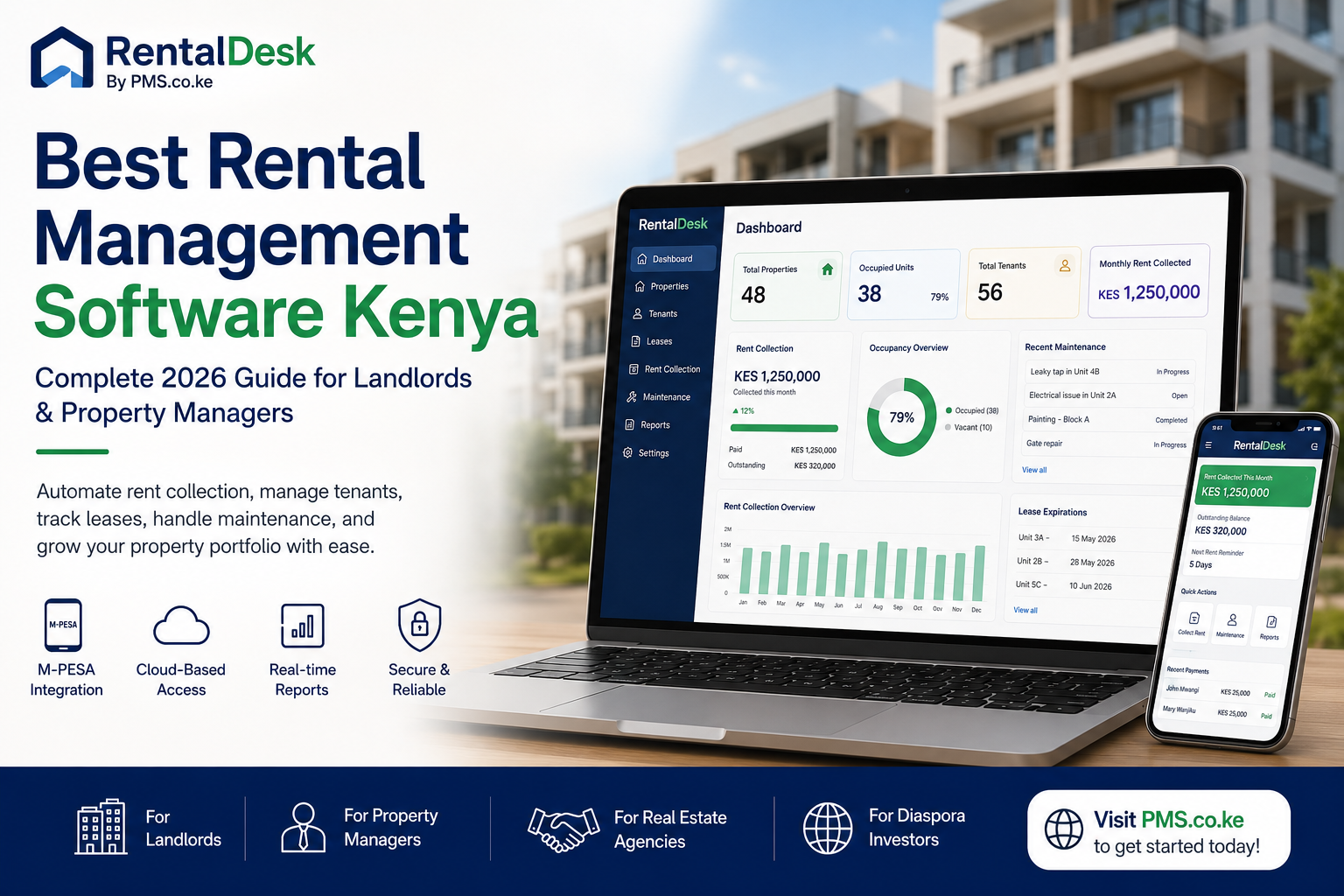
Rental Management Software Kenya: Transforming the Real Estate Industry
Kenya’s real estate sector has grown significantly over the last few years. Rapid urbanization, population growth, and increased investment in residential and commercial developments have created new opportunities for landlords and property managers.
However, managing properties efficiently remains a challenge. Landlords are expected to collect rent, maintain accurate records, communicate with tenants, coordinate repairs, monitor occupancy rates, and generate financial reports.
Traditional management methods often involve spreadsheets, paperwork, phone calls, and manual record-keeping systems. These approaches can be time-consuming and increase the possibility of mistakes.
This is why more property owners are adopting rental management software in Kenya.
Modern digital platforms allow landlords to automate daily operations, improve efficiency, reduce costs, and provide better services to tenants.
What Is Rental Management Software?
Rental management software is a digital platform designed to simplify every aspect of property management.
The system provides users with a central location where they can manage:
- Tenant information
- Lease agreements
- Rent payments
- Maintenance requests
- Financial reports
- Occupancy records
- Property inspections
- Expense tracking
- Communication records
- Important documents
These tools help property managers operate more efficiently while increasing profitability.
Why Kenyan Landlords Need Rental Management Software
Managing rental properties manually often creates numerous challenges.
Delayed rent payments
Property owners spend a considerable amount of time following up on payments.
Missing records
Paper files can easily be damaged or lost.
Maintenance delays
Repair requests may remain unresolved for long periods.
Communication difficulties
Managing multiple tenants simultaneously can be complicated.
Limited financial visibility
Manual reports often fail to provide accurate business insights.
A reliable management system addresses these challenges while improving productivity.
Essential Features of Rental Management Software Kenya
Tenant management
Property managers can organize:
- Tenant profiles
- Lease agreements
- Contact details
- Payment histories
- Occupancy records
- Maintenance requests
Rent collection management
The system allows users to:
- Generate invoices.
- Track payments.
- Issue receipts.
- Monitor overdue balances.
- Generate account statements.
M-Pesa integration
Since M-Pesa is one of the most widely used payment methods in Kenya, seamless integration is essential.
Benefits include:
- Faster transactions
- Automated payment tracking
- Reduced paperwork
- Greater convenience
- Improved transparency
Lease management
Users can monitor:
- Lease periods
- Renewal dates
- Rental agreements
- Tenant information
- Historical records
Maintenance management
Maintenance tools help managers:
- Record maintenance requests.
- Assign technicians.
- Monitor progress.
- Track expenses.
- Schedule inspections.
Financial reporting
Advanced reporting tools provide valuable information about:
- Income
- Expenses
- Cash flow
- Occupancy levels
- Maintenance costs
- Business growth
Benefits of Using Rental Management Software
Increased efficiency
Automation reduces repetitive administrative tasks.
Improved accuracy
Digital records minimize the risk of errors.
Better communication
Property owners can communicate more effectively with tenants.
Reduced operating costs
Automation lowers administrative expenses.
Improved business growth
Scalable systems support expanding property portfolios.
How PMS.co.ke Helps Kenyan Property Owners
PMS.co.ke provides landlords with a complete property management ecosystem.
The platform offers:
- Tenant management tools
- Rent collection capabilities
- M-Pesa integration
- Maintenance tracking
- Financial reporting
- Occupancy monitoring
- Secure cloud storage
- Multi-property management
These features help landlords save time while increasing profitability.
Best Practices for Successful Property Management
Property owners should follow these recommendations:
- Maintain accurate tenant records.
- Automate repetitive tasks.
- Review financial reports regularly.
- Respond quickly to maintenance requests.
- Monitor occupancy rates.
- Improve communication with tenants.
- Conduct regular property inspections.
- Protect confidential information.
- Plan for future growth.
- Invest in reliable technology.
Why Digital Property Management Is Growing in Kenya
Kenya has experienced significant growth in the real estate sector over the past decade. Cities such as Nairobi, Mombasa, Kisumu, Eldoret, Nakuru, and Thika continue to attract investors and developers.
As property portfolios grow, landlords require smarter ways to manage their businesses.
Several factors are accelerating this digital transformation:
- Increased internet accessibility
- Growth of mobile payment solutions
- Expansion of cloud technology
- Rising demand for efficient services
- Greater investment in real estate
Technology has become an essential part of modern property management.
How M-Pesa Integration Simplifies Rent Collection
M-Pesa has transformed the financial landscape in Kenya. Integrating mobile payment solutions into property management systems provides landlords with numerous advantages.
Faster transactions
Payments are processed quickly and securely.
Automated payment tracking
Property managers can monitor every transaction in real time.
Improved convenience
Tenants can pay rent from almost anywhere.
Reduced paperwork
Digital transactions reduce the need for manual record-keeping.
Greater transparency
Both landlords and tenants can access accurate payment records.
The Importance of Tenant Communication
Successful property management depends on strong communication.
Modern software platforms allow landlords to:
- Send payment reminders.
- Announce maintenance schedules.
- Share important notices.
- Respond quickly to complaints.
- Provide account statements.
Effective communication builds trust and strengthens long-term relationships.
Property Inspection Management
Regular inspections help maintain high standards while protecting investments.
Inspection tools help property managers:
- Schedule inspections.
- Record observations.
- Upload photographs.
- Monitor repair progress.
- Generate inspection reports.
Routine inspections reduce maintenance costs and improve tenant satisfaction.
Managing Multiple Properties Efficiently
Many landlords own properties in different locations. Managing these properties manually can become extremely difficult.
A centralized management platform allows users to:
- Monitor multiple properties simultaneously.
- Review occupancy rates.
- Track financial performance.
- Analyze maintenance activities.
- Generate detailed reports.
This level of visibility supports better business decisions.
Cloud-Based Property Management Solutions
Cloud technology has revolutionized property management by making information more accessible.
Cloud-based systems offer numerous advantages:
- Remote access
- Improved security
- Automatic backups
- Real-time updates
- Better collaboration
- Increased flexibility
Property managers can access information from computers, smartphones, and tablets.
Security Features Every Landlord Should Consider
Protecting sensitive information is essential.
Modern platforms often include:
- Data encryption
- User authentication
- Secure backups
- Role-based access control
- Activity monitoring
- Multi-factor authentication
These measures help protect financial information and tenant records.
How Rental Management Software Helps Landlords Save Time
Time is one of the most valuable resources in property management. Landlords who manage several apartments often spend many hours every week handling administrative work.
Rental management software helps property owners save time by automating tasks such as:
- Rent collection
- Invoice generation
- Payment reminders
- Lease management
- Financial reporting
- Maintenance scheduling
- Tenant communication
Automation allows landlords to focus on expanding their investments instead of spending time on repetitive tasks.
Managing Vacant Units More Effectively
Vacant properties can significantly affect profitability. Every unoccupied unit represents lost revenue.
A rental management system helps property owners:
- Track vacant units.
- Monitor occupancy rates.
- Manage tenant applications.
- Schedule property inspections.
- Update rental pricing.
- Generate occupancy reports.
These features help landlords maximize income while reducing vacancy periods.
Financial Planning and Budget Management
Successful property management requires careful financial planning.
Rental management software can help users:
- Monitor monthly income.
- Record expenses.
- Track maintenance costs.
- Analyze financial performance.
- Create annual budgets.
- Generate tax reports.
Having access to accurate financial information helps business owners make better decisions.
Improving Customer Service Through Technology
Excellent customer service strengthens tenant relationships and encourages long-term occupancy.
Modern management systems allow property owners to:
- Respond to inquiries quickly.
- Send maintenance updates.
- Deliver payment reminders.
- Share announcements instantly.
- Resolve complaints more efficiently.
Providing excellent service improves the overall reputation of the property.
Reducing Human Errors
Manual processes often result in mistakes that affect financial records, tenant information, and lease agreements.
Automation helps eliminate common problems, including:
- Duplicate entries
- Incorrect calculations
- Missing documents
- Delayed reports
- Lost receipts
Accurate information improves efficiency throughout the organization.
Document Management and Secure Storage
Property managers handle a large amount of information every day.
A reliable platform allows users to store:
- Lease agreements
- Tenant records
- Payment receipts
- Maintenance reports
- Inspection reports
- Legal documents
Digital storage improves organization while protecting important information.
Choosing the Right Rental Management Software
Before selecting a platform, landlords should carefully evaluate the available features.
Important considerations include:
- Ease of use
- Security features
- Cloud accessibility
- Mobile compatibility
- Payment integration
- Reporting capabilities
- Customer support
- Scalability
Choosing the right platform can significantly improve long-term business performance.
Why Automation Is the Future of Property Management
Technology continues to transform the real estate industry across the world.
Automation enables businesses to:
- Increase productivity.
- Reduce operational costs.
- Improve communication.
- Strengthen data security.
- Simplify decision-making.
- Improve customer experiences.
Organizations that adopt digital solutions early often gain a considerable advantage over their competitors.
Final Conclusion
The property management industry is changing rapidly. Landlords who continue relying on outdated systems may struggle to remain competitive in an increasingly digital environment.
Rental management software provides a smarter, faster, and more reliable approach to managing properties while improving tenant satisfaction and supporting business growth.
With a comprehensive solution such as PMS.co.ke, landlords can streamline operations, improve profitability, and build stronger relationships with tenants.
Future Trends in Kenya’s Property Market
Several technological innovations are expected to transform the industry further.
These developments include:
- Artificial intelligence
- Smart building systems
- Predictive maintenance
- Digital contracts
- Automated reporting tools
- Advanced data analytics
Property owners who invest in technology today will be better prepared for future opportunities
Frequently Asked Questions
Can small landlords use rental management software?
Yes. The software supports landlords of every size.
Can I manage multiple properties?
Yes. Multiple properties can be managed from a single dashboard.
Is M-Pesa integration available?
Yes. Modern property management platforms support M-Pesa payments.
Is the software secure?
Yes. Advanced security measures protect sensitive information.
