
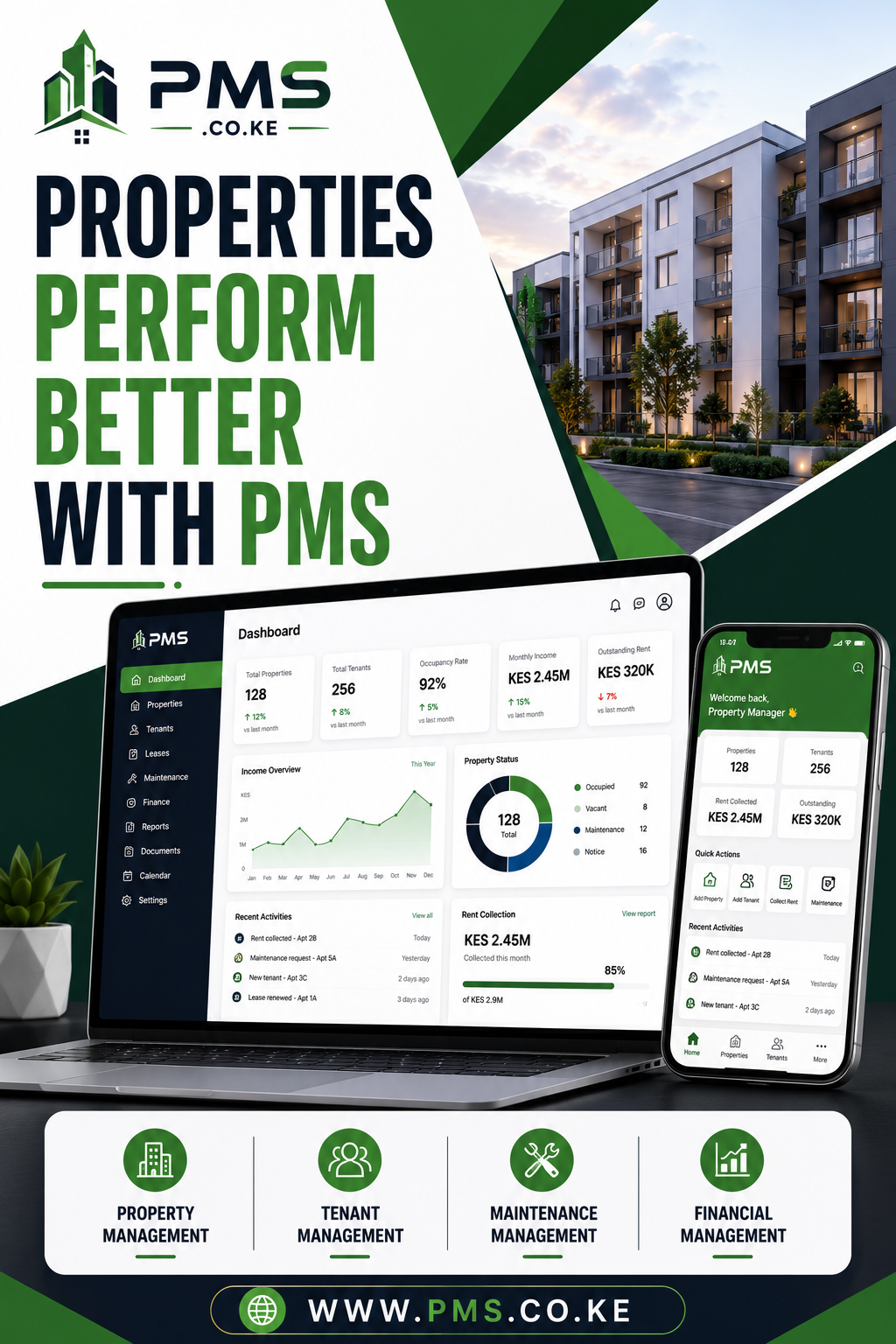
easy Property Rent Collection Software helps landlords, property managers, estate management companies, and rental businesses simplify the process of collecting and tracking rent from tenants. Instead of relying on notebooks, spreadsheets, paper receipts, bank statements, and manual calculations, property managers can use centralized software to organize rent charges, payments, outstanding balances, tenant accounts, receipts, and financial reports.
Rent collection is one of the most important responsibilities in property management. When payments are handled manually, it can become difficult to determine which tenants have paid, who still owes rent, how much has been collected, and which accounts require follow-up. A properly designed system can bring this information together and make rental financial administration more organized.
What Is Easy Property Rent Collection Software?
easy Property Rent Collection Software is a digital platform designed to simplify how landlords and property managers manage rental payments.
Depending on the platform, it can help with:
- Tenant account management
- Monthly rent charges
- Payment recording
- Rent reminders
- Arrears tracking
- Digital receipts
- Tenant statements
- Payment reconciliation
- Deposit management
- Property income tracking
- Financial reporting
- Multi-property management
The main objective is to reduce manual work while giving property managers a clear view of rental income and outstanding balances.
Why Rent Collection Software Is Important
Collecting rent manually can become increasingly difficult as a rental portfolio grows.
A landlord managing five tenants might easily remember who has paid. A property manager handling hundreds of tenants across several buildings cannot realistically depend on memory or scattered records.
easy Property Rent Collection Software can help centralize the information needed to manage these accounts.
Instead of checking different spreadsheets or searching through messages, a manager can access tenant payment information from a centralized system.
Centralized Tenant Accounts
Each tenant can have an individual account containing important rental information.
A tenant account can include:
- Tenant name
- Phone number
- Email address
- Property
- Unit number
- Monthly rent
- Lease information
- Security deposit
- Payment history
- Outstanding balance
- Previous receipts
This gives the property manager a complete picture of the tenant’s rental account.
Automated Monthly Rent Charges
One of the most useful capabilities of easy Property Rent Collection Software is recurring rent management.
Instead of manually creating a rent charge for every tenant every month, the software can generate charges based on configured rental agreements.
For example:
Tenant: John
Unit: A-12
Monthly Rent: KSh 25,000
Due Date: 5th of Every Month
The system can automatically create the monthly charge according to the configured terms.
Rent Payment Recording
When a tenant pays rent, the transaction can be recorded against the correct account.
A payment record can include:
- Tenant
- Property
- Unit
- Payment date
- Amount
- Payment method
- Reference number
- Account balance
This makes it easier to determine whether a tenant has fully paid, partially paid, or still has an outstanding amount.
Rent Collection in Kenya
Rental businesses in Kenya often receive payments through several channels.
These may include:
- Mobile money
- Bank transfers
- Cash
- Cheques
- Other electronic payment methods
easy Property Rent Collection Software can help organize payments regardless of the payment channel, either through integrations or manual transaction recording depending on the system.
Mobile Money Payment Management
Mobile money is an important payment channel for many rental businesses in Kenya.
A property management platform can be configured to support suitable payment workflows where integrations are available.
This can help managers associate incoming payments with the appropriate tenant accounts.
Instead of keeping payment confirmations in separate messages, the transaction can become part of the tenant’s financial history.
Automated Rent Reminders
Late payments can create unnecessary administrative work.
Property managers may have to contact tenants individually through phone calls, text messages, email, or messaging applications.
easy Property Rent Collection Software can support automated reminders where notification functionality is available.
Reminders can be scheduled:
- Before rent is due
- On the due date
- After the due date
- During an arrears period
This can reduce repetitive follow-up work.
Rent Due Notifications
A tenant can receive a reminder indicating:
Rent Due
Amount: KSh 20,000
Due Date: 5th
Such notifications help tenants remember their payment obligations without requiring the property manager to contact them manually.
Arrears Management
Rent arrears are one of the biggest challenges facing property managers.
An effective system should make outstanding balances easy to identify.
A dashboard may show:
- Total rent billed
- Total rent collected
- Total outstanding
- Current arrears
- Overdue accounts
- Partially paid accounts
This gives managers a quick view of the financial position of their rental portfolio.
Tracking Part Payments
Not every tenant pays the full amount at once.
For example:
Monthly Rent: KSh 30,000
Payment 1: KSh 20,000
Payment 2: KSh 10,000
Balance: KSh 0
easy Property Rent Collection Software can track each transaction and automatically calculate the remaining balance.
This prevents managers from incorrectly marking partially paid accounts as fully settled.
Tenant Statements
Tenant statements provide a detailed financial history.
A statement can contain:
- Opening balance
- Rent charges
- Payments
- Adjustments
- Arrears
- Credits
- Closing balance
This is useful when tenants want to confirm their payment history or when managers need to investigate account discrepancies.
Digital Rent Receipts
Digital receipts provide tenants with evidence that their payment has been recorded.
A receipt can include:
- Tenant name
- Property
- Unit
- Amount paid
- Date
- Payment method
- Transaction reference
- Remaining balance
Digital receipts are easier to store and retrieve than paper documents.
Payment Reconciliation
Receiving rent is only one part of the financial process.
Property managers also need to reconcile payments against tenant accounts.
For example:
Expected Rent: KSh 500,000
Payments Received: KSh 475,000
Outstanding: KSh 25,000
easy Property Rent Collection Software can help managers identify differences between expected and received rental income.
Property-Level Rent Collection
A landlord may manage several properties with different tenants and rental rates.
Software can separate income by property.
For example:
Apartment A — KSh 600,000
Apartment B — KSh 450,000
Commercial Building — KSh 800,000
This makes it easier to understand the performance of individual properties.
Multi-Property Rent Management
Property managers can use easy Property Rent Collection Software to organize several properties from a central platform.
The system can maintain separate records for:
- Properties
- Buildings
- Floors
- Units
- Tenants
- Rent rates
- Payment histories
This is especially useful for property management companies handling multiple estates.
Multi-Unit Management
An apartment building may have dozens or hundreds of units.
The software can organize units according to:
- Unit number
- Tenant
- Rent amount
- Occupancy
- Lease
- Payment status
Managers can quickly identify which units have paid and which accounts require attention.
Occupancy and Rent Collection
Occupancy information can provide useful context for rental income.
For example:
Total Units: 100
Occupied: 90
Vacant: 10
Monthly Potential Rent: KSh 2,000,000
Collected: KSh 1,750,000
Outstanding: KSh 250,000
This allows managers to analyze both occupancy and payment performance.
Security Deposit Management
Security deposits should be separated from regular rent transactions.
The software can record:
- Deposit amount
- Tenant
- Unit
- Date received
- Deposit adjustments
- Refunds
- Outstanding deposit balance
This can simplify tenant move-out accounting.
Tenant Move-In Payments
At move-in, a tenant may need to pay:
- Security deposit
- First month’s rent
- Registration charges
- Utility deposits
- Other agreed charges
A property management platform can record these transactions separately.
Tenant Move-Out Accounting
When a tenant leaves, the manager may need to calculate:
- Final rent
- Outstanding arrears
- Utility balances
- Maintenance charges
- Deposit deductions
- Refund amount
easy Property Rent Collection Software can help organize these financial adjustments within the tenant’s account.
Late Payment Tracking
A manager should know how long an account has been outstanding.
The system can categorize overdue accounts by age.
For example:
1–7 Days
8–30 Days
31–60 Days
61–90 Days
90+ Days
This helps property managers prioritize follow-ups.
Rent Collection Dashboard
A dashboard can provide a quick overview of rental performance.
It may display:
Total Rent Due
Rent Collected
Outstanding Rent
Overdue Accounts
Payments Today
Payments This Month
Vacant Units
easy Property Rent Collection Software can turn this information into a centralized management view.
Monthly Rent Collection Reports
Property managers can generate reports showing the month’s performance.
A report may contain:
- Total rent expected
- Total rent collected
- Total arrears
- Number of fully paid accounts
- Number of partially paid accounts
- Number of overdue tenants
- Collection percentage
These reports can support management decisions.
Property Income Reports
Rental owners may want to know how much income each property generates.
Reports can compare:
- Gross rental income
- Outstanding rent
- Operating expenses
- Maintenance costs
- Net income
This helps owners understand property profitability.
Expense Management
Rent collection should not be viewed separately from property expenses.
Property managers may need to track:
- Repairs
- Cleaning
- Security
- Landscaping
- Utilities
- Insurance
- Management costs
- Maintenance
Connecting income and expenses provides a more complete financial picture.
Rent Collection and Property Accounting
easy Property Rent Collection Software can become part of a broader property accounting workflow.
The platform can help connect:
Tenant Charges → Payments → Receipts → Arrears → Property Income → Financial Reports
This reduces the need to maintain separate records for each process.
Payment Methods
A rental management platform should allow property managers to record the payment methods used by tenants.
These may include:
- Mobile money
- Bank transfer
- Cash
- Cheque
- Card
- Online payment
The available integrations depend on the software provider.
Payment Reference Tracking
Each payment should ideally have a reference that can be used during reconciliation.
For example:
Payment Reference: MPESA12345
Tenant: Jane
Amount: KSh 18,000
Date: 5 July
This makes it easier to trace transactions later.
Tenant Payment History
A complete payment history can help managers identify patterns.
For example, a tenant may:
- Pay early
- Pay on time
- Frequently pay late
- Make partial payments
- Accumulate arrears
This information can help managers manage accounts more proactively.
Automated Payment Allocation
Where supported, incoming payments can be matched with the relevant tenant account.
This can reduce the need for staff to manually determine which account should receive every payment.
Automated allocation should still be reviewed where payment information is incomplete or ambiguous.
Tenant Self-Service
Some property management platforms provide tenant portals.
Tenants may be able to:
- View rent balances
- View statements
- Download receipts
- Submit maintenance requests
- View payment history
- Receive notices
This can reduce routine inquiries sent to property management staff.
Online Rent Payment
An integrated platform may allow tenants to initiate payments through supported online channels.
This can make rent collection more convenient while giving property managers better visibility into transactions.
The available payment options depend on the software’s integrations and the provider’s supported payment services.
Rental Property Management Integration
Rent collection software can be integrated with other property management functions.
For example:
Tenant Management
Lease Management
Maintenance Management
Rent Collection
Accounting
This creates a broader rental management environment.
Lease-Based Rent Billing
Rental agreements can define:
- Monthly rent
- Due date
- Deposit
- Lease duration
- Rent increases
- Other recurring charges
easy Property Rent Collection Software can use these terms to support accurate billing.
Rent Increase Management
Rental rates may change when a lease is renewed or according to applicable contractual terms.
The system can record the new rent amount and apply it from the appropriate effective date.
This helps avoid continuing to charge an outdated rental rate.
Managing Different Rental Rates
Not every unit in a building has the same rent.
For example:
Studio — KSh 15,000
One Bedroom — KSh 22,000
Two Bedroom — KSh 35,000
Commercial Unit — KSh 60,000
The software can maintain different rental rates for different units.
Utility Billing
Some landlords charge tenants for utilities separately.
These may include:
- Water
- Electricity
- Garbage collection
- Internet
- Security
The system can record these additional charges alongside rent.
Tenant Communication
Property managers need to communicate with tenants about:
- Rent due dates
- Payment confirmations
- Arrears
- Lease renewals
- Notices
- Maintenance
- Property announcements
Centralized communication tools can help make these processes more consistent.
Data Security
Rental software contains important financial and tenant information.
A reliable platform should provide appropriate security controls such as:
- User authentication
- Role-based access
- Secure data transmission
- Backups
- Activity logs
- Access controls
Property managers should also establish internal procedures for protecting tenant information.
Role-Based Access
Different staff members may need different levels of access.
For example:
Property Manager — Tenant and property management
Accountant — Financial records and reports
Maintenance Officer — Maintenance information
Administrator — System configuration
easy Property Rent Collection Software with role-based access can help ensure employees only access information relevant to their responsibilities.
Cloud-Based Rent Collection
Cloud-based software can allow authorized users to access rental information from supported devices.
This can be useful for property managers operating across:
- Multiple properties
- Different offices
- Property sites
- Multiple cities
Remote access can make rent administration more flexible.
Mobile Rent Management
A mobile-friendly platform allows property managers to review rental information while away from the office.
They may be able to check:
- Tenant balances
- Payments
- Arrears
- Receipts
- Property information
- Reports
This can be useful for managers who frequently visit properties.
Choosing Easy Property Rent Collection Software
Before selecting easy Property Rent Collection Software, property owners should evaluate the size and requirements of their rental portfolio.
Important considerations include:
- Number of properties
- Number of units
- Number of tenants
- Monthly transaction volume
- Payment channels
- Automated reminders
- Accounting requirements
- Reporting
- Tenant portal
- Mobile access
- Integrations
- User permissions
- Data security
- Scalability
The best platform should be simple enough for everyday use while still supporting the company’s operational requirements.
Questions to Ask a Software Provider
Before choosing a rental payment platform, ask:
Can I manage multiple properties?
Can I manage multiple units?
Can I create tenant accounts?
Can I automate recurring rent charges?
Can I record partial payments?
Can I track arrears?
Can I send rent reminders?
Can tenants access their statements?
Can the system generate receipts?
Can I reconcile payments?
Can I manage deposits?
Can I track property expenses?
Can I generate income reports?
Can I manage different rental rates?
Can I integrate payment services?
Can multiple staff members use the platform?
Can I control staff permissions?
Can I access the system remotely?
How is tenant information protected?
Can the system grow with my property portfolio?
These questions can help landlords select a platform based on actual business needs.
Benefits of Easy Property Rent Collection Software
easy Property Rent Collection Software can provide several benefits for landlords and property management companies.
Reduced Manual Work
Automated recurring charges, reminders, statements, and reports can reduce repetitive administrative tasks.
Better Payment Visibility
Managers can quickly identify paid, partially paid, and overdue accounts.
Improved Tenant Communication
Payment reminders and digital receipts can make communication more organized.
Better Financial Records
Every transaction can be associated with a tenant, unit, property, date, and payment reference.
Easier Arrears Management
Outstanding balances become easier to identify and follow up.
Better Property Reporting
Managers can analyze rental income across individual properties and the entire portfolio.
Improved Scalability
A centralized platform can be easier to expand as the number of tenants and properties increases.
Final Conclusion
easy Property Rent Collection Software can make rental financial administration more organized by bringing tenant accounts, rent charges, payments, receipts, reminders, arrears, deposits, and financial reporting into one platform. For landlords and property managers, this can reduce the amount of time spent checking spreadsheets, searching through payment messages, calculating balances, and manually preparing rental records.
The right system should do more than record payments. It should help managers understand the complete financial position of their rental portfolio. This includes knowing how much rent has been billed, how much has been collected, which tenants have outstanding balances, which properties are generating income, and where payment problems may be developing.
For rental businesses operating in Kenya, support for common payment channels such as mobile money and bank transfers can be especially useful. However, payment integrations should be evaluated carefully to ensure they fit the company’s actual collection workflow.
A good easy Property Rent Collection Software should also integrate naturally with tenant management, lease administration, property accounting, maintenance, and reporting. This creates a more complete rental management environment rather than another isolated tool.
Ultimately, the purpose of easy Property Rent Collection Software is to simplify rent administration while giving landlords and property managers better control over their rental income. With centralized records, automated workflows, clear tenant statements, accurate payment tracking, and useful reports, rental businesses can build a more efficient and organized rent collection process.
easy Property Rent Collection Software
easy Property Rent Collection Software
easy Property Rent Collection Software
easy Property Rent Collection Software
easy Property Rent Collection Software
easy Property Rent Collection Software
easy Property Rent Collection Software
easy Property Rent Collection Software
easy Property Rent Collection Software
