
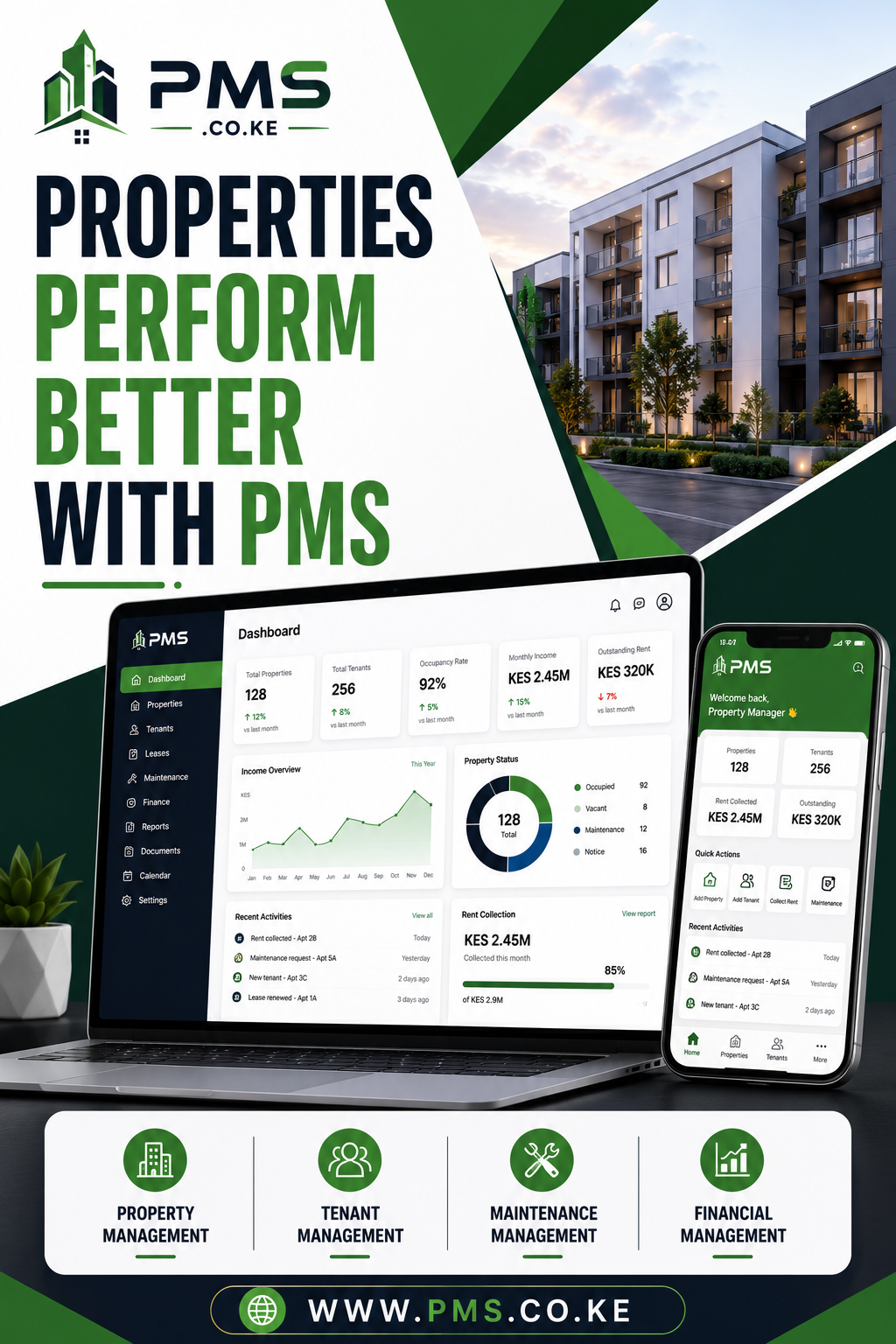
easy Rental Property Management System gives landlords, property managers, estate owners, and rental businesses a simpler way to organize their properties and manage everyday rental operations. Instead of relying on notebooks, spreadsheets, paper files, phone calls, and disconnected payment records, property managers can use centralized software to manage tenants, units, rent, maintenance, expenses, leases, and financial information.
As a rental portfolio grows, managing properties manually can become increasingly difficult. A landlord with a few units may be able to keep track of tenants and payments using spreadsheets, but larger portfolios can involve hundreds of tenants, multiple buildings, different rental rates, maintenance requests, deposits, arrears, expenses, and recurring monthly transactions. A properly designed property management platform can bring these activities together in one place.
Table of Contents
ToggleWhat Is an Easy Rental Property Management System?
An easy Rental Property Management System is software designed to simplify the management of rental properties while reducing repetitive administrative work. It provides landlords and property managers with tools for organizing properties, recording tenants, managing leases, collecting rent, tracking maintenance, and monitoring financial performance.
Instead of maintaining separate records for every part of the business, managers can use one platform for:
- Property management
- Unit management
- Tenant management
- Lease management
- Rent collection
- Payment tracking
- Arrears management
- Maintenance requests
- Expense management
- Property accounting
- Financial reporting
- Tenant communication
The goal is to make rental management more organized and accessible.
Why Property Managers Need Simple Software
Property management involves repetitive tasks that must be completed accurately every month.
A manager may need to:
- Record new tenants
- Track vacant units
- Generate rent charges
- Record payments
- Identify arrears
- Follow up on overdue rent
- Manage maintenance requests
- Track property expenses
- Renew leases
- Generate reports
When these activities are handled manually, mistakes and delays can easily occur.
An easy Rental Property Management System can automate or simplify many of these tasks while keeping the manager in control.
Centralized Property Management
One of the biggest advantages of rental management software is centralization.
A property manager can organize information about:
- Buildings
- Apartments
- Houses
- Commercial units
- Tenants
- Leases
- Payments
- Maintenance
- Expenses
Instead of searching through multiple files, the manager can access information from a centralized dashboard.
Property and Unit Management
A rental business may contain multiple properties, each with several units.
For example:
Property A
- Unit A01
- Unit A02
- Unit A03
- Unit A04
Property B
- Unit B01
- Unit B02
- Unit B03
The software can maintain separate records for each property and unit.
This makes it easier to identify occupied, vacant, reserved, and unavailable units.
Tenant Management
Tenant information is one of the most important parts of rental administration.
An easy Rental Property Management System can maintain tenant profiles containing information such as:
- Tenant name
- Phone number
- Email address
- Identification information
- Assigned property
- Unit number
- Lease details
- Rent amount
- Deposit
- Payment history
- Outstanding balance
Having this information organized makes tenant administration much easier.
Tenant Records
A digital tenant record provides a complete history of the tenant’s relationship with the property.
The manager can review:
- Move-in date
- Lease period
- Rent charges
- Payments
- Arrears
- Maintenance requests
- Notices
- Previous transactions
This can be useful when resolving disputes or reviewing account history.
Rental Unit Availability
Property managers need to know which units are occupied and which ones are available.
The system can display statuses such as:
- Occupied
- Vacant
- Reserved
- Under Maintenance
- Unavailable
This provides a quick overview of property occupancy.
Vacancy Management
Vacant units represent potential lost rental income.
Property management software can help managers identify vacancies quickly and track when units become available.
Managers can monitor:
- Vacant units
- Vacancy dates
- Previous tenant
- Unit rent
- Maintenance status
- New tenant allocation
This helps reduce the time properties remain unoccupied.
Lease Management
Lease administration can become complicated when managing many tenants.
The software can store:
- Lease start date
- Lease expiry date
- Monthly rent
- Security deposit
- Payment terms
- Tenant details
- Unit information
Managers can retrieve lease information without searching through physical files.
Lease Expiry Monitoring
A property manager should know when leases are approaching expiry.
The system can help identify leases that need attention.
For example:
Lease Expiring in 90 Days
Lease Expiring in 60 Days
Lease Expiring in 30 Days
This allows managers to begin renewal discussions early.
Rent Collection
Rent collection is one of the most important functions of rental property management.
An easy Rental Property Management System can help managers organize monthly rent charges and payments.
Instead of manually checking several bank accounts, mobile money messages, spreadsheets, and receipts, managers can maintain a structured payment record.
Automated Rent Charges
The system can automatically generate recurring rent charges according to configured rental agreements.
For example:
Monthly Rent: KSh 25,000
Due Date: 5th of Every Month
The system can generate the charge for the relevant tenant and unit.
This reduces repetitive administrative work.
Rent Payment Recording
Whenever a tenant makes a payment, the transaction can be recorded against the tenant’s account.
The record can contain:
- Tenant
- Unit
- Payment date
- Amount
- Payment method
- Reference number
- Outstanding balance
This creates a clear financial history.
Rent Collection in Kenya
Kenyan landlords and property managers may receive rental payments through different channels.
These can include:
- Mobile money
- Bank transfers
- Cash
- Cheques
- Other supported payment methods
A rental management platform can help centralize these records.
Mobile Money Rent Payments
Mobile money is widely used for payments in Kenya.
A suitable property management system can be integrated with supported payment services or allow administrators to record mobile money transactions.
This can make rent reconciliation more organized.
Rent Arrears Management
Late rent payments can create major challenges for landlords.
An easy Rental Property Management System can identify tenants who have outstanding balances.
A dashboard can show:
- Current rent
- Amount paid
- Outstanding balance
- Days overdue
- Previous arrears
- Payment history
This allows managers to follow up more systematically.
Automated Rent Reminders
Rent reminders can reduce missed payments.
Depending on the system, tenants may receive notifications before or after the due date.
A reminder could communicate:
Rent Due
Amount: KSh 20,000
Due Date: 5th
Such automation reduces the need for managers to contact every tenant individually.
Tenant Statements
A tenant statement provides a summary of account activity.
It may show:
Opening Balance
Rent Charges
Payments
Adjustments
Arrears
Closing Balance
This makes it easier for tenants and managers to understand the account.
Digital Rent Receipts
A digital receipt can be generated when payment is recorded.
It may contain:
- Tenant name
- Property
- Unit
- Amount paid
- Payment date
- Payment reference
- Balance
This provides better documentation than handwritten receipts.
Property Maintenance Management
Property maintenance is another major part of rental management.
Tenants may report:
- Plumbing problems
- Electrical faults
- Broken doors
- Water problems
- Damaged fixtures
- Security issues
- General repairs
An easy Rental Property Management System can organize these requests in one place.
Maintenance Requests
A tenant or property manager can create a maintenance request containing:
- Tenant
- Property
- Unit
- Problem description
- Priority
- Date reported
- Assigned technician
- Status
This prevents maintenance issues from being forgotten.
Maintenance Status Tracking
Requests can move through different stages:
New
↓
Assigned
↓
In Progress
↓
Completed
The manager can quickly identify outstanding maintenance tasks.
Maintenance Priority
Not every repair has the same urgency.
A system can classify requests as:
- Emergency
- High Priority
- Normal
- Low Priority
For example, a major water leak should receive attention before a minor cosmetic repair.
Contractor Management
Property managers may work with plumbers, electricians, painters, cleaners, security providers, and other contractors.
Software can maintain contractor information such as:
- Name
- Phone number
- Service type
- Assigned jobs
- Costs
- Payment history
This helps organize property maintenance relationships.
Maintenance Cost Tracking
Managers need to understand how much they spend maintaining properties.
The system can record:
- Repair cost
- Contractor
- Property
- Unit
- Date
- Description
- Payment status
This can help managers monitor maintenance expenses over time.
Property Expense Management
Rental businesses have expenses beyond maintenance.
These can include:
- Utilities
- Security
- Cleaning
- Landscaping
- Insurance
- Repairs
- Management fees
- Staff expenses
- Taxes
- Property improvements
An easy Rental Property Management System can organize these costs by property and category.
Property-Level Financial Tracking
A manager with several properties should be able to see the financial performance of each property separately.
For example:
Property A
Rental Income: KSh 500,000
Expenses: KSh 150,000
Net: KSh 350,000
Property B
Rental Income: KSh 350,000
Expenses: KSh 100,000
Net: KSh 250,000
This helps identify which properties are performing well.
Rental Property Accounting
Property accounting is essential for understanding the financial health of a rental portfolio.
Software can help track:
- Rental income
- Expenses
- Deposits
- Arrears
- Payments
- Supplier costs
- Property balances
This creates a clearer financial picture.
Income and Expense Reports
Managers can generate reports showing:
- Total rent collected
- Total rent outstanding
- Maintenance expenses
- Other expenses
- Property income
- Net income
These reports can support better financial planning.
Security Deposit Management
Security deposits should be recorded separately from ordinary rental payments.
The system can track:
- Deposit amount
- Date received
- Tenant
- Unit
- Deposit balance
- Adjustments
- Refunds
This helps prevent confusion when tenants move out.
Tenant Move-In Management
When a tenant moves into a property, the manager may need to record:
- Tenant information
- Unit
- Lease
- Deposit
- Initial payment
- Meter readings
- Inventory
- Move-in date
A digital workflow can make this process more organized.
Tenant Move-Out Management
The move-out process may include:
- Notice received
- Final rent calculation
- Outstanding balance
- Property inspection
- Damage assessment
- Deposit reconciliation
- Key return
- Tenant account closure
Keeping these steps together helps managers avoid missing important details.
Utility Management
Some rental properties include utilities such as:
- Water
- Electricity
- Garbage collection
- Internet
- Security services
The system can record utility charges and allocate them to the appropriate tenants or units where applicable.
Meter Reading Management
For properties where utilities are billed according to usage, managers may record meter readings.
For example:
Previous Reading: 1,200
Current Reading: 1,250
Consumption: 50 units
This can support more accurate utility billing.
Multi-Property Management
A landlord may own several apartments, houses, commercial buildings, or estates.
An easy Rental Property Management System can provide a centralized view across all properties.
Managers can switch between properties while maintaining separate records for each one.
Multi-Unit Management
Apartment buildings may contain dozens or hundreds of units.
The system can organize units by:
- Building
- Floor
- Unit number
- Type
- Rent amount
- Occupancy status
- Tenant
This reduces confusion when managing a large property portfolio.
Occupancy Management
Occupancy rate is an important property performance metric.
For example:
100 Units
90 Occupied
10 Vacant
Occupancy Rate: 90%
Monitoring occupancy helps property owners understand how effectively their available units are being utilized.
Tenant Communication
Property managers frequently need to communicate with tenants about:
- Rent reminders
- Maintenance
- Notices
- Inspections
- Lease renewals
- Property announcements
Centralized tenant communication can improve organization.
Property Management Dashboard
A dashboard provides an overview of important information.
It may display:
- Total properties
- Total units
- Occupied units
- Vacant units
- Rent collected
- Rent outstanding
- Maintenance requests
- Expiring leases
This gives managers a quick operational snapshot.
Property Management Reports
Useful reports can include:
- Rent collection report
- Tenant statement
- Arrears report
- Occupancy report
- Maintenance report
- Expense report
- Income report
- Property performance report
- Lease expiry report
These reports can help managers make informed decisions.
Role-Based Access
Property management software may be used by several employees.
For example:
Administrator
Property Manager
Accountant
Maintenance Officer
Receptionist
Each role can receive access to the information required for their responsibilities.
Data Security
Rental management systems contain important information about tenants and properties.
Security measures can include:
- User authentication
- Role-based permissions
- Secure connections
- Activity logs
- Data backups
- Controlled access
Property managers should also establish internal policies for protecting tenant information.
Cloud-Based Property Management
Cloud-based software allows authorized users to access the system through supported devices and internet connections.
This can be useful for property managers who need to work from:
- Offices
- Property sites
- Homes
- Multiple branches
- Different cities
The availability of mobile and remote access depends on the software provider.
Mobile Property Management
Property managers are not always sitting behind a desk.
Mobile-friendly software can help managers review:
- Tenant information
- Rent payments
- Maintenance requests
- Property records
- Reports
This can make property administration more flexible.
How to Choose an Easy Rental Property Management System
Before selecting a platform, landlords and property managers should consider:
- Number of properties
- Number of units
- Number of tenants
- Rent collection requirements
- Payment methods
- Maintenance workflow
- Accounting requirements
- Reporting needs
- User permissions
- Mobile access
- Integration requirements
- Future growth
The best software should be simple enough for everyday use while still providing the necessary features.
Questions to Ask Before Buying
Before choosing an easy Rental Property Management System, ask:
Can I manage multiple properties?
Can I manage multiple units?
Can I create tenant profiles?
Can I track leases?
Can I automate rent charges?
Can I record payments?
Can I track arrears?
Can tenants receive reminders?
Can I generate receipts?
Can I manage maintenance requests?
Can I track property expenses?
Can I manage deposits?
Can I generate financial reports?
Can different employees have different permissions?
Can I access the system remotely?
Does it support mobile devices?
Can the software scale as my property portfolio grows?
How is tenant data protected?
What support is available?
These questions help property owners compare systems based on practical requirements.
Benefits of an Easy Rental Property Management System
An easy Rental Property Management System can provide several important benefits to landlords and property managers.
Better Organization
Property information, tenants, payments, leases, and maintenance records can be stored centrally.
Faster Rent Administration
Recurring charges, payment recording, receipts, and arrears tracking can become easier to manage.
Better Tenant Service
Managers can access tenant information and respond to requests more quickly.
Improved Maintenance Control
Maintenance requests can be assigned, tracked, and closed systematically.
Better Financial Visibility
Income, expenses, arrears, and property performance can be monitored.
Reduced Manual Work
Automation can reduce repetitive administrative tasks.
Better Decision-Making
Reports provide information that can help owners make better decisions about their properties.
Final Conclusion
An easy Rental Property Management System can transform the way landlords and property managers handle rental operations. Instead of maintaining separate spreadsheets, paper files, payment records, tenant lists, maintenance notes, and lease documents, managers can organize these processes through a centralized digital platform.
From tenant management and rent collection to maintenance, accounting, lease administration, occupancy tracking, and reporting, the right system can help make everyday property management more structured. It can also improve visibility into rental income, outstanding balances, property expenses, vacancies, and maintenance performance.
For landlords managing a small number of units, simplicity and ease of use may be the most important considerations. For larger property managers, scalability, multi-property management, automated rent collection, detailed reporting, user permissions, and financial controls become increasingly important.
The best easy Rental Property Management System should therefore combine straightforward operation with the functionality required by the property portfolio. A system that is easy for staff to understand can encourage consistent use and reduce the amount of time spent dealing with administrative processes.
Ultimately, an easy Rental Property Management System is not simply about replacing paper records with software. It is about creating a more organized way to manage tenants, properties, payments, maintenance, leases, and financial information so landlords and property managers can spend less time chasing records and more time managing their rental business effectively.
easy Rental Property Management System
easy Rental Property Management System
easy Rental Property Management System
easy Rental Property Management System
easy Rental Property Management System
easy Rental Property Management System
easy Rental Property Management System
easy Rental Property Management System
easy Rental Property Management System
