
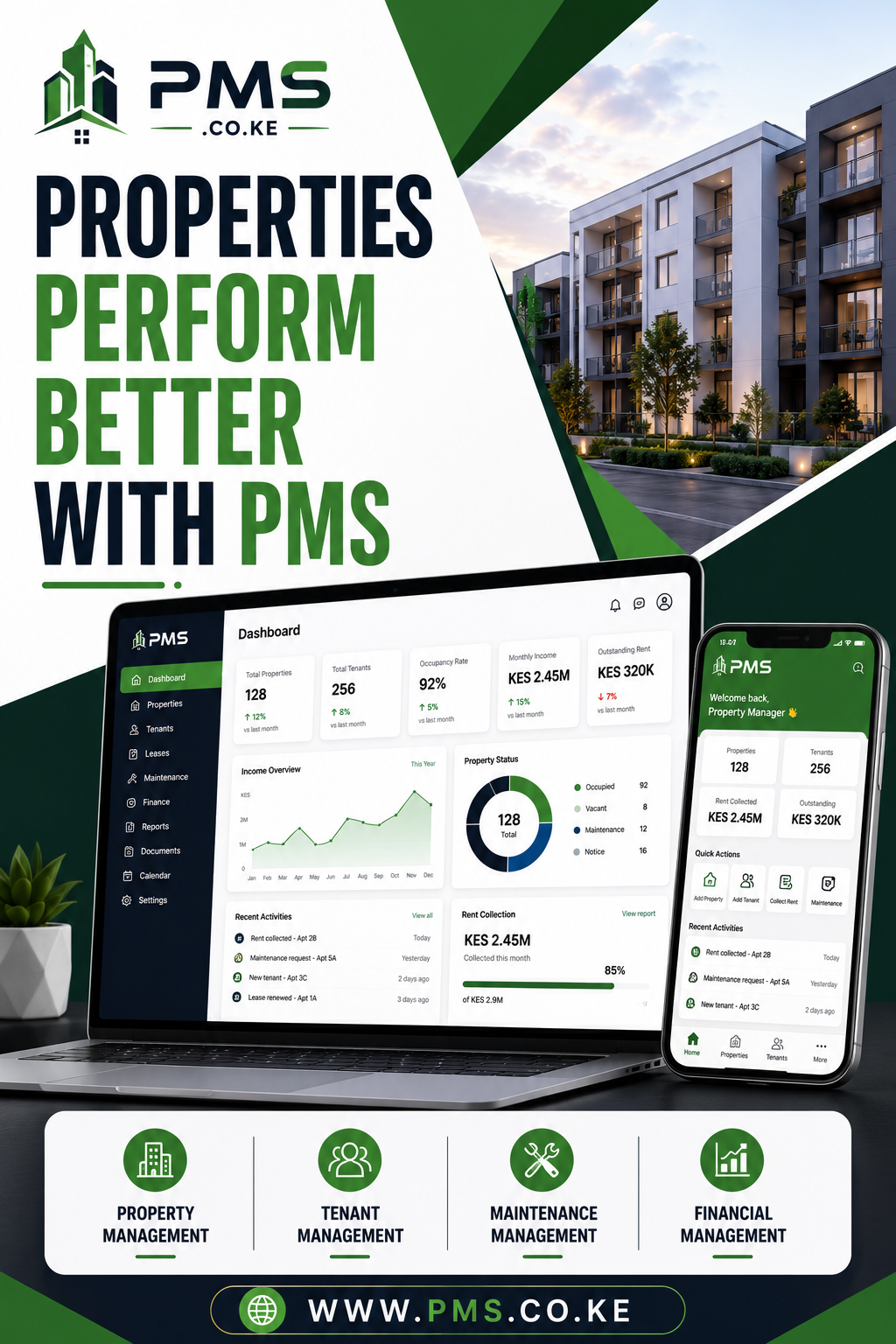
Property Management System for Hotels is a critical software solution that enables hotels, resorts, lodges, guest houses, serviced apartments, boutique hotels, and hospitality businesses to manage their daily operations efficiently. From handling reservations and guest check-ins to room assignments, housekeeping, maintenance, billing, and financial reporting, a Property Management System for Hotels centralizes every operational process into one easy-to-use platform. As Kenya’s hospitality industry continues to grow in destinations such as Nairobi, Mombasa, Diani, Kisumu, Naivasha, Nakuru, Nanyuki, and Maasai Mara, adopting a Property Management System for Hotels helps businesses improve guest experiences, maximize occupancy rates, streamline operations, and increase profitability. Whether managing a small boutique hotel or a large hospitality chain, the right hotel property management system provides complete visibility and control over every aspect of hotel management.
Table of Contents
- Introduction
- Understanding Hotel Property Management
- Why Hotel Management Software Is Essential
- Core Features Every Hotel Needs
- Reservation and Booking Management
- Guest Check-In and Check-Out
- Housekeeping and Room Management
- Financial Management and Reporting
- Improving Hotel Performance Through Technology
Introduction
Running a successful hotel requires much more than providing comfortable rooms. Hotel managers must coordinate reservations, guest services, housekeeping, maintenance, payments, staff schedules, and financial reporting while ensuring every guest enjoys an exceptional experience. Managing these responsibilities manually often leads to booking errors, delayed room preparation, inconsistent communication, and inefficient operations. A Property Management System for Hotels simplifies these complex processes by bringing every department together on one centralized platform. Instead of relying on spreadsheets, paper records, and disconnected software, hotels can automate daily operations, improve service delivery, and make informed business decisions using real-time data. For hospitality businesses across Kenya, investing in a modern hotel management system has become essential for remaining competitive in an increasingly digital industry.
Understanding Hotel Property Management
Hotel property management involves coordinating every activity required to deliver quality accommodation services while maintaining operational efficiency.
Daily hotel operations typically include:
- Reservation management.
- Guest registration.
- Room allocation.
- Check-in processing.
- Check-out procedures.
- Housekeeping coordination.
- Maintenance management.
- Billing and invoicing.
- Staff management.
- Financial reporting.
Without automation, these responsibilities become increasingly difficult as guest numbers and room inventory grow.
A Property Management System for Hotels centralizes these activities, allowing every department to work with accurate and up-to-date information.
Why Hotel Management Software Is Essential
The hospitality industry depends on speed, accuracy, and exceptional customer service.
A Property Management System for Hotels enables hotel operators to:
- Eliminate booking conflicts.
- Improve guest satisfaction.
- Automate repetitive administrative tasks.
- Increase room occupancy.
- Improve communication between departments.
- Monitor room availability.
- Generate business reports.
- Improve operational efficiency.
Hotels that implement digital management systems are better positioned to meet guest expectations while reducing operational costs.
For hotels operating throughout Kenya, digital transformation supports sustainable business growth and improved customer experiences.
Core Features Every Hotel Needs
Selecting the right hotel management software requires understanding the features that directly support daily hospitality operations.
Centralized Hotel Dashboard
A modern dashboard provides complete visibility into:
- Room occupancy.
- Active reservations.
- Guest arrivals.
- Guest departures.
- Housekeeping schedules.
- Maintenance activities.
- Revenue performance.
- Daily hotel operations.
Managers can quickly identify issues and make informed operational decisions.
Reservation Management
Reservation management is one of the most important components of a Property Management System for Hotels.
The system should support:
- Online reservations.
- Walk-in bookings.
- Reservation modifications.
- Booking cancellations.
- Group bookings.
- Corporate reservations.
- Availability management.
- Reservation history.
Efficient reservation management minimizes errors while maximizing occupancy.
Guest Management
Providing excellent guest experiences begins with organized guest information.
Guest profiles should include:
- Contact details.
- Booking history.
- Payment information.
- Preferences.
- Loyalty records.
- Special requests.
- Communication history.
- Identification records.
Personalized service improves guest satisfaction and encourages repeat visits.
Room Management
Each room should have detailed information including:
- Room type.
- Availability status.
- Housekeeping status.
- Maintenance history.
- Amenities.
- Pricing.
- Occupancy history.
- Inspection records.
Keeping room information updated ensures efficient hotel operations.
Reservation and Booking Management
Managing hotel reservations manually becomes increasingly difficult as occupancy grows.
A Property Management System for Hotels simplifies booking management by allowing hotel staff to:
- View room availability instantly.
- Confirm reservations.
- Prevent double bookings.
- Manage seasonal pricing.
- Handle cancellations.
- Process modifications.
- Coordinate group reservations.
- Monitor occupancy trends.
These capabilities improve revenue while reducing administrative work.
Guest Check-In and Check-Out
Efficient front desk operations are essential for delivering positive guest experiences.
Modern hotel management software enables reception staff to:
- Register guests quickly.
- Verify reservations.
- Assign rooms.
- Process payments.
- Record identification.
- Issue invoices.
- Complete check-outs efficiently.
- Update room status automatically.
Faster front desk operations improve customer satisfaction while reducing waiting times.
Housekeeping and Room Management
Housekeeping plays a vital role in maintaining hotel standards.
A Property Management System for Hotels helps housekeeping departments:
- Receive cleaning schedules.
- Prioritize occupied rooms.
- Track cleaning progress.
- Report maintenance issues.
- Update room availability.
- Coordinate inspections.
- Monitor housekeeping performance.
- Improve communication with reception.
Efficient housekeeping ensures rooms are ready for arriving guests without unnecessary delays.
Financial Management and Reporting
Accurate financial management supports profitable hotel operations.
Hotel management software provides reporting on:
- Room revenue.
- Occupancy rates.
- Daily sales.
- Outstanding balances.
- Operational expenses.
- Department performance.
- Profitability.
- Business growth trends.
Reliable financial information enables management to make informed strategic decisions.
Improving Hotel Performance Through Technology
Technology continues to reshape the hospitality industry.
A Property Management System for Hotels enables hotels to automate routine operations, improve guest communication, optimize resource utilization, and enhance service quality while reducing operational costs.
By investing in modern hotel management technology, hospitality businesses can strengthen their competitive advantage and prepare for continued growth.
Benefits of a Property Management System for Hotels for Different Stakeholders
A successful hotel depends on seamless coordination between multiple departments. Receptionists, housekeeping staff, maintenance teams, finance departments, hotel managers, and guests all play an important role in delivering exceptional hospitality services. A Property Management System for Hotels connects these departments through one centralized platform, ensuring everyone has access to accurate, real-time information. This improves efficiency, reduces communication gaps, and creates a better experience for both staff and guests.
Benefits for Hotel Owners
Hotel owners need complete visibility into business performance, occupancy levels, and financial results. Managing these areas manually can make it difficult to identify opportunities for growth or address operational issues quickly.
A Property Management System for Hotels helps hotel owners by allowing them to:
- Monitor occupancy rates in real time.
- Track daily, weekly, and monthly revenue.
- Review financial performance across multiple properties.
- Monitor room availability.
- Analyze booking trends.
- Control operational costs.
- Improve return on investment.
- Make data-driven business decisions.
Whether managing a single hotel or a chain of hospitality properties, owners gain greater control over their investments through centralized reporting and analytics.
Benefits for Hotel Managers
Hotel managers oversee daily operations while ensuring every department works together efficiently.
Using a Property Management System for Hotels, managers can:
- Monitor reservations from one dashboard.
- Coordinate front office operations.
- Supervise housekeeping schedules.
- Track maintenance activities.
- Monitor staff performance.
- Review guest feedback.
- Generate operational reports.
- Improve service delivery.
Automation reduces administrative work, allowing managers to focus on improving guest satisfaction and growing the business.
Benefits for Front Desk Staff
The reception team creates the first and last impression for hotel guests.
A Property Management System for Hotels enables front desk employees to:
- Process reservations quickly.
- Complete fast guest check-ins.
- Assign rooms instantly.
- Process guest payments.
- Handle room upgrades.
- Manage guest requests.
- Complete efficient check-outs.
- Generate invoices automatically.
Reducing manual paperwork allows receptionists to provide faster and more professional customer service.
Benefits for Housekeeping Teams
Housekeeping is responsible for maintaining cleanliness, preparing rooms, and ensuring accommodation standards remain consistently high.
An effective Property Management System for Hotels supports housekeeping teams by:
- Assigning daily cleaning schedules.
- Updating room status instantly.
- Prioritizing urgent room turnovers.
- Reporting maintenance issues.
- Tracking completed cleaning tasks.
- Managing inspection checklists.
- Improving communication with reception.
- Increasing operational efficiency.
This ensures rooms are always ready for incoming guests while reducing delays between check-out and the next check-in.
Benefits for Maintenance Teams
Maintaining hotel facilities is essential for protecting guest satisfaction and property value.
With a Property Management System for Hotels, maintenance teams can:
- Receive repair requests immediately.
- Schedule preventive maintenance.
- Monitor work progress.
- Record completed repairs.
- Track maintenance history.
- Prioritize urgent repairs.
- Reduce equipment downtime.
- Improve response times.
Preventive maintenance minimizes costly breakdowns while extending the lifespan of hotel assets.
Benefits for Finance Departments
Hotel finances involve managing room revenue, payments, refunds, operational expenses, taxes, and financial reporting.
A Property Management System for Hotels helps finance teams by providing:
- Automated billing.
- Revenue tracking.
- Daily financial reports.
- Expense management.
- Audit-ready financial records.
- Outstanding balance monitoring.
- Occupancy-based revenue analysis.
- Business performance reporting.
Accurate financial reporting simplifies decision-making while supporting long-term profitability.
Benefits for Guests
Guest satisfaction remains the primary objective of every hospitality business.
Hotels using a Property Management System for Hotels provide guests with:
- Faster reservation confirmations.
- Smooth check-in experiences.
- Accurate room assignments.
- Faster responses to special requests.
- Better communication.
- Well-maintained rooms.
- Efficient check-out processes.
- Consistently high service standards.
Positive guest experiences lead to stronger online reviews, repeat bookings, and increased referrals.
Improving Efficiency Through Automation
Automation is one of the greatest advantages of implementing a Property Management System for Hotels.
Instead of relying on manual processes, hotels can automate routine tasks such as:
- Reservation confirmations.
- Room availability updates.
- Guest notifications.
- Housekeeping assignments.
- Maintenance scheduling.
- Invoice generation.
- Payment tracking.
- Occupancy reporting.
- Staff notifications.
- Business analytics.
Automation reduces human error while enabling hotel staff to focus on delivering exceptional hospitality services.
Hotels managing large room inventories particularly benefit from automation because it allows them to handle increased guest volumes without significantly increasing administrative workload.
Compliance, Security and Risk Management
Hotels handle sensitive guest information, payment records, employee data, and financial information every day.
A modern Property Management System for Hotels includes security features that help protect both the business and its guests.
User Role Management
Different hotel departments require different access permissions.
System administrators can assign access to:
- Reception staff.
- Hotel managers.
- Housekeeping teams.
- Maintenance personnel.
- Finance departments.
- Property owners.
Role-based permissions improve accountability while protecting confidential information.
Secure Guest Records
Guest information should be stored securely while remaining accessible to authorized staff when required.
Digital guest records improve organization while supporting personalized customer service.
Audit Trails
Every important system activity is recorded.
Managers can review:
- Reservation updates.
- Payment modifications.
- Room assignments.
- User activities.
- Maintenance requests.
- Housekeeping schedules.
Audit trails simplify operational reviews while improving transparency.
Data Backup
Automatic backups protect valuable business information from accidental deletion or hardware failures.
Reliable backup systems improve business continuity and reduce operational risks.
Regulatory Compliance
Hotels operating in Kenya must maintain accurate financial records, tax documentation, and operational information.
A Property Management System for Hotels simplifies compliance by organizing business records and generating reliable reports whenever required.
Integrating a Property Management System for Hotels with Other Business Systems
Modern hotels often use multiple software platforms to manage operations.
A comprehensive Property Management System for Hotels can integrate with:
- Accounting software.
- Online booking platforms.
- Payment gateways.
- Customer relationship management systems.
- Inventory management software.
- Restaurant and POS systems.
- Housekeeping applications.
- Maintenance management tools.
- Business intelligence dashboards.
- Mobile applications.
Integration improves operational efficiency while eliminating duplicate data entry across departments.
Why PMS Is the Ideal Solution
Hospitality businesses require more than a reservation calendar. They need a complete hotel management platform that connects reservations, room management, guest services, housekeeping, maintenance, billing, and reporting.
PMS is designed to help hotels, lodges, resorts, serviced apartments, guest houses, and hospitality businesses manage their operations efficiently through one centralized system.
Key capabilities include:
- Reservation management.
- Room management.
- Guest profiles.
- Housekeeping coordination.
- Maintenance management.
- Financial reporting.
- Occupancy monitoring.
- Property performance dashboards.
- User role management.
- Business analytics.
Rather than functioning as a basic booking system, PMS helps hospitality businesses automate operations, improve guest satisfaction, reduce operational costs, and support long-term business growth.
Property Management System for Hotels in the Kenyan Hospitality Industry
Kenya continues to attract both domestic and international travelers, creating growing demand for modern hotel management solutions.
Hospitality businesses that benefit from a Property Management System for Hotels include:
- Hotels.
- Resorts.
- Boutique hotels.
- Guest houses.
- Serviced apartments.
- Holiday villas.
- Lodges.
- Conference centers.
- Safari camps.
- Extended-stay accommodation providers.
Popular destinations such as Nairobi, Mombasa, Diani, Naivasha, Nakuru, Kisumu, Nanyuki, Malindi, Watamu, and Maasai Mara continue to experience increased demand for efficient hospitality management.
Hotels investing in digital property management are better positioned to compete while delivering exceptional guest experiences.
Future Trends in Hotel Property Management
Technology continues transforming hotel operations worldwide.
Future Property Management System for Hotels platforms are expected to include:
Artificial Intelligence
AI will assist hotels by forecasting occupancy, recommending pricing strategies, and automating guest communication.
Smart Hotel Technology
Smart room controls, digital keys, automated lighting, and connected devices will become increasingly integrated into hotel management systems.
Mobile Guest Services
Guests will increasingly use mobile applications for reservations, digital check-in, room access, service requests, and payments.
Cloud-Based Hotel Operations
Cloud platforms will continue improving scalability, accessibility, and business continuity for hospitality businesses.
Advanced Analytics
Hotels will increasingly rely on real-time dashboards for revenue forecasting, occupancy analysis, guest behavior insights, and operational performance monitoring.
Personalized Guest Experiences
Future systems will use guest history and preferences to deliver highly personalized hospitality services that improve satisfaction and loyalty.
Getting Started with a Property Management System for Hotels
Successfully implementing a Property Management System for Hotels begins with understanding your hotel’s operational requirements.
Hotels should:
- Assess current management processes.
- Identify operational challenges.
- Define business objectives.
- Organize room and guest information.
- Train employees.
- Configure user permissions.
- Integrate financial systems.
- Test operational workflows.
- Monitor system performance.
- Continuously improve hotel operations.
Hotels that invest in proper planning and staff training experience smoother implementation and faster returns on investment.
For hospitality businesses across Kenya, adopting a professional hotel property management system provides the technology foundation needed to improve service quality, increase occupancy, and support sustainable growth.
Conclusion
Property Management System for Hotels software has become an essential investment for modern hospitality businesses seeking to improve operational efficiency, enhance guest experiences, and maximize profitability. By centralizing reservations, room management, housekeeping, maintenance, billing, guest communication, and financial reporting into one platform, hotels can streamline operations while reducing administrative complexity.
As Kenya’s hospitality industry continues to grow, hotels that embrace digital management solutions will be better positioned to meet evolving guest expectations and compete in an increasingly technology-driven market. With a comprehensive solution like PMS, hotel owners and managers can confidently manage daily operations, optimize occupancy, improve customer satisfaction, and prepare their businesses for long-term success.
Benefits of a Property Management System for Hotels for Different Stakeholders
A successful hotel depends on seamless coordination between multiple departments. Receptionists, housekeeping staff, maintenance teams, finance departments, hotel managers, and guests all play an important role in delivering exceptional hospitality services. A Property Management System for Hotels connects these departments through one centralized platform, ensuring everyone has access to accurate, real-time information. This improves efficiency, reduces communication gaps, and creates a better experience for both staff and guests.
Benefits for Hotel Owners
Hotel owners need complete visibility into business performance, occupancy levels, and financial results. Managing these areas manually can make it difficult to identify opportunities for growth or address operational issues quickly.
A Property Management System for Hotels helps hotel owners by allowing them to:
- Monitor occupancy rates in real time.
- Track daily, weekly, and monthly revenue.
- Review financial performance across multiple properties.
- Monitor room availability.
- Analyze booking trends.
- Control operational costs.
- Improve return on investment.
- Make data-driven business decisions.
Whether managing a single hotel or a chain of hospitality properties, owners gain greater control over their investments through centralized reporting and analytics.
Benefits for Hotel Managers
Hotel managers oversee daily operations while ensuring every department works together efficiently.
Using a Property Management System for Hotels, managers can:
- Monitor reservations from one dashboard.
- Coordinate front office operations.
- Supervise housekeeping schedules.
- Track maintenance activities.
- Monitor staff performance.
- Review guest feedback.
- Generate operational reports.
- Improve service delivery.
Automation reduces administrative work, allowing managers to focus on improving guest satisfaction and growing the business.
Benefits for Front Desk Staff
The reception team creates the first and last impression for hotel guests.
A Property Management System for Hotels enables front desk employees to:
- Process reservations quickly.
- Complete fast guest check-ins.
- Assign rooms instantly.
- Process guest payments.
- Handle room upgrades.
- Manage guest requests.
- Complete efficient check-outs.
- Generate invoices automatically.
Reducing manual paperwork allows receptionists to provide faster and more professional customer service.
Benefits for Housekeeping Teams
Housekeeping is responsible for maintaining cleanliness, preparing rooms, and ensuring accommodation standards remain consistently high.
An effective Property Management System for Hotels supports housekeeping teams by:
- Assigning daily cleaning schedules.
- Updating room status instantly.
- Prioritizing urgent room turnovers.
- Reporting maintenance issues.
- Tracking completed cleaning tasks.
- Managing inspection checklists.
- Improving communication with reception.
- Increasing operational efficiency.
This ensures rooms are always ready for incoming guests while reducing delays between check-out and the next check-in.
Benefits for Maintenance Teams
Maintaining hotel facilities is essential for protecting guest satisfaction and property value.
With a Property Management System for Hotels, maintenance teams can:
- Receive repair requests immediately.
- Schedule preventive maintenance.
- Monitor work progress.
- Record completed repairs.
- Track maintenance history.
- Prioritize urgent repairs.
- Reduce equipment downtime.
- Improve response times.
Preventive maintenance minimizes costly breakdowns while extending the lifespan of hotel assets.
Benefits for Finance Departments
Hotel finances involve managing room revenue, payments, refunds, operational expenses, taxes, and financial reporting.
A Property Management System for Hotels helps finance teams by providing:
- Automated billing.
- Revenue tracking.
- Daily financial reports.
- Expense management.
- Audit-ready financial records.
- Outstanding balance monitoring.
- Occupancy-based revenue analysis.
- Business performance reporting.
Accurate financial reporting simplifies decision-making while supporting long-term profitability.
Benefits for Guests
Guest satisfaction remains the primary objective of every hospitality business.
Hotels using a Property Management System for Hotels provide guests with:
- Faster reservation confirmations.
- Smooth check-in experiences.
- Accurate room assignments.
- Faster responses to special requests.
- Better communication.
- Well-maintained rooms.
- Efficient check-out processes.
- Consistently high service standards.
Positive guest experiences lead to stronger online reviews, repeat bookings, and increased referrals.
Improving Efficiency Through Automation
Automation is one of the greatest advantages of implementing a Property Management System for Hotels.
Instead of relying on manual processes, hotels can automate routine tasks such as:
- Reservation confirmations.
- Room availability updates.
- Guest notifications.
- Housekeeping assignments.
- Maintenance scheduling.
- Invoice generation.
- Payment tracking.
- Occupancy reporting.
- Staff notifications.
- Business analytics.
Automation reduces human error while enabling hotel staff to focus on delivering exceptional hospitality services.
Hotels managing large room inventories particularly benefit from automation because it allows them to handle increased guest volumes without significantly increasing administrative workload.
Compliance, Security and Risk Management
Hotels handle sensitive guest information, payment records, employee data, and financial information every day.
A modern Property Management System for Hotels includes security features that help protect both the business and its guests.
User Role Management
Different hotel departments require different access permissions.
System administrators can assign access to:
- Reception staff.
- Hotel managers.
- Housekeeping teams.
- Maintenance personnel.
- Finance departments.
- Property owners.
Role-based permissions improve accountability while protecting confidential information.
Secure Guest Records
Guest information should be stored securely while remaining accessible to authorized staff when required.
Digital guest records improve organization while supporting personalized customer service.
Audit Trails
Every important system activity is recorded.
Managers can review:
- Reservation updates.
- Payment modifications.
- Room assignments.
- User activities.
- Maintenance requests.
- Housekeeping schedules.
Audit trails simplify operational reviews while improving transparency.
Data Backup
Automatic backups protect valuable business information from accidental deletion or hardware failures.
Reliable backup systems improve business continuity and reduce operational risks.
Regulatory Compliance
Hotels operating in Kenya must maintain accurate financial records, tax documentation, and operational information.
A Property Management System for Hotels simplifies compliance by organizing business records and generating reliable reports whenever required.
Integrating a Property Management System for Hotels with Other Business Systems
Modern hotels often use multiple software platforms to manage operations.
A comprehensive Property Management System for Hotels can integrate with:
- Accounting software.
- Online booking platforms.
- Payment gateways.
- Customer relationship management systems.
- Inventory management software.
- Restaurant and POS systems.
- Housekeeping applications.
- Maintenance management tools.
- Business intelligence dashboards.
- Mobile applications.
Integration improves operational efficiency while eliminating duplicate data entry across departments.
Why PMS Is the Ideal Solution
Hospitality businesses require more than a reservation calendar. They need a complete hotel management platform that connects reservations, room management, guest services, housekeeping, maintenance, billing, and reporting.
PMS is designed to help hotels, lodges, resorts, serviced apartments, guest houses, and hospitality businesses manage their operations efficiently through one centralized system.
Key capabilities include:
- Reservation management.
- Room management.
- Guest profiles.
- Housekeeping coordination.
- Maintenance management.
- Financial reporting.
- Occupancy monitoring.
- Property performance dashboards.
- User role management.
- Business analytics.
Rather than functioning as a basic booking system, PMS helps hospitality businesses automate operations, improve guest satisfaction, reduce operational costs, and support long-term business growth.
Property Management System for Hotels in the Kenyan Hospitality Industry
Kenya continues to attract both domestic and international travelers, creating growing demand for modern hotel management solutions.
Hospitality businesses that benefit from a Property Management System for Hotels include:
- Hotels.
- Resorts.
- Boutique hotels.
- Guest houses.
- Serviced apartments.
- Holiday villas.
- Lodges.
- Conference centers.
- Safari camps.
- Extended-stay accommodation providers.
Popular destinations such as Nairobi, Mombasa, Diani, Naivasha, Nakuru, Kisumu, Nanyuki, Malindi, Watamu, and Maasai Mara continue to experience increased demand for efficient hospitality management.
Hotels investing in digital property management are better positioned to compete while delivering exceptional guest experiences.
Future Trends in Hotel Property Management
Technology continues transforming hotel operations worldwide.
Future Property Management System for Hotels platforms are expected to include:
Artificial Intelligence
AI will assist hotels by forecasting occupancy, recommending pricing strategies, and automating guest communication.
Smart Hotel Technology
Smart room controls, digital keys, automated lighting, and connected devices will become increasingly integrated into hotel management systems.
Mobile Guest Services
Guests will increasingly use mobile applications for reservations, digital check-in, room access, service requests, and payments.
Cloud-Based Hotel Operations
Cloud platforms will continue improving scalability, accessibility, and business continuity for hospitality businesses.
Advanced Analytics
Hotels will increasingly rely on real-time dashboards for revenue forecasting, occupancy analysis, guest behavior insights, and operational performance monitoring.
Personalized Guest Experiences
Future systems will use guest history and preferences to deliver highly personalized hospitality services that improve satisfaction and loyalty.
Getting Started with a Property Management System for Hotels
Successfully implementing a Property Management System for Hotels begins with understanding your hotel’s operational requirements.
Hotels should:
- Assess current management processes.
- Identify operational challenges.
- Define business objectives.
- Organize room and guest information.
- Train employees.
- Configure user permissions.
- Integrate financial systems.
- Test operational workflows.
- Monitor system performance.
- Continuously improve hotel operations.
Hotels that invest in proper planning and staff training experience smoother implementation and faster returns on investment.
For hospitality businesses across Kenya, adopting a professional hotel property management system provides the technology foundation needed to improve service quality, increase occupancy, and support sustainable growth.
Conclusion
Property Management System for Hotels software has become an essential investment for modern hospitality businesses seeking to improve operational efficiency, enhance guest experiences, and maximize profitability. By centralizing reservations, room management, housekeeping, maintenance, billing, guest communication, and financial reporting into one platform, hotels can streamline operations while reducing administrative complexity.
As Kenya’s hospitality industry continues to grow, hotels that embrace digital management solutions will be better positioned to meet evolving guest expectations and compete in an increasingly technology-driven market. With a comprehensive solution like PMS, hotel owners and managers can confidently manage daily operations, optimize occupancy, improve customer satisfaction, and prepare their businesses for long-term success.
