
Tenant Arrears Recovery Management
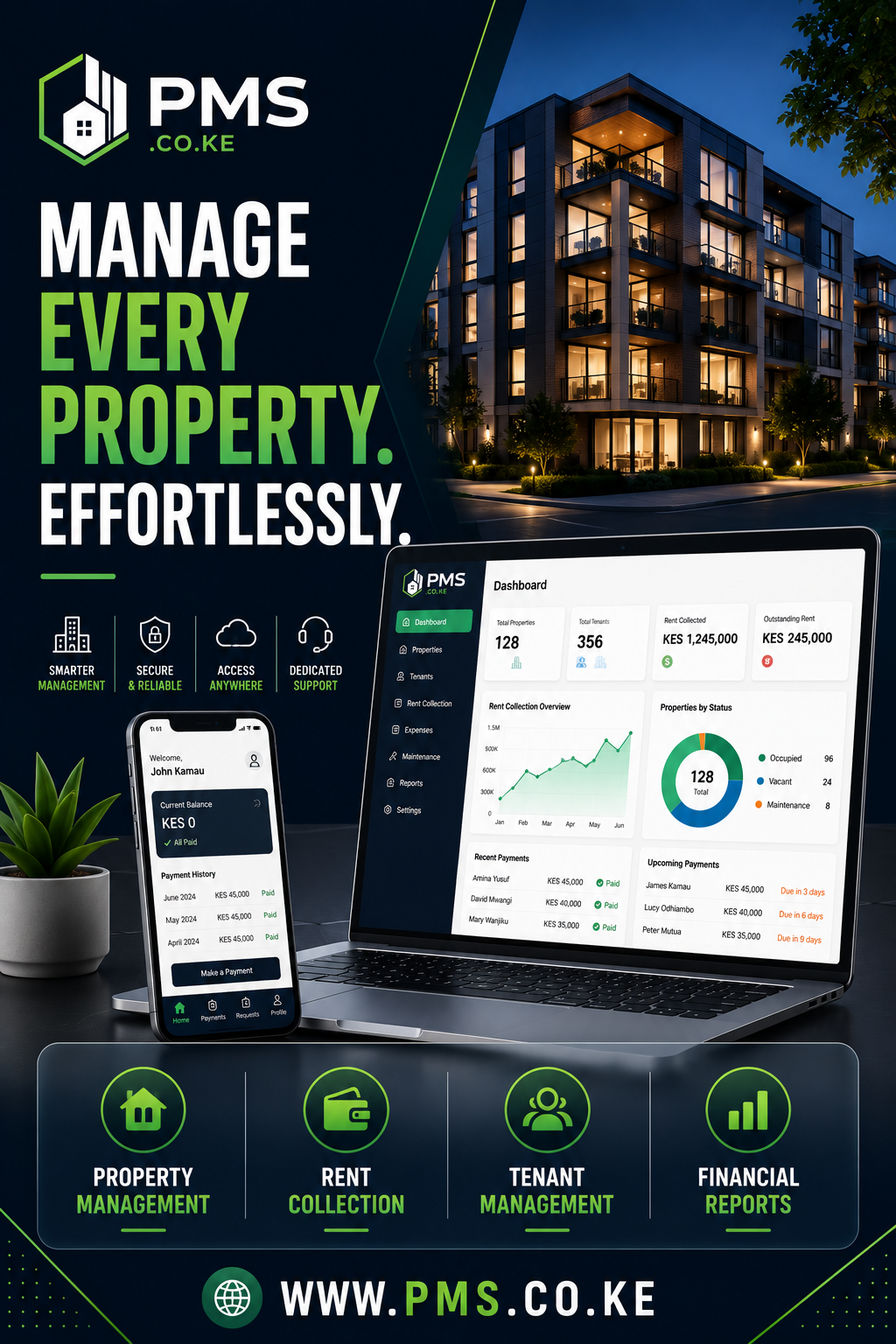
Maintaining consistent rental income is one of the most important objectives for every property owner, landlord, and property management company. While attracting quality tenants and achieving high occupancy rates contribute to business success, delayed rental payments and accumulated arrears can significantly affect cash flow, operational planning, maintenance schedules, and overall profitability. Tenant Arrears Recovery Management provides a structured approach to monitoring overdue accounts, improving collection processes, and helping property managers recover outstanding balances while maintaining professional tenant relationships.
Across Kenya, residential apartments, commercial buildings, office complexes, student housing, and mixed-use developments generate recurring rental income that supports daily operations and long-term investment growth. However, managing hundreds of tenants often makes it difficult to monitor payment behaviour manually. Missed due dates, partial payments, disputed invoices, and inconsistent follow-ups frequently result in growing arrears that reduce financial stability.
A modern Tenant Arrears Recovery Management solution enables property managers to identify overdue accounts early, automate reminders, monitor recovery performance, prioritize collection activities, and generate detailed financial reports from a centralized platform. Instead of relying on spreadsheets or handwritten ledgers, organizations gain complete visibility into tenant payment behaviour and outstanding balances.
As Kenya’s real estate industry continues embracing digital transformation, implementing Tenant Arrears Recovery Management has become an essential strategy for improving rent collection efficiency, strengthening financial control, and supporting sustainable portfolio growth.
Table of Contents
- Understanding Tenant Arrears
- Why Effective Recovery Management Matters
- Challenges of Manual Arrears Management
- How Digital Recovery Solutions Work
- Key Features of Modern Recovery Platforms
- Improving Rent Collection Performance
- Monitoring Tenant Payment Behaviour
- Financial Visibility and Reporting
- Supporting Portfolio Growth
- The Growing Importance in Kenya
Understanding Tenant Arrears
Tenant arrears occur whenever rental payments or other lease-related charges remain unpaid after their agreed due dates. These outstanding balances may include monthly rent, service charges, utility bills, parking fees, maintenance contributions, penalties, or other contractual obligations.
Without a structured Tenant Arrears Recovery Management process, overdue balances can accumulate quickly, reducing cash flow and creating financial uncertainty for landlords and property managers.
A digital recovery platform records every outstanding balance, monitors payment history, categorizes overdue accounts by aging periods, and provides managers with accurate information needed to prioritize recovery efforts.
Instead of reacting after arrears become significant, property managers can identify payment issues early and take appropriate action before financial risks increase.
Why Effective Recovery Management Matters
Consistent rental income supports virtually every aspect of property management. Maintenance projects, security services, staff salaries, loan repayments, insurance premiums, and property improvements all depend on reliable cash flow.
Tenant Arrears Recovery Management helps organizations maintain financial stability by improving the efficiency of rent collection processes and reducing outstanding receivables.
An effective recovery strategy enables organizations to:
- Improve monthly cash flow.
- Reduce long-term arrears.
- Strengthen financial planning.
- Improve tenant payment discipline.
- Support accurate budgeting.
- Reduce administrative workload.
- Improve portfolio profitability.
- Strengthen investor confidence.
Rather than relying on reactive collection efforts, organizations establish consistent procedures that encourage timely payments while preserving positive tenant relationships.
Challenges of Manual Arrears Management
Many property businesses continue managing overdue accounts using spreadsheets, notebooks, or disconnected accounting systems. Although these methods may work for small portfolios, they become increasingly difficult to maintain as tenant numbers grow.
Common challenges include:
- Missed payment reminders.
- Duplicate records.
- Delayed follow-ups.
- Manual reconciliation.
- Inaccurate reporting.
- Poor visibility into overdue balances.
- Difficulty prioritizing collections.
- Time-consuming month-end reporting.
These challenges often result in delayed recoveries, increased administrative costs, and weaker financial performance.
A Tenant Arrears Recovery Management solution centralizes every collection activity, ensuring finance teams and property managers work from accurate, up-to-date information.
How Digital Recovery Solutions Work
A Tenant Arrears Recovery Management platform integrates with lease management, billing, receivables, tenant records, and financial reporting to provide complete visibility into outstanding balances.
The platform continuously tracks:
- Rent invoices
- Payment history
- Outstanding balances
- Partial payments
- Collection activities
- Tenant communication
- Aging reports
- Recovery performance
Whenever payments are received, account balances update automatically, ensuring collection teams always work with current information.
Automated workflows also generate reminders before and after due dates, reducing manual follow-up while improving collection consistency.
Key Features of Modern Recovery Platforms
An effective Tenant Arrears Recovery Management solution should provide tools that simplify collections while improving financial visibility.
Automated Payment Reminders
Scheduled SMS, email, and notification reminders encourage tenants to pay before accounts become overdue.
Aging Analysis
Categorize outstanding balances into current, 30-day, 60-day, 90-day, and long-term arrears to prioritize recovery activities.
Tenant Account Statements
Provide complete financial histories showing invoices, payments, adjustments, and outstanding balances.
Collection Tracking
Monitor recovery progress, follow-up activities, promises to pay, and payment arrangements.
Financial Reporting
Generate reports covering arrears performance, collection rates, overdue balances, and cash flow trends.
Multi-Property Monitoring
Manage arrears across multiple residential and commercial properties from one centralized dashboard.
Improving Rent Collection Performance
Recovering overdue rent requires more than sending payment reminders. Successful collection strategies combine timely communication, accurate financial information, structured follow-ups, and performance monitoring.
A Tenant Arrears Recovery Management platform enables managers to identify overdue tenants immediately, prioritize high-risk accounts, monitor payment behaviour, and evaluate collection performance using real-time dashboards.
Automated reminders improve consistency while reducing administrative effort.
Managers can also analyze collection trends to identify recurring payment issues and implement preventive measures such as improved tenant screening, flexible payment arrangements, or revised lease policies.
Monitoring Tenant Payment Behaviour
Understanding tenant payment patterns enables organizations to reduce future arrears while strengthening financial planning.
A Tenant Arrears Recovery Management platform analyzes:
- Payment frequency
- Late payment trends
- Partial payments
- Lease compliance
- Outstanding balances
- Collection success rates
These insights help property managers identify high-risk accounts early and develop targeted recovery strategies that improve payment compliance without damaging tenant relationships.
Financial Visibility and Reporting
Financial transparency is essential for effective portfolio management.
Interactive dashboards provide real-time visibility into:
- Total outstanding arrears
- Monthly collections
- Recovery rates
- Portfolio cash flow
- Aging summaries
- Property-level performance
- Collection team productivity
- Revenue trends
Instead of manually compiling reports, property managers receive continuously updated financial intelligence that supports faster decision-making and stronger operational control.
Supporting Portfolio Growth
As property portfolios expand, managing overdue accounts manually becomes increasingly inefficient.
Integrated platforms such as PMS combine Tenant Arrears Recovery Management with lease administration, tenant management, receivables tracking, maintenance coordination, inspections, financial reporting, and executive dashboards.
This integrated approach enables landlords and property managers across Kenya to strengthen rent collection, improve operational efficiency, enhance financial visibility, and support sustainable long-term portfolio growth.
Maintaining consistent rental income is one of the most important objectives for every property owner, landlord, and property management company. While attracting quality tenants and achieving high occupancy rates contribute to business success, delayed rental payments and accumulated arrears can significantly affect cash flow, operational planning, maintenance schedules, and overall profitability. Tenant Arrears Recovery Management provides a structured approach to monitoring overdue accounts, improving collection processes, and helping property managers recover outstanding balances while maintaining professional tenant relationships.
Across Kenya, residential apartments, commercial buildings, office complexes, student housing, and mixed-use developments generate recurring rental income that supports daily operations and long-term investment growth. However, managing hundreds of tenants often makes it difficult to monitor payment behaviour manually. Missed due dates, partial payments, disputed invoices, and inconsistent follow-ups frequently result in growing arrears that reduce financial stability.
A modern Tenant Arrears Recovery Management solution enables property managers to identify overdue accounts early, automate reminders, monitor recovery performance, prioritize collection activities, and generate detailed financial reports from a centralized platform. Instead of relying on spreadsheets or handwritten ledgers, organizations gain complete visibility into tenant payment behaviour and outstanding balances.
As Kenya’s real estate industry continues embracing digital transformation, implementing Tenant Arrears Recovery Management has become an essential strategy for improving rent collection efficiency, strengthening financial control, and supporting sustainable portfolio growth.
Table of Contents
- Understanding Tenant Arrears
- Why Effective Recovery Management Matters
- Challenges of Manual Arrears Management
- How Digital Recovery Solutions Work
- Key Features of Modern Recovery Platforms
- Improving Rent Collection Performance
- Monitoring Tenant Payment Behaviour
- Financial Visibility and Reporting
- Supporting Portfolio Growth
- The Growing Importance in Kenya
Understanding Tenant Arrears
Tenant arrears occur whenever rental payments or other lease-related charges remain unpaid after their agreed due dates. These outstanding balances may include monthly rent, service charges, utility bills, parking fees, maintenance contributions, penalties, or other contractual obligations.
Without a structured Tenant Arrears Recovery Management process, overdue balances can accumulate quickly, reducing cash flow and creating financial uncertainty for landlords and property managers.
A digital recovery platform records every outstanding balance, monitors payment history, categorizes overdue accounts by aging periods, and provides managers with accurate information needed to prioritize recovery efforts.
Instead of reacting after arrears become significant, property managers can identify payment issues early and take appropriate action before financial risks increase.
Why Effective Recovery Management Matters
Consistent rental income supports virtually every aspect of property management. Maintenance projects, security services, staff salaries, loan repayments, insurance premiums, and property improvements all depend on reliable cash flow.
Tenant Arrears Recovery Management helps organizations maintain financial stability by improving the efficiency of rent collection processes and reducing outstanding receivables.
An effective recovery strategy enables organizations to:
- Improve monthly cash flow.
- Reduce long-term arrears.
- Strengthen financial planning.
- Improve tenant payment discipline.
- Support accurate budgeting.
- Reduce administrative workload.
- Improve portfolio profitability.
- Strengthen investor confidence.
Rather than relying on reactive collection efforts, organizations establish consistent procedures that encourage timely payments while preserving positive tenant relationships.
Challenges of Manual Arrears Management
Many property businesses continue managing overdue accounts using spreadsheets, notebooks, or disconnected accounting systems. Although these methods may work for small portfolios, they become increasingly difficult to maintain as tenant numbers grow.
Common challenges include:
- Missed payment reminders.
- Duplicate records.
- Delayed follow-ups.
- Manual reconciliation.
- Inaccurate reporting.
- Poor visibility into overdue balances.
- Difficulty prioritizing collections.
- Time-consuming month-end reporting.
These challenges often result in delayed recoveries, increased administrative costs, and weaker financial performance.
A Tenant Arrears Recovery Management solution centralizes every collection activity, ensuring finance teams and property managers work from accurate, up-to-date information.
How Digital Recovery Solutions Work
A Tenant Arrears Recovery Management platform integrates with lease management, billing, receivables, tenant records, and financial reporting to provide complete visibility into outstanding balances.
The platform continuously tracks:
- Rent invoices
- Payment history
- Outstanding balances
- Partial payments
- Collection activities
- Tenant communication
- Aging reports
- Recovery performance
Whenever payments are received, account balances update automatically, ensuring collection teams always work with current information.
Automated workflows also generate reminders before and after due dates, reducing manual follow-up while improving collection consistency.
Key Features of Modern Recovery Platforms
An effective Tenant Arrears Recovery Management solution should provide tools that simplify collections while improving financial visibility.
Automated Payment Reminders
Scheduled SMS, email, and notification reminders encourage tenants to pay before accounts become overdue.
Aging Analysis
Categorize outstanding balances into current, 30-day, 60-day, 90-day, and long-term arrears to prioritize recovery activities.
Tenant Account Statements
Provide complete financial histories showing invoices, payments, adjustments, and outstanding balances.
Collection Tracking
Monitor recovery progress, follow-up activities, promises to pay, and payment arrangements.
Financial Reporting
Generate reports covering arrears performance, collection rates, overdue balances, and cash flow trends.
Multi-Property Monitoring
Manage arrears across multiple residential and commercial properties from one centralized dashboard.
Improving Rent Collection Performance
Recovering overdue rent requires more than sending payment reminders. Successful collection strategies combine timely communication, accurate financial information, structured follow-ups, and performance monitoring.
A Tenant Arrears Recovery Management platform enables managers to identify overdue tenants immediately, prioritize high-risk accounts, monitor payment behaviour, and evaluate collection performance using real-time dashboards.
Automated reminders improve consistency while reducing administrative effort.
Managers can also analyze collection trends to identify recurring payment issues and implement preventive measures such as improved tenant screening, flexible payment arrangements, or revised lease policies.
Monitoring Tenant Payment Behaviour
Understanding tenant payment patterns enables organizations to reduce future arrears while strengthening financial planning.
A Tenant Arrears Recovery Management platform analyzes:
- Payment frequency
- Late payment trends
- Partial payments
- Lease compliance
- Outstanding balances
- Collection success rates
These insights help property managers identify high-risk accounts early and develop targeted recovery strategies that improve payment compliance without damaging tenant relationships.
Financial Visibility and Reporting
Financial transparency is essential for effective portfolio management.
Interactive dashboards provide real-time visibility into:
- Total outstanding arrears
- Monthly collections
- Recovery rates
- Portfolio cash flow
- Aging summaries
- Property-level performance
- Collection team productivity
- Revenue trends
Instead of manually compiling reports, property managers receive continuously updated financial intelligence that supports faster decision-making and stronger operational control.
Supporting Portfolio Growth
As property portfolios expand, managing overdue accounts manually becomes increasingly inefficient.
Integrated platforms such as PMS combine Tenant Arrears Recovery Management with lease administration, tenant management, receivables tracking, maintenance coordination, inspections, financial reporting, and executive dashboards.
This integrated approach enables landlords and property managers across Kenya to strengthen rent collection, improve operational efficiency, enhance financial visibility, and support sustainable long-term portfolio growth.
Maintaining consistent rental income is one of the most important objectives for every property owner, landlord, and property management company. While attracting quality tenants and achieving high occupancy rates contribute to business success, delayed rental payments and accumulated arrears can significantly affect cash flow, operational planning, maintenance schedules, and overall profitability. Tenant Arrears Recovery Management provides a structured approach to monitoring overdue accounts, improving collection processes, and helping property managers recover outstanding balances while maintaining professional tenant relationships.
Across Kenya, residential apartments, commercial buildings, office complexes, student housing, and mixed-use developments generate recurring rental income that supports daily operations and long-term investment growth. However, managing hundreds of tenants often makes it difficult to monitor payment behaviour manually. Missed due dates, partial payments, disputed invoices, and inconsistent follow-ups frequently result in growing arrears that reduce financial stability.
A modern Tenant Arrears Recovery Management solution enables property managers to identify overdue accounts early, automate reminders, monitor recovery performance, prioritize collection activities, and generate detailed financial reports from a centralized platform. Instead of relying on spreadsheets or handwritten ledgers, organizations gain complete visibility into tenant payment behaviour and outstanding balances.
As Kenya’s real estate industry continues embracing digital transformation, implementing Tenant Arrears Recovery Management has become an essential strategy for improving rent collection efficiency, strengthening financial control, and supporting sustainable portfolio growth.
Table of Contents
- Understanding Tenant Arrears
- Why Effective Recovery Management Matters
- Challenges of Manual Arrears Management
- How Digital Recovery Solutions Work
- Key Features of Modern Recovery Platforms
- Improving Rent Collection Performance
- Monitoring Tenant Payment Behaviour
- Financial Visibility and Reporting
- Supporting Portfolio Growth
- The Growing Importance in Kenya
Understanding Tenant Arrears
Tenant arrears occur whenever rental payments or other lease-related charges remain unpaid after their agreed due dates. These outstanding balances may include monthly rent, service charges, utility bills, parking fees, maintenance contributions, penalties, or other contractual obligations.
Without a structured Tenant Arrears Recovery Management process, overdue balances can accumulate quickly, reducing cash flow and creating financial uncertainty for landlords and property managers.
A digital recovery platform records every outstanding balance, monitors payment history, categorizes overdue accounts by aging periods, and provides managers with accurate information needed to prioritize recovery efforts.
Instead of reacting after arrears become significant, property managers can identify payment issues early and take appropriate action before financial risks increase.
Why Effective Recovery Management Matters
Consistent rental income supports virtually every aspect of property management. Maintenance projects, security services, staff salaries, loan repayments, insurance premiums, and property improvements all depend on reliable cash flow.
Tenant Arrears Recovery Management helps organizations maintain financial stability by improving the efficiency of rent collection processes and reducing outstanding receivables.
An effective recovery strategy enables organizations to:
- Improve monthly cash flow.
- Reduce long-term arrears.
- Strengthen financial planning.
- Improve tenant payment discipline.
- Support accurate budgeting.
- Reduce administrative workload.
- Improve portfolio profitability.
- Strengthen investor confidence.
Rather than relying on reactive collection efforts, organizations establish consistent procedures that encourage timely payments while preserving positive tenant relationships.
Challenges of Manual Arrears Management
Many property businesses continue managing overdue accounts using spreadsheets, notebooks, or disconnected accounting systems. Although these methods may work for small portfolios, they become increasingly difficult to maintain as tenant numbers grow.
Common challenges include:
- Missed payment reminders.
- Duplicate records.
- Delayed follow-ups.
- Manual reconciliation.
- Inaccurate reporting.
- Poor visibility into overdue balances.
- Difficulty prioritizing collections.
- Time-consuming month-end reporting.
These challenges often result in delayed recoveries, increased administrative costs, and weaker financial performance.
A Tenant Arrears Recovery Management solution centralizes every collection activity, ensuring finance teams and property managers work from accurate, up-to-date information.
How Digital Recovery Solutions Work
A Tenant Arrears Recovery Management platform integrates with lease management, billing, receivables, tenant records, and financial reporting to provide complete visibility into outstanding balances.
The platform continuously tracks:
- Rent invoices
- Payment history
- Outstanding balances
- Partial payments
- Collection activities
- Tenant communication
- Aging reports
- Recovery performance
Whenever payments are received, account balances update automatically, ensuring collection teams always work with current information.
Automated workflows also generate reminders before and after due dates, reducing manual follow-up while improving collection consistency.
Key Features of Modern Recovery Platforms
An effective Tenant Arrears Recovery Management solution should provide tools that simplify collections while improving financial visibility.
Automated Payment Reminders
Scheduled SMS, email, and notification reminders encourage tenants to pay before accounts become overdue.
Aging Analysis
Categorize outstanding balances into current, 30-day, 60-day, 90-day, and long-term arrears to prioritize recovery activities.
Tenant Account Statements
Provide complete financial histories showing invoices, payments, adjustments, and outstanding balances.
Collection Tracking
Monitor recovery progress, follow-up activities, promises to pay, and payment arrangements.
Financial Reporting
Generate reports covering arrears performance, collection rates, overdue balances, and cash flow trends.
Multi-Property Monitoring
Manage arrears across multiple residential and commercial properties from one centralized dashboard.
Improving Rent Collection Performance
Recovering overdue rent requires more than sending payment reminders. Successful collection strategies combine timely communication, accurate financial information, structured follow-ups, and performance monitoring.
A Tenant Arrears Recovery Management platform enables managers to identify overdue tenants immediately, prioritize high-risk accounts, monitor payment behaviour, and evaluate collection performance using real-time dashboards.
Automated reminders improve consistency while reducing administrative effort.
Managers can also analyze collection trends to identify recurring payment issues and implement preventive measures such as improved tenant screening, flexible payment arrangements, or revised lease policies.
Monitoring Tenant Payment Behaviour
Understanding tenant payment patterns enables organizations to reduce future arrears while strengthening financial planning.
A Tenant Arrears Recovery Management platform analyzes:
- Payment frequency
- Late payment trends
- Partial payments
- Lease compliance
- Outstanding balances
- Collection success rates
These insights help property managers identify high-risk accounts early and develop targeted recovery strategies that improve payment compliance without damaging tenant relationships.
Financial Visibility and Reporting
Financial transparency is essential for effective portfolio management.
Interactive dashboards provide real-time visibility into:
- Total outstanding arrears
- Monthly collections
- Recovery rates
- Portfolio cash flow
- Aging summaries
- Property-level performance
- Collection team productivity
- Revenue trends
Instead of manually compiling reports, property managers receive continuously updated financial intelligence that supports faster decision-making and stronger operational control.
Supporting Portfolio Growth
As property portfolios expand, managing overdue accounts manually becomes increasingly inefficient.
Integrated platforms such as PMS combine Tenant Arrears Recovery Management with lease administration, tenant management, receivables tracking, maintenance coordination, inspections, financial reporting, and executive dashboards.
This integrated approach enables landlords and property managers across Kenya to strengthen rent collection, improve operational efficiency, enhance financial visibility, and support sustainable long-term portfolio growth.
