
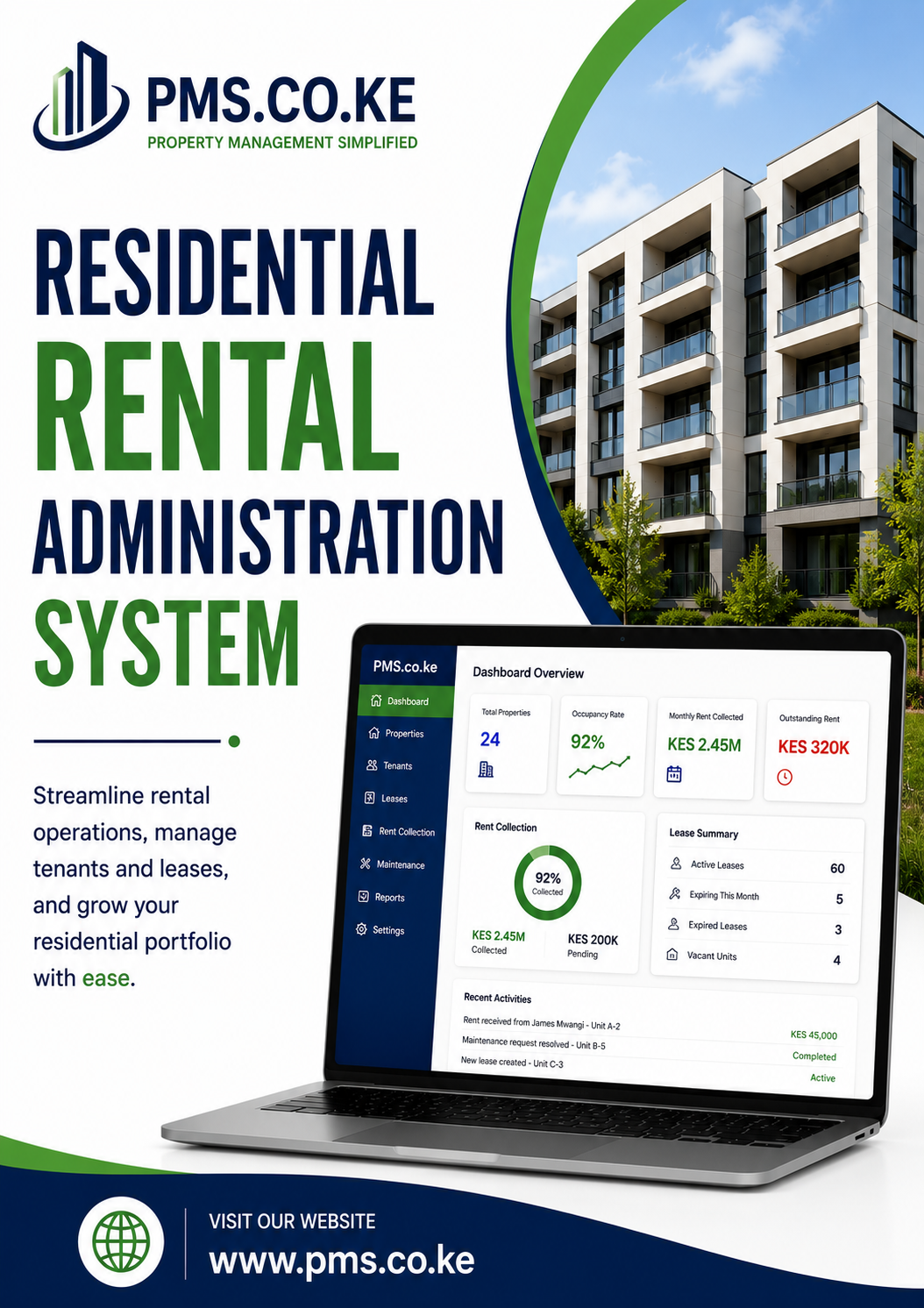
Residential Rental Administration System is transforming how property managers, landlords, and real estate companies manage residential properties across Kenya. As rental portfolios continue to expand, the need for efficient administrative processes becomes increasingly important. Manual paperwork, spreadsheets, and disconnected systems often create inefficiencies that affect tenant satisfaction, operational performance, and revenue collection.
A modern Residential Rental Administration System centralizes administrative functions into a single digital platform. From tenant onboarding and lease administration to rent collection and maintenance coordination, property managers can streamline daily operations while improving visibility across their portfolios.
For property management companies handling multiple residential units, adopting a Residential Rental Administration System provides the structure and automation needed to support long-term growth while maintaining high service standards.
Table of Contents
- Understanding Rental Administration
- The Growing Need for Digital Property Operations
- Core Features of Modern Platforms
- Tenant Administration and Record Management
- Lease Management and Documentation
- Rent Collection and Financial Oversight
- Challenges of Traditional Administrative Processes
Understanding Rental Administration
Rental administration involves the day-to-day management of residential rental properties. These activities include maintaining tenant records, processing lease agreements, collecting rent, managing occupancy, handling maintenance requests, and ensuring compliance with property policies.
A Residential Rental Administration System provides a centralized environment where all administrative activities can be managed efficiently. Instead of relying on multiple software tools or manual records, property managers gain a single source of truth for operational data.
As residential portfolios become larger and more complex, effective administration becomes a critical factor in maintaining profitability and tenant satisfaction.
The primary goal of a Residential Rental Administration System is to simplify administrative workloads while improving accuracy and transparency throughout the rental lifecycle.
The Growing Need for Digital Property Operations
Kenya’s residential property market continues to experience significant growth, creating increased demand for efficient property management solutions. Property managers often oversee multiple buildings, hundreds of tenants, and numerous administrative processes simultaneously.
Without proper systems, administrative workloads can become overwhelming. Missed payments, incomplete records, delayed maintenance responses, and lease tracking errors can negatively impact operations.
A Residential Rental Administration System addresses these challenges by automating repetitive tasks and improving access to information.
Digital property operations offer several advantages:
- Faster administrative workflows
- Improved tenant communication
- Better record management
- Reduced paperwork
- Enhanced financial oversight
- Greater operational visibility
- Improved service delivery
Property managers that embrace digital transformation are often better positioned to scale operations while maintaining service quality.
Core Features of Modern Platforms
A modern Residential Rental Administration System includes a wide range of tools designed to support property management activities.
One of the most important features is centralized data management. All tenant, property, lease, maintenance, and financial information is stored within a single platform.
Additional capabilities typically include:
Tenant Management
Property managers can maintain complete tenant profiles, track communication history, and monitor tenant activity throughout the tenancy period.
Lease Administration
The Residential Rental Administration System helps manage lease agreements, renewal schedules, expiration dates, and compliance requirements.
Rent Collection
Automated rent tracking and payment management improve collection efficiency while reducing administrative effort.
Occupancy Tracking
Property managers can monitor unit availability, occupancy levels, and tenant movement across multiple properties.
Maintenance Coordination
Maintenance requests can be logged, assigned, tracked, and resolved through centralized workflows.
Reporting and Analytics
The system provides insights into property performance, occupancy trends, revenue generation, and operational efficiency.
These features work together to improve productivity and support better decision-making.
Tenant Administration and Record Management
Tenant management represents one of the most important functions of a Residential Rental Administration System. Maintaining accurate tenant records is essential for effective property operations.
The system allows property managers to store and access information such as:
- Tenant contact details
- Lease agreements
- Payment history
- Occupancy records
- Maintenance requests
- Communication logs
- Compliance documentation
By centralizing tenant information, property managers can quickly respond to inquiries and resolve issues.
A Residential Rental Administration System also improves tenant onboarding by standardizing application processes and documentation requirements.
As a result, property managers can provide a more professional and organized tenant experience while reducing administrative overhead.
Lease Management and Documentation
Managing lease agreements manually can create significant challenges, particularly for organizations overseeing large residential portfolios.
A Residential Rental Administration System simplifies lease administration by digitizing lease documents and automating important workflows.
Property managers can:
- Create lease records
- Monitor lease terms
- Track renewal dates
- Manage amendments
- Store supporting documents
- Generate reminders
- Maintain compliance records
Automated lease tracking reduces the risk of missed renewals and expired agreements.
The Residential Rental Administration System ensures that all lease-related information remains organized and accessible, supporting both operational efficiency and legal compliance.
For growing property portfolios, digital lease administration becomes increasingly valuable.
Rent Collection and Financial Oversight
Rent collection is one of the most critical responsibilities within residential property management. Delays, inaccuracies, and inconsistent tracking can affect cash flow and financial stability.
A Residential Rental Administration System improves rent collection by providing structured payment tracking and automated financial processes.
Property managers can monitor:
- Rent payments
- Outstanding balances
- Payment schedules
- Revenue performance
- Tenant payment histories
- Collection trends
- Financial reports
Automated reminders encourage timely payments while reducing manual follow-up efforts.
The Residential Rental Administration System also supports improved financial transparency by providing real-time visibility into property income and receivables.
For residential property owners, better financial oversight contributes to stronger investment performance.
Challenges of Traditional Administrative Processes
Many property managers still rely on spreadsheets, paper records, email chains, and manual processes to manage rental administration.
While these methods may work for smaller portfolios, they often become inefficient as operations expand.
Common challenges include:
- Lost documentation
- Duplicate records
- Delayed communication
- Inaccurate reporting
- Manual rent tracking
- Missed lease deadlines
- Limited operational visibility
A Residential Rental Administration System eliminates many of these challenges by creating standardized workflows and centralized data management.
Property managers gain greater control over operations while reducing administrative complexity.
As residential rental markets continue to evolve, organizations that invest in modern administration systems are better equipped to meet tenant expectations and achieve sustainable growth.
Benefits of Residential Rental Administration System for Property Managers
Property managers are responsible for coordinating multiple operational activities every day. Managing tenant records, lease agreements, rent payments, maintenance requests, and occupancy tracking manually can become increasingly difficult as portfolios grow.
A Residential Rental Administration System helps property managers improve efficiency by centralizing administrative processes within a single platform.
Key benefits include:
- Reduced administrative workload
- Faster tenant onboarding
- Improved lease tracking
- Better rent collection management
- Enhanced communication workflows
- Centralized document storage
- Increased operational visibility
By automating routine administrative tasks, a Residential Rental Administration System allows property managers to focus on strategic activities that improve tenant satisfaction and portfolio performance.
The result is a more organized and scalable property management operation.
Benefits of Residential Rental Administration System for Property Owners
Property owners need accurate information and efficient management processes to maximize returns on investment. A Residential Rental Administration System provides owners with better visibility into portfolio performance while reducing operational risks.
The platform helps property owners:
- Monitor rental income
- Track occupancy rates
- Improve financial transparency
- Reduce vacancy periods
- Enhance tenant retention
- Monitor lease compliance
- Protect property value
A Residential Rental Administration System enables owners to make informed decisions based on real-time operational data rather than relying on fragmented reports.
With improved administrative oversight, owners can achieve stronger financial performance and long-term portfolio growth.
Enhancing Tenant Experience Through Efficient Administration
Tenant satisfaction is a major factor in residential property success. Delayed responses, administrative errors, and poor communication can negatively affect tenant relationships.
A Residential Rental Administration System improves the tenant experience by streamlining interactions throughout the rental lifecycle.
Benefits for tenants include:
- Faster application processing
- Clear communication channels
- Simplified rent payments
- Improved maintenance response times
- Accurate lease information
- Convenient access to records
- Better service delivery
When administrative processes operate smoothly, tenants are more likely to renew leases and maintain positive relationships with property managers.
This contributes to higher occupancy rates and improved retention levels.
Improving Operational Efficiency Across Residential Portfolios
Managing multiple residential properties requires consistent administrative processes. A Residential Rental Administration System standardizes workflows across an entire portfolio.
Property managers can create repeatable procedures for:
- Tenant onboarding
- Lease administration
- Rent collection
- Maintenance coordination
- Occupancy management
- Reporting and compliance
- Document management
Standardized operations reduce errors and improve overall efficiency.
A Residential Rental Administration System ensures that every property follows the same administrative framework, making it easier to maintain quality standards as portfolios expand.
This consistency becomes increasingly valuable for property management firms seeking sustainable growth.
Strengthening Financial Management and Revenue Control
Financial performance is directly linked to effective administrative management. A Residential Rental Administration System provides property managers and owners with greater control over revenue-related activities.
The platform supports:
- Rent tracking
- Payment monitoring
- Arrears management
- Financial reporting
- Revenue forecasting
- Expense visibility
- Portfolio performance analysis
Automated reminders help reduce late payments while improving cash flow predictability.
A Residential Rental Administration System also provides accurate financial records that support budgeting, investment planning, and operational decision-making.
These capabilities help organizations maintain stronger financial control and profitability.
Why RentalDesk Is the Ideal Solution
RentalDesk provides a comprehensive Residential Rental Administration System designed to meet the needs of modern property managers and landlords across Kenya.
The platform integrates key administrative functions into a single system, helping organizations streamline operations while improving visibility and control.
RentalDesk offers:
- Tenant management tools
- Lease administration capabilities
- Digital rent collection
- Occupancy monitoring
- Maintenance management
- Financial tracking
- Property reporting
- Portfolio management features
By combining all essential property management functions within one platform, RentalDesk eliminates the inefficiencies associated with disconnected systems and manual processes.
Property managers can manage residential portfolios more effectively while delivering better experiences for both tenants and property owners.
Future Trends in Residential Rental Administration System Technology
The property management industry continues to evolve as new technologies reshape administrative operations.
Several trends are expected to influence the future of Residential Rental Administration System platforms:
Artificial Intelligence
AI-powered tools will assist with tenant screening, payment forecasting, and operational decision-making.
Automation Expansion
Routine administrative tasks will become increasingly automated, reducing manual workloads.
Mobile Property Management
Mobile-first solutions will allow property managers to access critical information from anywhere.
Predictive Analytics
Advanced analytics will provide insights into occupancy trends, tenant behavior, and revenue performance.
Cloud-Based Operations
Cloud infrastructure will continue to improve accessibility, security, and collaboration.
Integrated Tenant Portals
Future Residential Rental Administration System solutions will offer enhanced self-service capabilities for tenants.
These developments will further improve efficiency, transparency, and scalability within residential property management.
Getting Started with Residential Rental Administration System
Organizations considering a Residential Rental Administration System should begin by evaluating their current administrative processes and identifying operational challenges.
Implementation typically involves:
- Assessing administrative requirements
- Migrating property and tenant data
- Configuring workflows
- Training staff members
- Establishing reporting standards
- Integrating financial processes
- Monitoring performance improvements
Selecting the right Residential Rental Administration System is essential for achieving long-term operational success.
A well-implemented system can significantly improve productivity, tenant satisfaction, and portfolio performance.
