
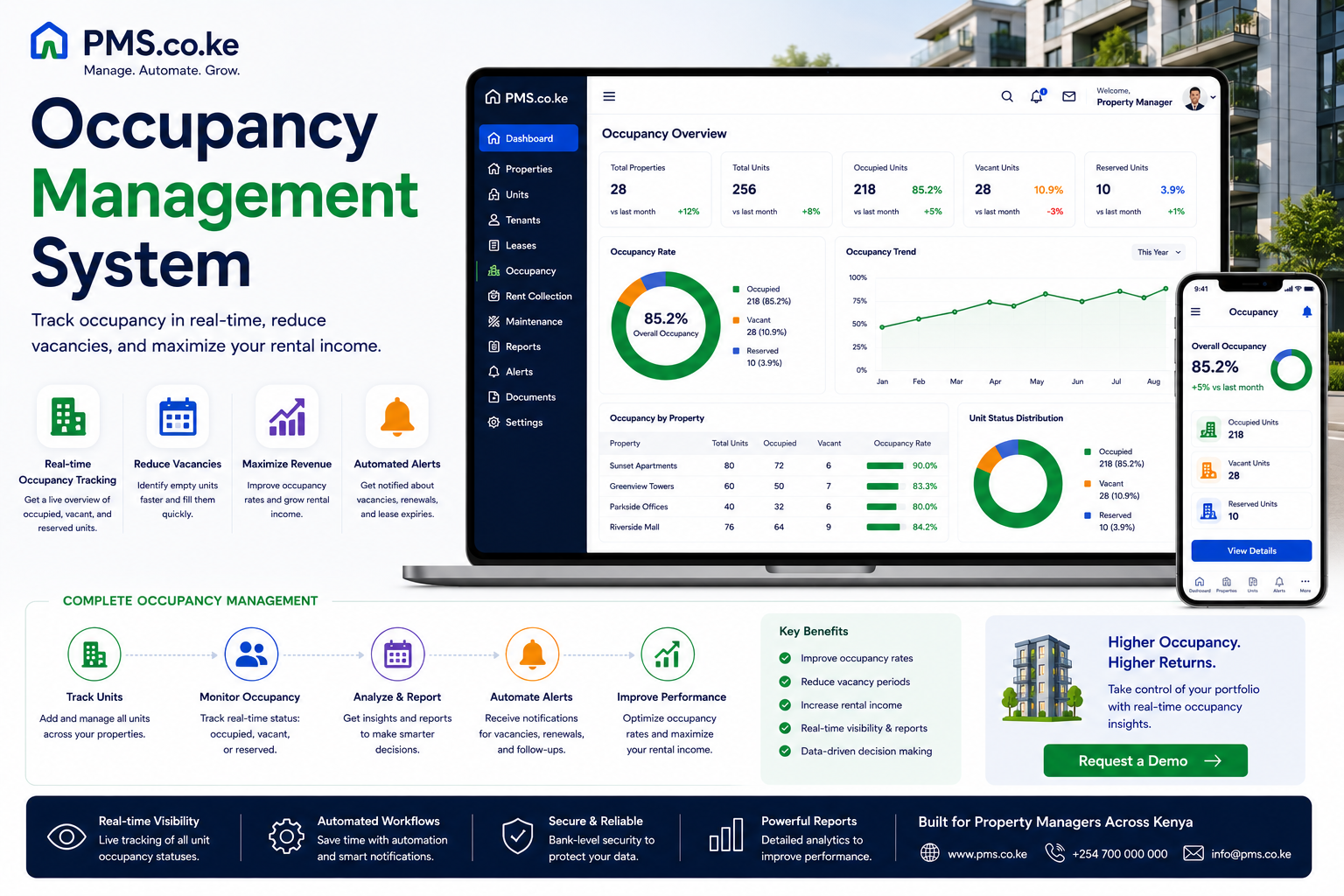
Occupancy Management System is an essential technology for modern property owners, landlords, and property managers seeking to maximize rental income and maintain high occupancy rates across their portfolios. In an increasingly competitive rental market, keeping units occupied, monitoring tenant movement, and managing vacancies efficiently can significantly impact profitability. An Occupancy Management System provides the visibility and operational control needed to optimize property utilization and improve overall portfolio performance.
Property managers often face challenges related to tenant turnover, vacant units, lease expirations, and occupancy reporting. Without a centralized solution, tracking occupancy across multiple properties can become time-consuming and prone to errors. An Occupancy Management System simplifies these processes by providing real-time occupancy insights, tenant tracking tools, vacancy monitoring capabilities, and reporting features within a single platform.
For property owners in Kenya, maintaining strong occupancy rates is critical for achieving consistent cash flow and maximizing returns on investment. An Occupancy Management System helps property professionals identify trends, reduce vacancy periods, improve leasing efficiency, and make data-driven decisions that support long-term growth.
Table of Contents
- Understanding Property Occupancy Management
- The Importance of Occupancy Tracking
- Core Features of Modern Occupancy Solutions
- Managing Vacancies Effectively
- Tenant Movement and Lease Monitoring
- Occupancy Reporting and Analytics
- Improving Portfolio Performance
Understanding Property Occupancy Management
Occupancy management involves monitoring, analyzing, and optimizing the use of rental units within a property portfolio. Every occupied unit contributes revenue, while vacant units represent lost income opportunities. An Occupancy Management System enables property managers to maintain accurate occupancy records and respond quickly to changing conditions.
Traditional occupancy tracking methods often rely on spreadsheets, paper records, and manual reporting processes. While these methods may work for small portfolios, they become increasingly inefficient as property holdings expand. An Occupancy Management System centralizes occupancy information, making it easier to monitor properties and identify areas requiring attention.
Property managers need visibility into current occupancy levels, upcoming lease expirations, tenant move-ins, and move-outs. Without accurate information, decision-making becomes difficult and vacancy periods may increase unnecessarily. An Occupancy Management System provides real-time access to occupancy data, helping managers maintain operational control.
The system also supports strategic planning by highlighting occupancy trends and identifying patterns that influence rental performance. This visibility allows property owners to improve leasing strategies and maximize asset utilization.
As rental markets evolve, occupancy management continues to play a critical role in successful property operations. Organizations that invest in effective occupancy tracking systems are better positioned to maintain strong performance and achieve long-term growth objectives.
The Importance of Occupancy Tracking
Occupancy rates are among the most important performance indicators in property management. High occupancy levels generally indicate strong asset utilization and stable revenue generation, while prolonged vacancies can significantly impact profitability.
An Occupancy Management System provides the tools needed to monitor occupancy rates accurately and consistently. Managers can track occupied units, vacant units, pending leases, and future availability from a centralized dashboard.
Accurate occupancy tracking helps property managers identify potential issues before they become major problems. For example, a sudden increase in vacancies may indicate market changes, pricing concerns, or tenant satisfaction issues. Early detection allows managers to implement corrective measures quickly.
Occupancy visibility also supports better financial planning. Property owners can forecast rental income more accurately when they understand current and projected occupancy levels. This improves budgeting, investment planning, and operational decision-making.
An Occupancy Management System creates transparency throughout the organization by providing reliable occupancy data to property managers, owners, investors, and stakeholders. This transparency supports accountability and improves overall portfolio management.
For growing property portfolios, occupancy tracking becomes increasingly complex. Centralized systems help ensure accuracy while reducing administrative workload and improving operational efficiency.
Core Features of Modern Occupancy Solutions
A comprehensive Occupancy Management System includes several features designed to improve occupancy monitoring and property utilization.
One key feature is real-time occupancy tracking. Managers can instantly view occupancy status across buildings, units, and entire portfolios. This visibility supports faster decision-making and more efficient leasing operations.
Vacancy monitoring tools help identify available units and track how long properties remain vacant. Managers can prioritize marketing efforts and reduce vacancy durations through proactive management.
Lease management functionality supports occupancy planning by tracking lease start dates, expiration dates, renewals, and tenant histories. Automated notifications help ensure that upcoming lease events are managed effectively.
Tenant tracking capabilities provide detailed information about current occupants, move-in dates, move-out schedules, and occupancy histories. This information supports accurate recordkeeping and operational planning.
Reporting and analytics features transform occupancy data into actionable insights. Property managers can evaluate occupancy trends, compare property performance, and identify opportunities for improvement.
An Occupancy Management System may also integrate with maintenance, financial management, and tenant communication tools, creating a comprehensive property management environment that supports operational efficiency.
Managing Vacancies Effectively
Vacancy management is one of the most important functions of property management. Every vacant unit represents unrealized revenue, making it essential to minimize vacancy periods wherever possible.
An Occupancy Management System helps managers identify vacant units immediately and monitor vacancy durations closely. By maintaining accurate records, property teams can prioritize leasing efforts and reduce delays between tenants.
Vacancy tracking also supports marketing activities. Property managers can identify available units quickly and coordinate advertising campaigns more effectively. Faster marketing responses often result in shorter vacancy periods and stronger occupancy rates.
Historical vacancy data provides valuable insights into portfolio performance. Managers can analyze seasonal trends, identify high-turnover properties, and evaluate the effectiveness of leasing strategies.
An Occupancy Management System improves coordination between leasing teams, property managers, and maintenance personnel. Units can be prepared for new tenants more efficiently, reducing downtime and accelerating occupancy recovery.
Reducing vacancy periods has a direct impact on profitability, making vacancy management a critical component of successful property operations.
Tenant Movement and Lease Monitoring
Tenant movement significantly affects occupancy performance. Move-ins, move-outs, renewals, transfers, and lease expirations must all be tracked carefully to maintain occupancy stability.
An Occupancy Management System provides complete visibility into tenant lifecycle events. Managers can monitor upcoming lease expirations, identify renewal opportunities, and prepare for transitions proactively.
Lease monitoring helps prevent unexpected vacancies by ensuring that renewal discussions begin well before lease expiration dates. Automated reminders improve consistency and reduce the risk of missed opportunities.
Tenant movement tracking also supports operational planning. Property managers can coordinate inspections, maintenance activities, and leasing efforts more effectively when future occupancy changes are visible.
Accurate tenant records improve reporting quality and provide valuable insights into retention rates and occupancy trends. These insights support better decision-making and stronger portfolio performance.
As property portfolios expand, manual lease tracking becomes increasingly difficult. An Occupancy Management System provides the structure and automation needed to manage tenant movement efficiently while maintaining high occupancy levels.
Occupancy Reporting and Analytics
Occupancy data becomes significantly more valuable when transformed into meaningful reports and performance indicators. An Occupancy Management System provides detailed analytics that help property professionals understand portfolio performance.
Managers can evaluate occupancy rates by property, building, unit type, or portfolio segment. These reports highlight strengths, weaknesses, and opportunities for improvement.
Trend analysis helps organizations identify recurring occupancy patterns and predict future performance. Understanding these patterns supports more effective planning and resource allocation.
Financial forecasting also benefits from accurate occupancy reporting. Revenue projections become more reliable when supported by real-time occupancy information and historical performance data.
Investors and stakeholders often require detailed occupancy reports to evaluate portfolio performance. An Occupancy Management System simplifies reporting while improving accuracy and transparency.
The ability to access occupancy insights quickly supports faster decision-making and more effective property management strategies.
Improving Portfolio Performance
Strong occupancy management contributes directly to portfolio success. Higher occupancy rates generate more consistent revenue, improve asset utilization, and strengthen overall investment performance.
An Occupancy Management System provides the tools necessary to monitor occupancy continuously, reduce vacancies, improve tenant retention, and optimize leasing operations.
Property managers can identify underperforming assets, evaluate occupancy trends, and implement targeted improvement strategies. This proactive approach supports sustainable growth and stronger financial outcomes.
Organizations that leverage occupancy data effectively gain competitive advantages in increasingly dynamic rental markets. Better visibility leads to better decisions, which ultimately drives improved portfolio performance.
A modern Occupancy Management System serves as the foundation for efficient occupancy management and long-term rental property success.
Benefits for Property Managers
Property managers are responsible for maintaining occupancy, reducing vacancies, coordinating tenant transitions, and ensuring consistent rental income. An Occupancy Management System provides the operational visibility necessary to achieve these goals efficiently.
One of the primary benefits is centralized occupancy tracking. Instead of manually updating spreadsheets and records, managers can access real-time occupancy information across their entire portfolio. This improves accuracy while reducing administrative workload.
An Occupancy Management System also enhances leasing efficiency by helping managers identify upcoming vacancies and renewal opportunities. Automated notifications ensure important occupancy events are not overlooked, enabling proactive tenant engagement.
Reporting capabilities further support management activities by providing performance insights. Property managers can monitor occupancy rates, compare properties, and evaluate leasing effectiveness using accurate data.
Improved communication is another major advantage. Occupancy information can be shared with leasing teams, maintenance personnel, and property owners, ensuring that everyone works from the same data source.
By improving visibility and reducing manual processes, an Occupancy Management System enables property managers to focus on strategic initiatives that support portfolio growth and operational excellence.
Benefits for Property Owners
Property owners depend on strong occupancy levels to generate stable rental income and maximize investment returns. An Occupancy Management System provides the insights needed to protect and enhance asset performance.
One of the most significant benefits is increased transparency. Property owners can view occupancy trends, vacancy rates, tenant turnover statistics, and portfolio performance metrics from a centralized dashboard.
Financial planning also becomes more accurate when occupancy information is readily available. Owners can forecast rental income, evaluate property performance, and identify areas requiring improvement.
An Occupancy Management System helps reduce revenue loss by minimizing vacancy periods. Faster leasing decisions and proactive renewal management contribute to higher occupancy rates and improved cash flow stability.
Owners with multiple properties benefit from portfolio-wide visibility. They can compare occupancy performance across assets, identify market opportunities, and make informed investment decisions based on reliable information.
The ability to monitor occupancy continuously supports stronger asset management and long-term portfolio growth.
Supporting Residential Property Management
Residential properties require constant attention to occupancy levels. Tenant turnover, lease renewals, and vacancy management directly influence profitability and operational efficiency.
An Occupancy Management System helps residential property managers maintain accurate occupancy records and monitor tenant activity across multiple units. Managers can quickly identify available units, upcoming vacancies, and renewal opportunities.
The platform also improves coordination between leasing and maintenance teams. Vacant units can be prepared more efficiently, reducing turnaround times and accelerating occupancy recovery.
Occupancy analytics provide valuable insights into tenant retention patterns and property performance trends. These insights help managers refine leasing strategies and improve resident satisfaction.
As residential portfolios expand, maintaining accurate occupancy records becomes increasingly important. An Occupancy Management System provides the structure needed to support efficient growth while maintaining operational control.
Supporting Commercial Property Operations
Commercial properties often involve complex lease arrangements, larger spaces, and longer occupancy cycles. Managing occupancy effectively within these environments requires specialized visibility and reporting capabilities.
An Occupancy Management System enables commercial property managers to monitor occupancy levels across office buildings, retail centers, warehouses, and mixed-use developments. Real-time occupancy tracking supports more effective leasing and portfolio management.
Commercial lease monitoring is particularly important because lease terms frequently vary between tenants. The system helps managers track lease expirations, renewals, and future availability with greater accuracy.
Occupancy reporting supports investor communications and strategic planning activities. Property owners can evaluate utilization rates and identify opportunities to improve revenue performance.
By centralizing occupancy information, an Occupancy Management System simplifies complex commercial property operations while supporting long-term asset optimization.
Why RentalDesk Is the Ideal Solution
RentalDesk provides property managers and landlords with the tools needed to manage occupancy efficiently across residential and commercial property portfolios.
The platform combines tenant management, lease tracking, maintenance coordination, financial reporting, and occupancy monitoring within a single integrated system. This centralized approach improves visibility while reducing administrative complexity.
RentalDesk helps users monitor occupancy rates, identify vacancies, track lease expirations, and manage tenant transitions more effectively. Real-time reporting ensures that property managers always have access to accurate occupancy information.
As a comprehensive Occupancy Management System, RentalDesk supports better decision-making, improved leasing efficiency, and stronger portfolio performance. The platform helps organizations maintain high occupancy levels while enhancing operational productivity.
Whether managing a small rental property or a large real estate portfolio, RentalDesk provides the capabilities needed to streamline occupancy management and maximize rental income.
Future of Occupancy Management
Occupancy management continues to evolve as property technology advances. Modern property organizations increasingly rely on digital tools to improve visibility, automate processes, and optimize asset performance.
Future occupancy management solutions will likely incorporate predictive analytics, automated leasing workflows, and advanced reporting capabilities. These innovations will help property managers anticipate vacancies and implement proactive strategies.
Artificial intelligence may further enhance occupancy forecasting by analyzing historical trends and market conditions. This will enable more accurate planning and stronger portfolio performance.
Mobile accessibility will also continue expanding, allowing property managers to monitor occupancy information from virtually any location. Real-time access to occupancy data will become increasingly important as portfolios grow.
An Occupancy Management System will remain a critical technology for organizations seeking to improve utilization, reduce vacancies, and maximize property value in competitive rental markets.
Getting Started Today
Maintaining high occupancy levels requires more than manual tracking methods and disconnected systems. Modern property portfolios demand centralized solutions capable of delivering accurate occupancy information and actionable insights.
Implementing an Occupancy Management System enables property owners and managers to improve visibility, streamline leasing operations, and make better business decisions. The result is stronger occupancy performance, reduced vacancies, and improved financial outcomes.
Organizations that invest in occupancy management technology position themselves for sustainable growth and long-term success. By leveraging real-time occupancy data and automated workflows, they can enhance efficiency while maximizing rental revenue.
Whether managing residential units, commercial properties, or mixed-use developments, an Occupancy Management System provides the foundation for effective occupancy management and superior portfolio performance.
