
Property Receivables Management Software
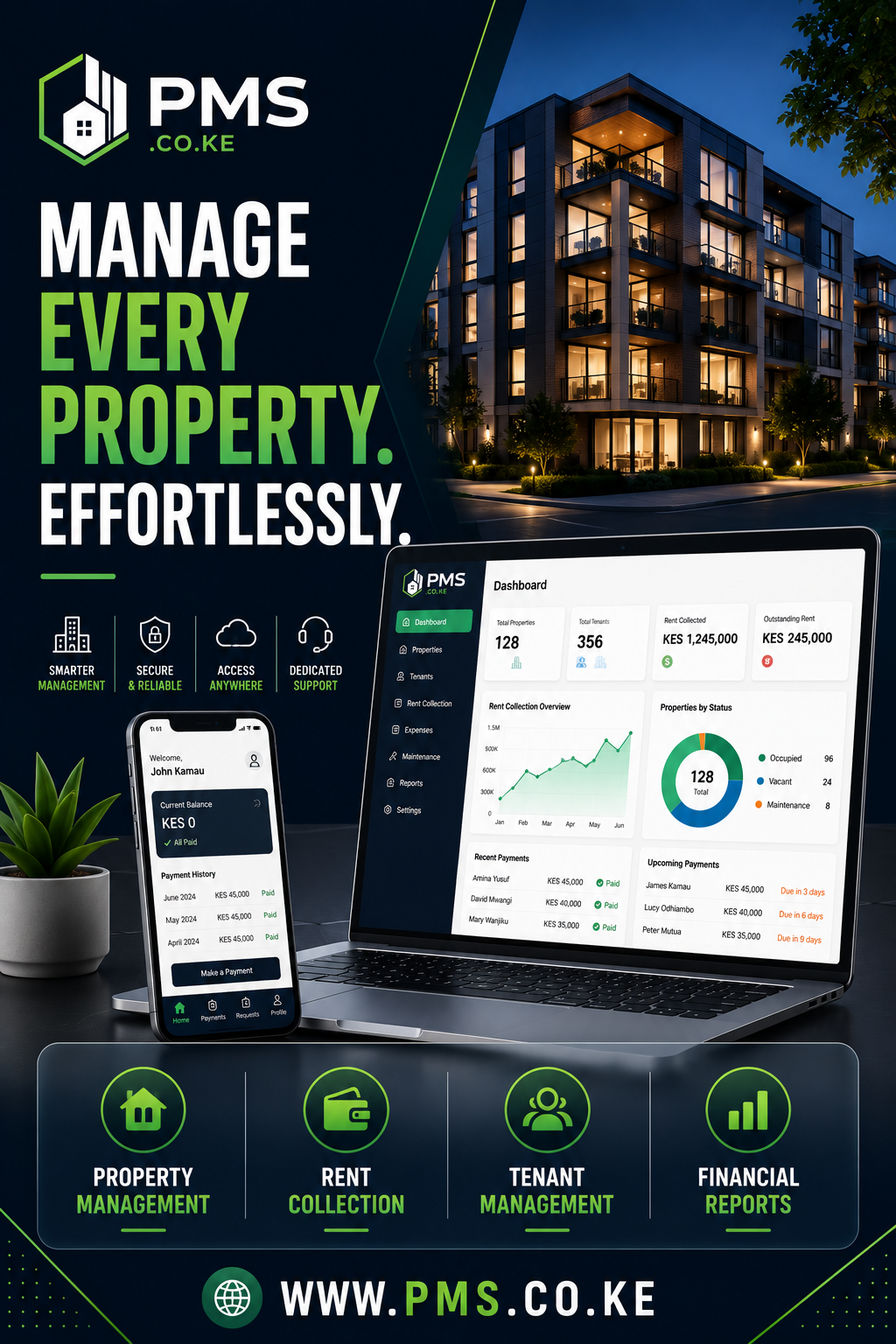
Managing property income has become increasingly complex as real estate portfolios continue to grow. Whether overseeing residential apartments, commercial buildings, mixed-use developments, or gated communities, property owners and managers need efficient ways to monitor invoices, collect rent, track outstanding balances, and generate financial reports. This is where Property Receivables Management Software becomes an essential business solution.
Property receivables represent one of the most critical financial assets within any real estate business. Delayed payments, manual reconciliation, missing invoices, and inaccurate records can quickly affect cash flow and overall profitability. Modern Property Receivables Management Software simplifies these processes by providing a centralized platform for billing, payment tracking, receivables monitoring, reporting, and financial forecasting.
For property managers in Kenya, adopting digital receivables management is no longer just an operational improvement—it has become a competitive advantage. With growing tenant expectations, mobile payment adoption, and increasing demand for financial transparency, automated systems enable businesses to remain efficient while delivering better customer experiences.
Table of Contents
- Understanding Property Receivables
- Why Manual Receivables Management Creates Challenges
- Core Features of Modern Receivables Solutions
- Automating Rent Billing and Invoicing
- Payment Tracking and Reconciliation
- Managing Outstanding Balances
- Improving Financial Visibility
- Supporting Growing Property Portfolios
Understanding Property Receivables
Property receivables include all amounts owed to a property owner or management company. These typically include rent payments, service charges, maintenance fees, parking charges, utility bills, security deposits, penalties, and other recurring or one-time charges.
A robust Property Receivables Management Software platform records every financial obligation from tenants, monitors payment status, and provides a complete overview of outstanding balances. Instead of relying on spreadsheets or paper records, every transaction is stored digitally, making retrieval and auditing significantly easier.
This centralized approach improves operational accuracy while reducing administrative workload for finance teams.
Why Manual Receivables Management Creates Challenges
Many property businesses still rely on spreadsheets, handwritten ledgers, and disconnected accounting tools. While these methods may work for smaller portfolios, they become increasingly difficult to manage as occupancy grows.
Common challenges include:
- Forgotten invoices
- Delayed rent reminders
- Duplicate records
- Human calculation errors
- Slow payment reconciliation
- Poor reporting accuracy
- Difficulty monitoring arrears
- Time-consuming month-end closing
These inefficiencies often result in delayed cash inflows and reduced operational visibility. Property Receivables Management Software addresses these problems by automating repetitive financial tasks while maintaining accurate records throughout the receivables lifecycle.
Core Features of Modern Receivables Solutions
A comprehensive receivables platform combines multiple financial processes into one centralized system.
Key features include:
Automated Billing
Generate recurring invoices automatically based on lease agreements, reducing manual work and ensuring timely billing.
Digital Tenant Accounts
Every tenant has an individual financial ledger showing invoices, payments, balances, adjustments, and payment history.
Payment Recording
Payments are captured instantly, minimizing reconciliation delays and improving accounting accuracy.
Outstanding Balance Monitoring
Finance teams can quickly identify overdue accounts and prioritize collections.
Financial Reporting
Generate receivables reports, aging summaries, payment trends, occupancy revenue analysis, and collection performance reports.
Automating Rent Billing and Invoicing
Rent billing represents one of the most repetitive financial activities in property management. Manual invoice preparation consumes valuable administrative time and increases the likelihood of missed billing cycles.
Property Receivables Management Software automates invoice generation according to lease terms. Monthly rent invoices, annual service charges, parking fees, utility charges, and maintenance costs can all be scheduled automatically.
Automation ensures that tenants receive consistent billing while reducing the workload for property managers.
Digital invoices also improve professionalism by presenting standardized documents that are easy to access and archive.
Payment Tracking and Reconciliation
One of the greatest advantages of Property Receivables Management Software is real-time payment tracking.
Rather than manually comparing bank statements with tenant records, payments are matched against invoices automatically where integrations exist. This significantly reduces reconciliation time while improving financial accuracy.
Property managers gain immediate visibility into:
- Paid invoices
- Partial payments
- Outstanding balances
- Advance payments
- Payment history
- Collection trends
This visibility allows finance teams to respond quickly whenever payment discrepancies arise.
Managing Outstanding Balances
Outstanding receivables directly affect cash flow. Without effective monitoring, overdue accounts can accumulate and become increasingly difficult to recover.
Property Receivables Management Software enables organizations to monitor aging balances using categorized reports such as:
- Current balances
- 30-day overdue accounts
- 60-day overdue accounts
- 90-day overdue accounts
- Long-term arrears
Automated reminders can notify tenants before due dates and after missed payments, improving collection rates while maintaining professional communication.
Finance managers can also prioritize collection efforts based on overdue amounts and payment history.
Improving Financial Visibility
Accurate financial data supports better business decisions.
Instead of waiting until month-end, property managers can monitor receivables in real time through interactive dashboards displaying:
- Expected monthly income
- Actual collections
- Outstanding receivables
- Collection percentages
- Payment performance
- Cash flow trends
These insights enable management teams to forecast revenue more accurately and make informed operational decisions.
Better financial visibility also strengthens investor confidence by providing transparent performance reporting.
Supporting Growing Property Portfolios
As real estate businesses expand, financial complexity increases significantly. Managing receivables across multiple buildings, locations, and hundreds of tenants requires scalable systems.
Property Receivables Management Software supports portfolio growth by allowing managers to oversee multiple properties from one centralized platform. Individual property performance can be monitored independently while consolidated reports provide organization-wide financial insights.
For growing property management firms in Kenya, this scalability ensures that operational efficiency remains consistent even as portfolios expand.
Solutions such as PMS help organizations centralize receivables management alongside lease administration, tenant records, maintenance coordination, reporting, and financial operations. By integrating these functions into one platform, property businesses reduce duplication, improve financial accuracy, and streamline daily workflows while maintaining complete visibility over property income.
Benefits for Property Managers
Property managers are responsible for ensuring that rental income is collected efficiently while maintaining positive relationships with tenants and property owners. Property Receivables Management Software significantly reduces the administrative burden associated with managing large volumes of financial transactions.
Instead of manually preparing invoices, following up on overdue payments, and reconciling bank statements, property managers can automate these tasks through a centralized platform. This allows them to dedicate more time to tenant satisfaction, property maintenance, and strategic business growth.
Additional benefits include:
- Faster rent collection processes
- Improved financial transparency
- Reduced paperwork
- Better communication with tenants
- Real-time receivables monitoring
- Simplified reporting for property owners
- Increased operational efficiency
By streamlining receivables management, property managers can improve service delivery while maintaining accurate financial records.
Benefits for Property Owners and Investors
Property owners depend on reliable rental income to maintain cash flow and achieve investment returns. Delayed collections and poor financial visibility can make it difficult to evaluate property performance.
Property Receivables Management Software provides property owners with timely insights into:
- Monthly income performance
- Outstanding balances
- Occupancy revenue
- Collection rates
- Financial forecasts
- Portfolio profitability
With access to accurate reports, owners can make informed investment decisions, identify underperforming properties, and plan future developments with greater confidence.
For investors managing multiple properties across Kenya, centralized receivables management offers improved oversight and accountability.
Benefits for Finance Teams
Finance departments benefit greatly from automation because repetitive accounting tasks become faster and more accurate.
Rather than spending hours preparing receivable reports, finance teams can generate detailed financial statements instantly.
Advantages include:
- Automated invoice generation
- Simplified payment reconciliation
- Reduced accounting errors
- Faster month-end closing
- Improved audit readiness
- Better financial forecasting
- Enhanced reporting accuracy
This level of automation supports stronger financial governance while reducing operational costs.
Benefits for Tenants
Digital receivables management also improves the tenant experience.
Tenants appreciate having easy access to their billing history, payment records, outstanding balances, and digital invoices. Automated payment reminders reduce the likelihood of missed due dates, while transparent account statements eliminate confusion over charges.
Additional tenant benefits include:
- Convenient access to payment information
- Faster issue resolution
- Improved billing accuracy
- Digital receipts
- Transparent financial records
- Better communication with property management
A positive payment experience contributes to stronger landlord-tenant relationships and increased tenant retention.
Improving Efficiency Through Automation
Automation is transforming property management by eliminating repetitive manual processes.
Property Receivables Management Software automates numerous activities, including:
- Rent billing
- Service charge invoicing
- Utility billing
- Late fee calculations
- Payment reminders
- Receipt generation
- Account reconciliation
- Financial reporting
Automation minimizes human error while ensuring financial processes remain consistent across all managed properties.
Organizations can also establish automated workflows that notify relevant staff whenever payments are overdue, invoices require approval, or financial exceptions occur.
These intelligent workflows increase productivity while reducing delays.
Compliance, Security and Risk Management
Financial information is among the most valuable business assets. Protecting this data requires secure systems that support regulatory compliance and industry best practices.
Modern Property Receivables Management Software includes features such as:
- Role-based user permissions
- Secure cloud storage
- Audit trails
- Automated backups
- Data encryption
- Transaction history
- Controlled document access
These capabilities help organizations protect confidential financial information while maintaining accountability across departments.
For businesses operating in Kenya, digital recordkeeping also simplifies financial audits and supports compliance with applicable tax and reporting requirements.
Why PMS is an Ideal Solution
Managing receivables becomes significantly easier when financial processes are integrated into a complete property management ecosystem.
PMS offers a comprehensive platform that combines receivables management with lease administration, tenant management, maintenance tracking, reporting, and operational oversight.
Instead of using multiple disconnected applications, property managers can oversee every stage of the property lifecycle from one centralized dashboard.
Key advantages include:
- Automated receivables tracking
- Centralized tenant financial records
- Real-time reporting dashboards
- Multi-property management
- Automated notifications
- Secure document management
- Financial analytics
- Scalable architecture suitable for growing portfolios
This integrated approach enables property businesses to improve operational efficiency while delivering better service to tenants and property owners alike.
Property Receivables Management Software in the Kenyan Real Estate Market
Kenya’s real estate industry continues to expand as demand grows for residential apartments, commercial office spaces, retail developments, and mixed-use properties.
Property managers increasingly require digital tools capable of supporting larger tenant bases while improving financial accountability.
Property Receivables Management Software helps Kenyan property businesses by:
- Supporting mobile payment reconciliation
- Reducing rent collection delays
- Improving occupancy revenue tracking
- Enhancing financial reporting
- Strengthening investor confidence
- Improving portfolio performance
As more organizations embrace digital transformation, receivables automation will continue to become a standard component of professional property management.
Future Trends
The future of receivables management will continue to be shaped by technological innovation.
Emerging developments include:
Artificial Intelligence
AI will improve payment forecasting, identify collection risks, and recommend proactive recovery strategies.
Predictive Financial Analytics
Advanced analytics will help managers forecast cash flow using historical payment behavior.
Mobile-First Property Management
Finance teams and property managers will increasingly manage receivables from smartphones and tablets.
Cloud-Based Collaboration
Cloud platforms will allow finance teams, accountants, property managers, and owners to collaborate from any location.
Intelligent Automation
Workflow automation will continue reducing manual intervention while improving processing speed and financial accuracy.
These innovations will further strengthen operational efficiency across Kenya’s growing property sector.
Getting Started
Implementing Property Receivables Management Software begins with understanding the financial needs of your property portfolio.
Organizations should evaluate:
- Number of managed properties
- Tenant volume
- Billing requirements
- Reporting expectations
- Payment collection processes
- Growth objectives
- Integration requirements
After selecting an appropriate solution, organizations should migrate existing financial records, configure billing structures, train staff, and establish automated workflows.
Choosing a scalable platform ensures that receivables management continues to support business growth without requiring major operational changes.
Conclusion
Effective receivables management is fundamental to maintaining healthy cash flow and achieving long-term success in property management. As portfolios grow, manual financial processes become increasingly difficult to manage, leading to delayed collections, reporting inaccuracies, and unnecessary administrative costs.
Property Receivables Management Software provides the automation, visibility, and financial control needed to streamline billing, monitor outstanding balances, reconcile payments, and produce accurate reports. For property managers, landlords, investors, and finance teams across Kenya, adopting a modern digital solution creates a more efficient, transparent, and scalable approach to managing property income.
Integrated platforms such as PMS enable organizations to centralize receivables management alongside other essential property operations, supporting sustainable growth while delivering better experiences for both property professionals and tenants.
